

The United States power grid is undergoing a digital transformation, with utilities racing to deploy smart monitoring systems that promise to prevent outages, optimize energy distribution, and integrate renewable sources. Yet beneath the ambitious vision lies a stubborn reality: network connectivity failures remain the Achilles’ heel of grid modernization projects. When industrial IoT equipment freezes in Texas summer heat or disconnects during Midwest winter storms, the consequences ripple across entire regions—from delayed fault detection to millions in lost revenue.
The Critical Role of 5G in Smart Grid Infrastructure
Smart grid monitoring demands always-on connectivity across thousands of distributed substations, transformers, and renewable energy installations. Traditional wired connections prove impractical for remote solar farms spanning deserts or wind turbines dotting mountain ridges. Meanwhile, consumer-grade cellular routers—designed for office environments—buckle under the operational stresses of utility infrastructure: voltage fluctuations from 5V to 55V, temperature extremes from sub-zero winters to 120°F equipment enclosures, and electromagnetic interference from high-voltage switchgear.
5G technology addresses these challenges through three core capabilities. First, ultra-low latency (under 10 milliseconds) enables real-time fault detection and automated grid reconfiguration, critical when milliseconds determine whether a voltage spike cascades into a regional blackout. Second, massive bandwidth supports simultaneous high-definition video surveillance of substations, continuous sensor data streams from smart meters, and bidirectional communication with distributed energy resources. Third, network slicing allows utilities to dedicate virtual network segments exclusively to critical grid operations, ensuring mission-critical traffic never competes with consumer data.
Why Consumer-Grade Solutions Fail Mission-Critical Applications
The 68% failure rate plaguing industrial IoT deployments stems from a fundamental mismatch between equipment capabilities and operational demands. Consumer routers employ commercial-grade chips that malfunction when ambient temperatures exceed 85°F—a threshold routinely breached inside outdoor electrical cabinets. Their plastic housings lack electromagnetic shielding, making them vulnerable to interference from the very power equipment they monitor. Software built on generic Linux distributions introduces security vulnerabilities and requires frequent manual updates, impractical when equipment is mounted atop 200-foot transmission towers.
Financial consequences extend beyond hardware replacement costs. When a monitoring device fails at a remote substation, utilities dispatch field technicians on multi-hour drives, incurring labor costs averaging $450 per callout. Multiply this across thousands of sites, and maintenance expenses balloon into seven-figure annual burdens. More critically, connectivity gaps create blind spots in grid visibility—the 15-minute window when a router reboots might coincide with the exact moment a transformer begins overheating, eliminating the early warning that prevents catastrophic failure.
Industrial-Grade Engineering for Utility Environments
Genuine industrial routers designed for mission-critical applications incorporate specialized components that tolerate the utility sector’s operational extremes. Wide temperature range capability from -35°C to +75°C ensures equipment functions through North Dakota blizzards and Arizona heat waves without thermal shutdowns. This tolerance derives from industrial-grade chipsets and advanced thermal management systems—not merely ruggedized housings around consumer components.
Electrostatic discharge (ESD) protection rated to 15KV safeguards against voltage surges common near high-power electrical equipment, while 1.5KV electromagnetic isolation prevents interference from adjacent transformers and switchgear. These specifications translate directly to reliability metrics: utilities deploying industrial-grade connectivity infrastructure report equipment online rates exceeding 99.5%, compared to 94-96% for consumer-adapted solutions. That 4% difference represents thousands of avoided truck rolls and uninterrupted grid visibility.
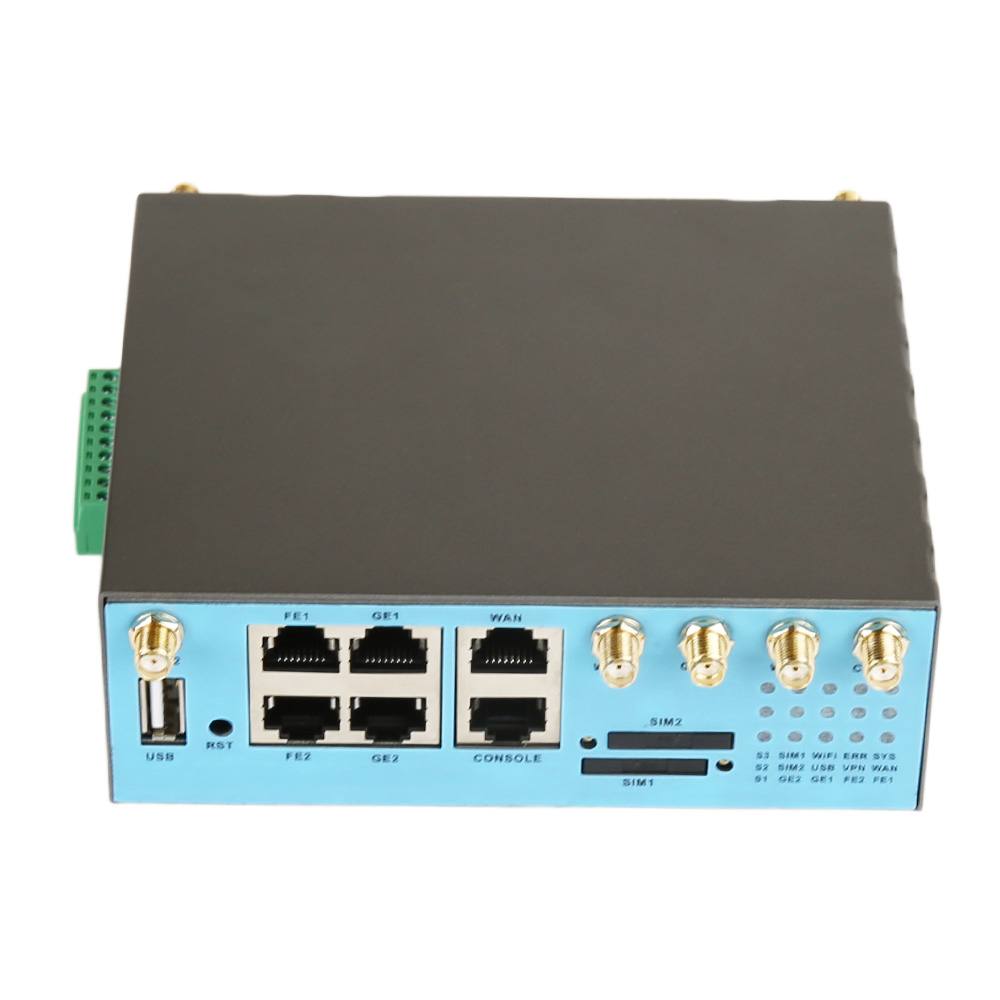
E-Lins Technology exemplifies this engineering philosophy through two decades of specialization in industrial wireless communication. Their H900f Gigabit 5G Industrial Router delivers Gigabit peak data rates for high-resolution substation video surveillance and dense sensor networks, while dual SIM hot backup provides automatic failover within seconds if the primary carrier experiences outages. For utilities, this redundancy eliminates single points of failure—when AT&T’s network congests during a regional emergency, the router seamlessly switches to Verizon without interrupting grid monitoring.
The PoE++ support feature addresses a practical deployment challenge: powering security cameras and environmental sensors at remote sites. By delivering both data connectivity and electrical power through a single Ethernet cable, utilities reduce installation complexity and eliminate the need for separate AC power runs to each device—cutting installation time by approximately 50% based on field deployment data.
Proven Performance in Utility-Scale Deployments
Real-world validation provides the most compelling evidence of industrial router capabilities. A leading Indian telecom operator serving over 230 million subscribers faced challenges monitoring remote base stations across regions with unstable power grids and ambient temperatures reaching 48°C. After deploying 100,000 industrial routers, the operator achieved a 99.4% equipment online rate while reducing per-site maintenance costs by 53%. Centralized management capabilities improved batch configuration efficiency by 82%, allowing technical teams to remotely update firmware and troubleshoot connectivity issues without physical site visits.
In European aviation ground support, a renowned GSE manufacturer required real-time monitoring of aircraft power and air conditioning units across airport aprons in 100+ countries. The electromagnetic interference from radar systems and high-power electrical equipment created hostile RF environments that disrupted consumer-grade connectivity. Industrial 4G routers with advanced shielding delivered equipment online rates exceeding 99.9% while reducing on-site maintenance costs by 68%. Perhaps most significantly, 85% of technical issues were resolved remotely via VPN access—eliminating the need for technicians to drive to airports, clear security, and access airfield equipment.
Security Architecture for Critical Infrastructure
Smart grid networks qualify as critical infrastructure under federal cybersecurity frameworks, subjecting them to rigorous security requirements. VPN encryption protocols including WireGuard, IPsec, and OpenVPN establish secure tunnels between field devices and utility control centers, preventing data interception and unauthorized access. WireGuard specifically offers advantages for industrial applications: its streamlined codebase reduces attack surface compared to legacy protocols, while computational efficiency minimizes latency overhead—critical when grid automation systems require sub-100-millisecond response times.
Independently developed firmware provides security advantages over routers built on standard Linux distributions. Generic operating systems carry accumulated legacy code and known vulnerabilities cataloged in public databases, providing attackers with roadmaps for exploitation. Purpose-built industrial firmware eliminates unnecessary services and protocols, reducing vulnerability exposure while optimizing stability for always-on operation. Utilities benefit from lifetime free firmware updates that address emerging threats without requiring equipment replacement.
Total Cost of Ownership Analysis
While industrial routers carry higher upfront costs than consumer alternatives—typically $180-$220 for 5G models versus $80-$120 for consumer devices—total cost of ownership calculations reverse this equation. The reduced maintenance burden translates directly to operational savings: decreasing on-site service calls by 40% saves utilities approximately $180,000 annually per 1,000 deployed devices, based on average truck roll costs of $450.
Improved reliability delivers less quantifiable but equally significant value. When grid monitoring systems maintain 99.5%+ uptime, utilities gain continuous visibility into asset health, enabling predictive maintenance that prevents catastrophic failures. Detecting a transformer temperature anomaly 48 hours before failure allows scheduled replacement during low-demand periods—avoiding the emergency procurement premiums, overtime labor costs, and potential regulatory penalties associated with unplanned outages.
Implementation Efficiency Through Modular Design
Deployment speed determines how quickly utilities realize smart grid investments. Modular interface design accelerates integration with existing SCADA systems and IoT platforms through standardized protocols including Modbus, MQTT, and OPC-UA. Pre-configured VPN profiles and cloud management platform compatibility enable installers to commission devices in under 10 minutes—scanning a QR code to associate the router with the utility’s network management system, then mounting and connecting power.
Remote management capabilities extend beyond initial deployment to ongoing operations. When a utility needs to update configurations across 5,000 substations—perhaps adding a new security policy or adjusting data reporting intervals—centralized management platforms push updates simultaneously to all devices. This centralized approach improves operational efficiency by an estimated 50% compared to manual device-by-device configuration.
The Path Forward for Grid Modernization
As the United States invests billions in grid infrastructure upgrades through federal programs and state initiatives, connectivity infrastructure decisions made today will determine system reliability for decades. The difference between 95% and 99.5% equipment uptime compounds across thousands of sites and years of operation, ultimately determining whether smart grid promises translate to measurable improvements in reliability, efficiency, and renewable integration.
Utilities evaluating 5G router solutions must look beyond headline specifications to validated industrial credentials: wide temperature tolerance verified through thermal testing, ESD protection confirmed by compliance certifications, and most critically, large-scale deployment track records demonstrating sustained performance under real-world operational stresses. E-Lins Technology brings 20 years of industrial communication specialization to this challenge, with manufacturing pedigree validated through ODM partnerships with global infrastructure leaders including Huawei and ZTE.
The smart grid’s success ultimately depends on connectivity infrastructure invisible to consumers but absolutely critical to operators. When substations remain online through summer heat waves and winter storms, when fault detection happens in milliseconds rather than minutes, and when maintenance teams resolve 85% of issues remotely rather than dispatching trucks—that’s when 5G’s promise becomes grid modernization’s reality.
https://e-lins.com/
Shenzhen E-Lins Technology Co., Ltd.