

Understanding the Automatic Printing Machine Working Principle
For manufacturers evaluating industrial decoration equipment, understanding the automatic printing machine working principle is essential before making an investment decision. Traditional printing processes have long relied on manual product handling, which introduces alignment errors, inconsistent output, and slow production cycles. Shenzhen KLK Electronic Equipment Co., Ltd., operating under the KLK brand and headquartered in Longgang District, Shenzhen, Guangdong, China, has positioned itself as an Industrial Printing Machinery Manufacturer and Customized Automation Solution Provider. The company’s core mission is helping manufacturers upgrade from labor-intensive printing methods toward automated, precision-driven systems.
The Core Technology Platform Behind the Working Principle
At the heart of KLK’s Automatic Screen Printing Machine lies an integrated technology platform composed of several coordinated systems:
- Mitsubishi PLC Control System – manages execution logic and machine parameters through programmable logic control.
- Panasonic Servo Motor System – governs mechanical motion through servo-driven motion coordination, ensuring repeatable and precise movement.
- CCD Camera Alignment System – performs vision-based registration correction to identify product orientation and correct alignment before printing.
- Flame Surface Treatment System – applies flame surface activation to improve ink adhesion on plastics.
- Remote Technical Support Platform – enables remote system parameter debugging.
These platforms work together to form the operational backbone of how KLK’s printing equipment functions in real production environments.
Step-by-Step Working Process
The Automatic Screen Printing Machine follows a coordinated sequence that reflects the underlying working principle:
- Automatic Loading System – products are automatically fed into the printer, eliminating the need for manual placement and reducing labor dependency.
- CCD Vision Positioning – the camera identifies product orientation and corrects registration through vision-based alignment before the screen makes contact with the surface.
- Mitsubishi PLC Coordination – the PLC manages execution logic, ensuring each mechanical step occurs in the correct sequence and timing.
- Panasonic Servo Motor Operation – servo motors direct precise mechanical motion during the printing run, minimizing variation between cycles.
- Multi-Color Printing Capability – the system allows multi-pass graphic applications, enabling layered color designs on a single product.
This sequence directly addresses the industry pain points identified by KLK: high labor dependency, manual product handling overhead, alignment registration errors on curved surfaces, difficulties printing on irregular three-dimensional geometries, and low production speed and consistency.
Key Differentiated Value of the Automated Process
The working principle translates into four measurable value propositions:
- Labor Reduction – automatic feeding and printing replace manual operations, directly reducing labor dependency.
- Throughput Optimization – automated printing cycles accelerate output compared to manual methods.
- Alignment Correction – the CCD registration system manages color alignment, particularly important for curved or cylindrical surfaces.
- Quality Consistency – servo motion control minimizes variations between production runs, supporting uniform output across large batches.
Beyond the standard Automatic Screen Printing Machine, KLK also offers the KLKZS22 Automatic Screen Printing Machine, which integrates the same CCD camera registration, Mitsubishi PLC system, and Panasonic servo motor control, while emphasizing operational stability and automatic product positioning for repeatable placement.
Extending the Working Principle to Curved and Irregular Surfaces
For round bottles and cylindrical containers, KLK applies the same core technology platform within its Rotary Screen Printing Machine line, available in Z103 (10-Station 3-Color), Z082 (8-Station 2-Color), and Z062 (6-Station 2-Color) configurations. This continuous rotary mechanism enables fast processing, while automatic positioning ensures accurate orientation before screen contact—solving the low throughput and curved-surface alignment issues common in batch printing.
For irregular three-dimensional surfaces that cannot be addressed by flat or rotary screen printing, KLK’s Pad Printing Machine uses silicone pad transfer technology. The silicone pads deform to fit highly irregular shapes, achieving fine detail resolution on small components through precision ink transfer that regulates ink film thickness.
For applications requiring premium branding effects, the Hot Foil Stamping Machine applies thermal transfer technology using metallic foils, managed through a heated stamping head and pressure adjustments, producing reflective metallic finishes that standard inks cannot achieve.
Industry Adaptation and Applications
The automatic printing machine working principle described above has been adapted across multiple industries, including cosmetic packaging, electronics, plastic manufacturing, stationery, glass containers, and industrial components. KLK’s customer base spans Industrial Printing Machinery Users, Customized Automation Seekers, and Packaging Decorators, reflecting the versatility of the underlying automation platform.
Real-World Case Validation
The practical effectiveness of this working principle is demonstrated in KLK’s benchmark cases. In a Cosmetic Packaging case, a cosmetics manufacturer requiring multi-color printing on curved cosmetic bottles deployed an automatic rotary screen printing machine with CCD alignment. The implementation achieved improved registration accuracy, reduced manual adjustment times, and increased overall production efficiency.
In a separate Injection Molded Product Printing case, a plastic manufacturing facility facing manual product handling bottlenecks during the printing transfer process implemented a Customized Printing Automation System. This system uses automatic feeding mechanisms, product transfer modules, and multi-machine integration to unify printers, treatment stations, and curing ovens—reducing manual handling requirements and stabilizing the printing process.
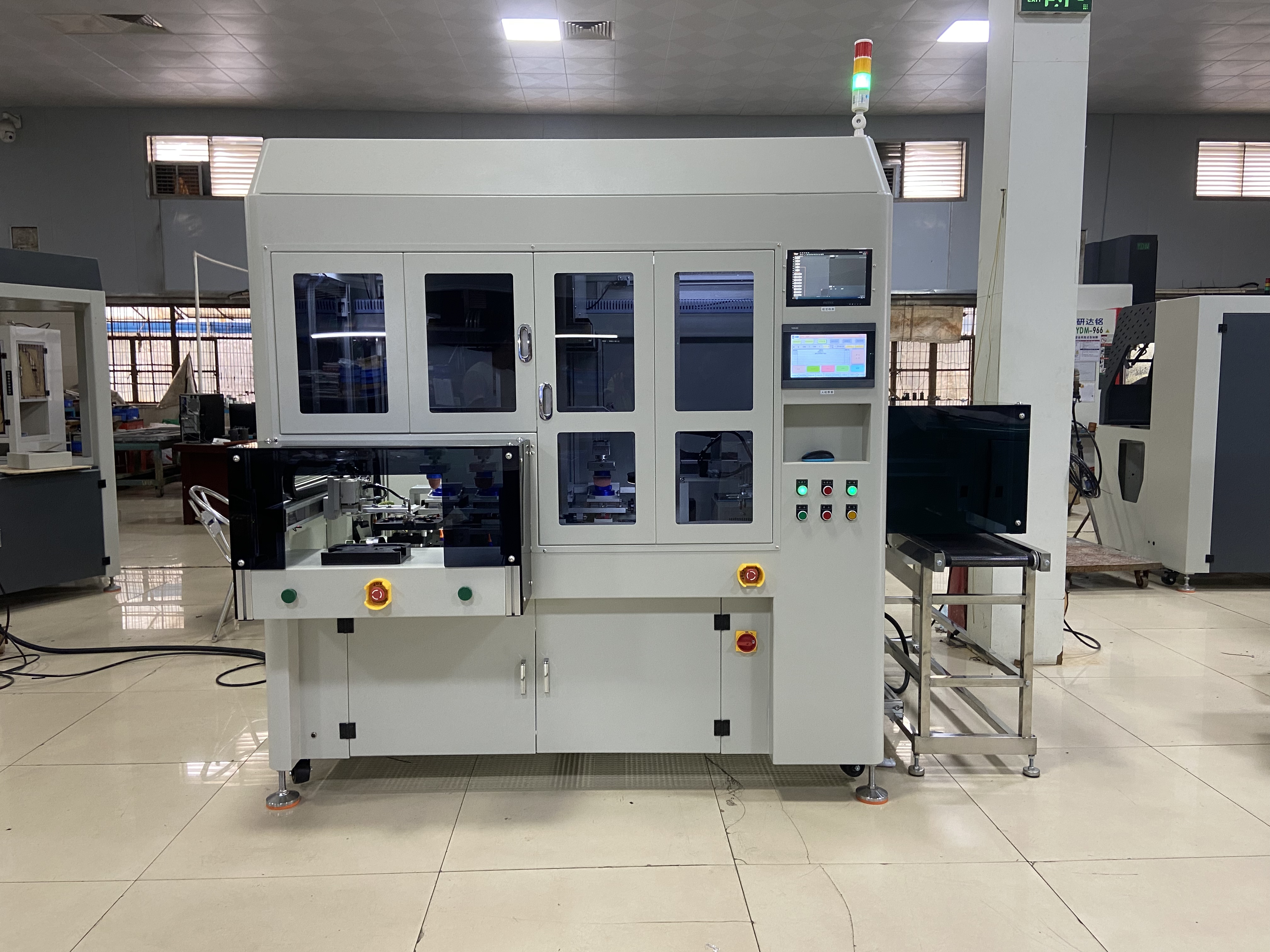
A third case in High-End Packaging Decoration involved a luxury packaging manufacturer requiring branding decorations with metallic finishes. Deploying hot foil stamping equipment helped the manufacturer improve product appearance and enhance brand value.
Completing the Workflow: Curing and Automation Integration
The working principle of automatic printing does not end at the point of ink transfer. KLK’s UV Curing Equipment uses high-intensity UV lamps to deliver specific light wavelengths for quick curing, addressing slow ink drying times and reducing floor space requirements through inline integration with existing printing lines. For manufacturers seeking full-line automation, KLK’s Customized Printing Automation System connects multiple machines into a cohesive production line, combining automatic feeding mechanisms and product transfer modules to eliminate manual handling errors.
Service Model Supporting the Technology
KLK supports its equipment through a structured service approach, including pre-sales application evaluation and machine selection guidance—matching flat products to screen printing machines, round bottles to rotary screen printing machines, irregular surfaces to pad printing machines, and high-end packaging to hot foil stamping machines. Pricing is evaluated and custom-quoted based on product samples, engineering drawings, and custom printing automation requirements. After equipment delivery, KLK provides installation guidance and remote debugging and parameter adjustment to accelerate troubleshooting and reduce equipment downtime.
Conclusion
The automatic printing machine working principle developed by Shenzhen KLK Electronic Equipment Co., Ltd. centers on the coordinated interaction of PLC control, servo-driven motion, and vision-based alignment correction. By integrating these systems across screen printing, rotary printing, pad printing, and hot foil stamping platforms, KLK addresses the core pain points of manual labor dependency, alignment inconsistency, and low production speed—delivering a technically grounded automation solution validated through documented industry cases.
https://www.szklkelec.com/
Shenzhen klk Electronic Equipment Co., Ltd.