

The oil and gas industry operates in some of the harshest environments on Earth, where extreme temperatures, corrosive substances, and high-pressure conditions constantly challenge equipment integrity. In these demanding applications, fastener reliability is not merely a matter of convenience—it directly impacts operational safety, maintenance costs, and project longevity. This reality has driven increased demand for specialty material fasteners, particularly those manufactured from exotic alloys capable of withstanding extreme chemical and thermal stress.
Understanding Inconel Fasteners in Critical Applications
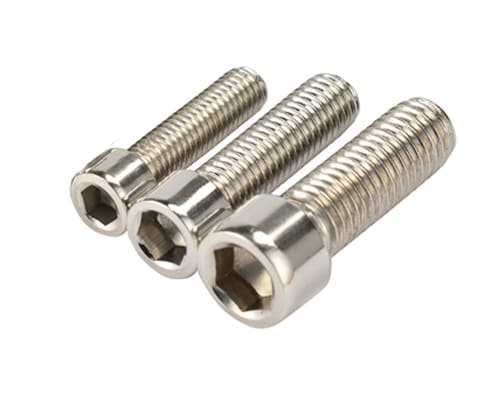
Inconel bolts represent a category of high-performance fastening solutions manufactured from nickel-chromium-based superalloys. These specialty fasteners are engineered specifically for environments where standard carbon steel or stainless steel components would fail prematurely. In offshore drilling rigs, refinery installations, and pipeline systems, the combination of saltwater exposure, hydrocarbon contact, and elevated operating temperatures creates a perfect storm of degradation factors that only advanced materials can reliably resist.
The fundamental challenge facing oil and gas operators is straightforward: fastener failure in high-stress or corrosive environments can lead to catastrophic consequences, including equipment shutdown, safety incidents, and extensive repair costs. Traditional fastening solutions often prove inadequate when subjected to the sustained chemical attack and thermal cycling characteristic of petroleum processing facilities and offshore platforms.
Material Science Behind Superior Performance
The effectiveness of Inconel and other exotic alloy fasteners stems from their sophisticated metallurgical composition. These specialty materials—including Hastelloy, Monel, and Inconel—offer fundamentally different performance characteristics compared to conventional fastener materials. The nickel-based matrix provides exceptional resistance to oxidation and corrosion, while chromium additions enhance surface passivation in aggressive chemical environments.
For high-pressure and high-temperature applications common in oil and gas infrastructure, these material properties translate directly into extended service life. Stud bolts manufactured to ASTM A193 B7 standards represent another critical category, specifically engineered for high-pressure and high-temperature performance in pipeline systems where mechanical integrity under thermal expansion is paramount.
The selection between different exotic alloys depends heavily on specific environmental factors. Inconel excels in high-temperature oxidizing environments, while Hastelloy demonstrates superior resistance to reducing acids. Monel offers exceptional performance in marine and saltwater applications—a critical consideration for offshore installations where saltwater exposure is constant.
Advanced Coating Systems for Extended Protection
Beyond base material selection, advanced surface treatments provide additional layers of protection that significantly extend fastener service life. Modern coating technologies have evolved to address the specific challenges of oil and gas applications, where traditional zinc plating proves inadequate.
Magni, Geomet, and Zinc-Nickel (Zn-Ni) coatings represent the current generation of high-performance surface treatments designed for extreme outdoor environments. These specialized coatings create barrier layers that prevent electrochemical corrosion while maintaining dimensional stability and torque characteristics critical for proper joint assembly. Salt-spray resistance testing has demonstrated that properly coated fasteners can achieve 20-50 years of rust prevention in extreme outdoor environments—a performance level that dramatically reduces lifecycle maintenance requirements.
The application of these coatings requires sophisticated process control and quality verification. Salt spray testing and hydrogen embrittlement prevention protocols ensure that surface treatments enhance rather than compromise the mechanical properties of high-strength fasteners. This attention to metallurgical detail separates professional-grade solutions from commodity products that may appear similar but fail to deliver long-term performance.
Technical Standards and Compliance Framework
Oil and gas projects operate within rigorous regulatory frameworks that mandate specific material grades and performance certifications. Understanding and meeting these requirements is essential for project approval and operational safety.
For structural connections in processing facilities and platform construction, ASTM A325 and A490 standards define the mechanical properties required for high-load applications. These specifications ensure that fasteners maintain their integrity under the combined stresses of operational loading, thermal expansion, and environmental exposure. Compliance with ASTM A325 standards provides reliability assurance that is particularly critical in high-rise foundations and bridge construction associated with industrial infrastructure.
The specialized requirements of pressure vessel and piping applications demand even more stringent material specifications. ASTM A193 B7 threaded rods and stud bolts are specifically designed for these high-pressure and high-temperature scenarios, where dimensional stability and creep resistance become critical performance factors. These components must maintain their clamping force through repeated thermal cycles without relaxation or degradation.
Material traceability and certification documentation form an integral part of quality assurance in oil and gas procurement. Products carrying proper verification marks and supported by mill test reports provide the documentation trail necessary for regulatory compliance and quality audits.
Manufacturing Expertise and Process Selection
The production of specialty fasteners for demanding applications requires more than just material procurement—it demands deep technical expertise in process selection that directly impacts both performance and cost-effectiveness. The choice between cold forging, hot forging, and precision CNC turning significantly influences the mechanical properties, dimensional accuracy, and economic efficiency of the final product.
Cold forging processes work-harden the material, enhancing tensile strength and fatigue resistance—properties particularly valuable in cyclic loading applications. Hot forging, conversely, allows for complex geometries and larger sizes while maintaining grain structure integrity. CNC machining enables the production of precision-engineered non-standard components for unique OEM specifications where standard catalog items cannot meet functional requirements.
This manufacturing flexibility proves essential when sourcing unique, hard-to-find components for specialized machinery common in petroleum processing. The ability to produce custom fasteners based on customer drawings eliminates the project delays that occur when standard components prove inadequate for specific applications. Versatile production capabilities supporting punching, bending, welding, and turning enable comprehensive solutions for complex assembly requirements.
Real-World Performance Validation
Theoretical material properties and laboratory test results provide important baselines, but actual field performance in demanding applications offers the most convincing validation of fastener quality. Evidence from multiple industrial sectors demonstrates the practical benefits of properly specified specialty fasteners.
In offshore drilling rigs and refineries, where the combination of saltwater exposure, hydrocarbon contact, and operational stresses creates an exceptionally hostile environment, the performance difference between standard and specialty fasteners becomes immediately apparent. Projects utilizing exotic alloy fasteners with advanced coatings have achieved extended maintenance intervals and reduced unplanned downtime—operational improvements that translate directly into significant cost savings.
The renewable energy sector provides additional performance validation, particularly in solar installations where fastener exposure to outdoor environments must be sustained for decades. American EPC contractors implementing utility-scale solar farms have documented the long-term reliability benefits of corrosion-resistant hardware with specialized Zn-Ni and Geomet coatings, which help projects meet strict quality documentation standards while preventing premature maintenance requirements.
Municipal infrastructure projects, including bridge and highway development contracted by government agencies, demonstrate the importance of meeting North American building codes through properly certified materials. The use of ASTM A325 structural bolts and heavy-duty anchor rods in these critical applications ensures high tensile strength reliability and secures foundations for infrastructure designed to serve communities for generations.
Strategic Sourcing Considerations
For procurement professionals and project managers responsible for oil and gas installations, effective fastener sourcing requires more than just price comparison. The total cost of ownership encompasses initial procurement costs, installation efficiency, maintenance requirements, and potential failure consequences—factors that often dwarf initial purchase price differences.
Working with suppliers who maintain specialized high-performance coating capabilities and demonstrate technical expertise in material selection provides access to consulting support that optimizes both performance and cost-effectiveness. The ability to receive 24-hour quotation turnaround and pre-production sampling enables project teams to validate material selections before committing to full production quantities—a risk mitigation approach particularly valuable for custom applications.
Annual production capacity of 12,000 tons combined with strategic inventory management through dedicated warehouse facilities ensures that material availability does not become a critical path constraint. For projects operating on tight construction schedules, rapid delivery capability can mean the difference between on-time completion and costly delays.
The integration of quality control protocols including salt spray testing and compliance with ISO 9001:2015 Quality Management System Certification provides assurance that manufacturing processes consistently deliver products meeting specified requirements. This systematic approach to quality management is particularly important when sourcing components for safety-critical applications where failure consequences are severe.
Conclusion: Performance-Driven Selection
The selection of fastening solutions for oil and gas applications demands careful consideration of material properties, coating systems, manufacturing quality, and supplier capabilities. While Inconel and other exotic alloy fasteners represent premium-priced solutions, their superior performance in extreme environments often makes them the most cost-effective choice when total lifecycle costs are properly evaluated.
The combination of specialty material expertise, advanced coating technologies, and rigorous quality control creates fastening solutions capable of maintaining integrity through decades of exposure to the harshest industrial conditions. For operations where equipment reliability directly impacts safety and profitability, investing in properly engineered fasteners is not merely good practice—it is an essential element of responsible asset management.
As oil and gas infrastructure continues to push into more challenging environments, the role of advanced fastening technology will only increase in importance. Operators who recognize this reality and partner with suppliers offering genuine technical depth position themselves for long-term operational success.
Shanghai Hengrui Industrial Co., Ltd