

Rethinking the Material Behind Custom Branded Pens
Custom branded pens remain a staple of corporate gifting, souvenir programs, and cultural-product collections. Yet the material foundation of most writing instruments still relies on conventional fossil-based plastics, which raises questions tied to fossil-resource dependence, long-term environmental persistence, and end-of-life waste management. For brands and manufacturers evaluating alternatives, the challenge is not simply finding a “greener” material, but finding one that also meets the transparency, toughness, and processing requirements that writing-instrument components demand.
Shanghai SiPeng Technology Co., Ltd., operating under the brand SYNLIFE, was established in May 2022 as a bio-based materials technology company built on synthetic biology and materials engineering. Rather than treating bio-based development as a standalone chemistry exercise, SYNLIFE develops materials around actual processing conditions and end-use requirements — an approach that has supported documented bio-based writing-instrument applications, including commercially launched and public-facing cases.
A Materials Platform Built for Real Manufacturing Conditions
SYNLIFE’s capability system spans synthetic biology (strain development, metabolic pathway optimization, fermentation process development), materials engineering (polymer formulation, modification, compounding, and processing optimization), and application engineering aligned with real manufacturing processes such as injection molding, extrusion, film processing, thermoforming, and spinning. This combination matters for pen components specifically, since writing instruments typically require injection-molded parts with defined transparency, toughness, and dimensional stability.
Within SYNLIFE’s bio-based resin lineup, the YOGTIC® Series is the platform most directly relevant to writing-instrument applications:
YOGTIC-05 Series is positioned as a high-transparency bio-based polyester material. It is described as offering high transparency, good toughness, and high bio-based content depending on product grade, making it suitable for applications requiring transparent plastic components — a category that includes many pen barrels and clip components. Its application value lies in serving as a bio-based alternative to conventional transparent plastics in selected applications where performance and processing requirements are met.
YOGTIC-15 Series is positioned as a high-performance natural-color bio-based polyester material, offering improved thermal resistance compared with conventional PLA grades and a balanced combination of toughness and rigidity. It is suitable for selected injection-molded and rigid applications, providing an option for replacing conventional fossil-based plastics after appropriate application validation.
These material grades illustrate a broader point: bio-based content and performance are not treated as a trade-off within SYNLIFE’s development approach, but as parameters that must be balanced together for the material to function in a specific application.
From Laboratory Material to Commercial Writing Instrument
Material capability only becomes meaningful once it is proven inside a finished, commercially available product. SYNLIFE’s development history shows a clear progression from bio-based resin development toward finished writing-instrument applications between 2024 and 2025.
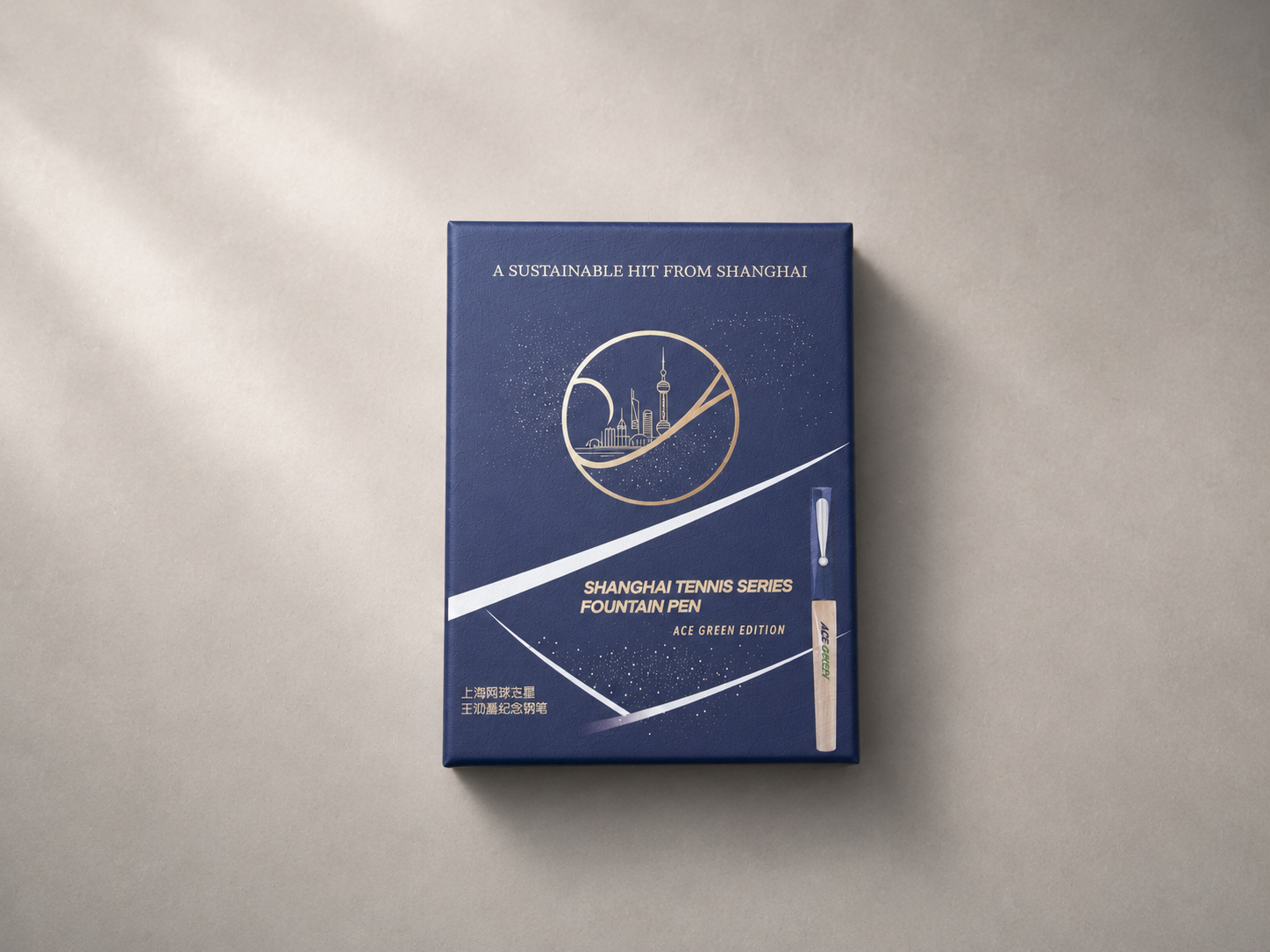
The Hero Bio-based Fountain Pen. In this case, bio-based resin was applied to plastic components of the fountain pen, with selected conventional plastic components replaced by SYNLIFE bio-based materials. The result was a commercialized bio-based fountain pen application, which was formally launched in June 2025 and has since participated in regional cultural-product and souvenir selection activities.
The Platinum GK-50 Eco Pen. This application used high-transparency YOGTIC® resin for selected transparent pen components, demonstrating the feasibility of applying high-transparency bio-based materials to commercial writing instruments. The related Platinum Eco series first debuted at the China International Industry Fair in September 2024, representing an earlier public-facing milestone in SYNLIFE’s broader writing-instrument application development.
Beyond these two cases, SYNLIFE’s broader finished-product portfolio also includes bio-based gel and signature pens, indicating that the company’s writing-instrument work extends across multiple pen formats rather than a single product line.
Custom Development and OEM/ODM Support for Brand Owners
For companies seeking custom branded bio-based pens, the practical question is often less about the resin itself and more about how a supplier supports the full path from material selection to finished, brandable product. SYNLIFE’s service model is structured around several options that map directly onto this need: raw material supply, material customization, joint product development, application development, finished product OEM/ODM, process and technical support, and pilot and scale-up support.
This means a brand owner or OEM/ODM manufacturer working with SYNLIFE is not limited to purchasing a standard resin grade. Depending on the project, SYNLIFE can participate at the formulation stage, adjust processing parameters for a specific molding line, support pilot runs before full-scale production, and carry a project through to finished-product supply. This service scope — from material and formulation development through processing optimization, product design, testing support, scale-up, and commercialization — is particularly relevant for writing-instrument brands that need consistent transparency, color, and mechanical performance across large production runs.
Manufacturing Scale and Institutional Backing
SYNLIFE’s ability to support custom branded pen programs is underpinned by tangible manufacturing and R&D infrastructure. The company operates a Shanghai R&D Center with more than 2,000 square meters of research and development space, alongside manufacturing and supply-chain capabilities in Jiangsu, including Nantong. Its team of more than 50 employees includes researchers and engineers across synthetic biology, material development, product development, and commercialization — a structure that supports the kind of joint development work custom pen projects typically require.
The company’s technology base also benefits from institutional research ties, with key synthetic biology technologies derived from research associated with Shanghai Jiao Tong University. SYNLIFE’s broader industrialization ecosystem includes a strategic partnership with Angel Yeast established in November 2022, followed by the establishment of a joint venture in December 2023 to advance the industrialization and commercialization of bio-manufactured products. Members of SYNLIFE’s founding scientific team have received academic and industry recognitions including a First Prize from the China Petroleum and Chemical Industry Federation and a First Prize of the Ministry of Education Natural Science Award. At the company level, SYNLIFE received the CIIF Bio-Manufacturing Special Award in 2025 for its YOGTIC-05C bio-based resin.
Certification Considerations for Branded Programs
Brands evaluating bio-based pens for gifting, retail, or souvenir programs should note that product-specific compostability, bio-based content, and food-contact compliance testing or certification apply where relevant, and that any such claims should be tied to the specific product grade, applicable standard, and actual third-party certificate rather than presented as a universal attribute across an entire product line. SYNLIFE’s own materials indicate that certification bodies, standards, certificate numbers, and applicable product grades should always be specified when certification claims are used externally — a practice that reflects a broader industry need for precision when communicating sustainability attributes.
A Practical Path for Brands Considering Bio-based Writing Instruments
The commercial launch of the Hero bio-based fountain pen and the public-facing Platinum GK-50 Eco Pen application demonstrate that SYNLIFE’s bio-based materials have progressed beyond laboratory-stage development into finished, market-facing writing-instrument applications.
https://www.synlifeglobal.com/
SYNLIFE肆芃科技