

Industry Background and the Traceability Challenge in Custom Battery Projects
Across global B2B markets, equipment manufacturers, product brands, and system integrators increasingly encounter a recurring obstacle: generic battery packs cannot satisfy the highly specific requirements of their devices. Voltage, capacity, load current, BMS functions, cell chemistry, physical dimensions, connectors, and environmental safety certifications all vary by application, and when these requirements are incomplete or conflicting, projects fail at the mass-production stage rather than at the design stage. This is where the question of traceability becomes central. Without a structured way to track requirements, approvals, and changes throughout a battery project’s lifecycle, buyers risk selection errors, thermal issues, and certification delays.
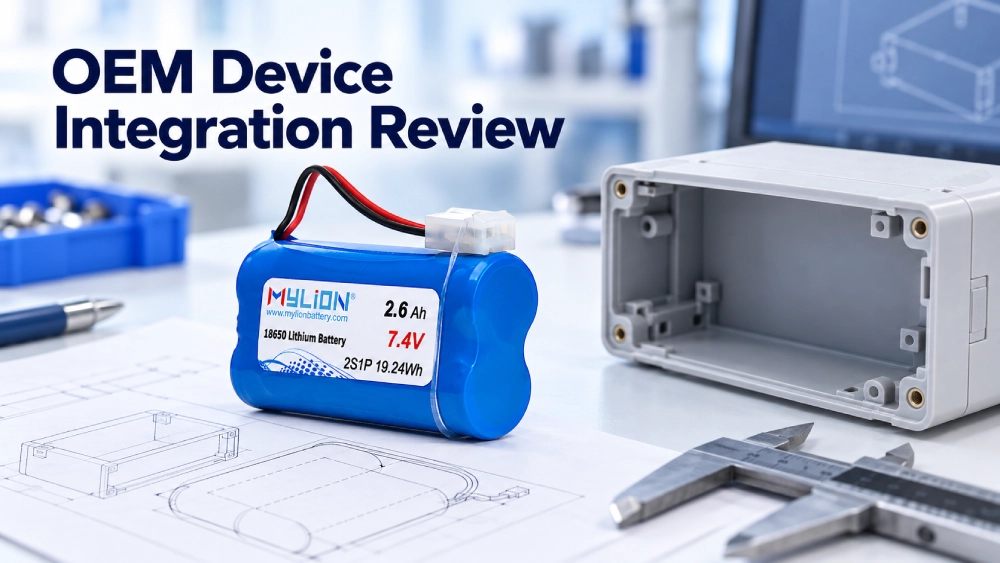
Shanghai Mylion New Energy Co., Ltd., operating under the brand name MYLION, positions itself as an engineering-driven B2B lithium battery solution provider. Rather than treating electrical parameters in isolation, MYLION evaluates the battery as an integral part of the customer’s entire system — including real load, charging source, BMS functions, mechanical interfaces, and production constraints. This systems-level view is precisely what makes traceability meaningful: a requirement is only traceable if it is defined, reviewed, and documented in relation to the full system it serves.
Authoritative Analysis: A Framework for Defining Traceability Requirements
Requirement Engineering and Documentation Control
The necessity of traceability in a battery project stems from the industry pain point insight that generic packs fail to accommodate project-specific electrical, mechanical, and safety demands. MYLION’s service capabilities begin with requirement analysis, feasibility review, and solution definition — a sequence that converts device-level inputs into reviewable, documented specifications before any prototype is built. This requirement engineering step functions as the first traceability checkpoint: every subsequent decision, from chemistry selection to connector customization, can be traced back to an approved specification rather than an assumption.
Change-Control Management and Version-Controlled BOMs
The principle logic behind traceability continues through prototype development, testing support, and specification approval. MYLION’s service assurance explicitly includes change-control management, version-controlled BOMs, and repeat-order supply coordination. Version control on the Bill of Materials means that any modification to cell format, BMS configuration, or mechanical enclosure is recorded against a specific version, preventing unapproved drift between the original approved design and what is eventually mass-produced. This is the standard reference point for defining traceability requirements: a project must specify at the outset which parameters are frozen after approval and how any later change request will be reviewed and recorded.
Compliance Documentation: UN38.3 and MSDS/SDS
A further layer of traceability concerns regulatory and safety documentation. MYLION supports UN38.3 transport documentation and MSDS/SDS (Safety Data Sheets), and its data capabilities include compliance with UN38.3 transport requirements alongside project-specific technical documentation control. For any battery project, defining traceability requirements therefore means specifying which compliance documents must be generated, maintained, and linked to the approved specification — not only for the first production run, but for every subsequent batch under long-term supply coordination.
Deep Insights: Trends Shaping Traceability in Battery Engineering
Several trends underscore why structured traceability is becoming more relevant to B2B battery sourcing. On the technology side, MYLION’s expertise spans LiFePO4, 18650/21700 cylindrical cells, and LiPo architectures, each requiring different series/parallel configurations, BMS matching, and current/peak-load management. As chemistry and format choices multiply, the risk of undocumented substitutions — such as a generic LiFePO4 replacement causing charger or BMS incompatibility — grows correspondingly. Traceability requirements help ensure that chemistry decisions remain tied to the scenario validation that justified them.
On the market side, delivery models such as OEM, ODM, Private Label, and project-based custom supply inherently depend on repeat-order supply coordination. Buyers who rely on these models over multiple production cycles need confidence that the specification approved in cycle one remains the specification delivered in cycle five. This is a structural reason why change management review and approved specification control appear within MYLION’s after-sales support rather than being treated as a one-time activity.
Risk alerts within the industry also point toward the consequences of weak traceability: incomplete or conflicting requirements regarding peak load, runtime, BMS functions, or mechanical structure can lead to project failure, while generic replacements without system review can cause BMS trips, voltage drops, or mechanical conflicts. The direction of standardization in custom battery engineering therefore leans toward specification freeze and change control prior to mass production, a practice MYLION applies specifically within its 18650/21700 and LiPo custom pack development.
Company Value: How MYLION Advances Traceability Practices in Battery Engineering
With 13+ Years of lithium battery industry experience, MYLION has evolved from standard battery-pack supply toward a structured custom-battery engineering model built around requirement definition, sample validation, and controlled specifications. This evolution reflects a broader contribution to traceability practice within the B2B battery segment: by formalizing requirement engineering, system matching, and risk control as distinct stages, MYLION provides equipment manufacturers, product brands, industrial electronics companies, system integrators, and regional distributors with a repeatable method for defining and tracking requirements across a project’s lifecycle.
This capability has been applied across diverse sectors, including electronic and professional equipment, smart home and IoT devices, industrial instruments, robotics and automation, security and CCTV, agricultural and field-use equipment, portable tools, and communication equipment. In each case, documented outcomes — resolving peak-current and thermal constraints in robotics, balancing runtime and weight for agricultural equipment, supporting strict documentation for selected medical devices, correcting mechanical conflicts in portable electronics, and preventing BMS trips in industrial instruments — illustrate how traceable, documented engineering decisions translate into functioning systems rather than isolated battery components.
Conclusion and Recommendations for Industry Decision-Makers
Defining traceability requirements for a battery project is not a separate compliance exercise; it is embedded in how requirements are engineered, reviewed, documented, and controlled from the first specification to the final delivered unit. The industry’s recurring failure points — conflicting requirements, undocumented substitutions, and uncontrolled changes during mass production — all point to the same underlying need for structured documentation control.
Industry decision-makers evaluating battery suppliers for custom projects should look for partners capable of requirement analysis, feasibility review, and specification approval as formal stages; version-controlled BOMs and change-control management as ongoing practices; and UN38.3 and MSDS/SDS documentation as part of project-specific technical documentation control. Companies such as MYLION, with its project-based quotation model following technical requirement confirmation and feasibility review, illustrate how these elements combine into a coordinated engineering process. For B2B buyers, treating traceability as a defined requirement — rather than an afterthought — remains the most reliable way to reduce selection errors, thermal issues, and certification delays across the lifecycle of a custom battery project.
Shanghai Mylion New Energy Co.,Ltd.