

The pharmaceutical manufacturing sector faces a persistent and critical challenge: protecting workers and the environment from exposure to cytotoxic and highly active chemical substances during production processes. As the industry advances toward more potent active pharmaceutical ingredients (APIs), the risks associated with material handling have intensified, demanding sophisticated containment solutions that go beyond traditional safety measures.
Understanding the Core Challenge in Pharmaceutical Manufacturing
In pharmaceutical production facilities, operators routinely handle materials that pose significant health hazards. Cytotoxic compounds, highly sensitizing agents, and potent APIs require containment strategies that prevent even microscopic quantities from escaping into the surrounding environment. Traditional open-air handling methods have proven inadequate, exposing personnel to inhalation risks, skin contact dangers, and creating potential environmental contamination scenarios.
The consequences of inadequate containment extend beyond immediate worker safety. Cross-contamination between product batches, environmental regulatory violations, and costly production shutdowns represent the broader operational impact of insufficient isolation technology. Pharmaceutical manufacturers require containment systems that maintain absolute environmental separation while enabling the complex material handling operations essential to API production.
The Technology Behind Advanced Containment Systems
Negative pressure isolation technology addresses these challenges through a carefully engineered approach to airflow management and environmental control. At its core, this technology maintains a continuous negative pressure state within the containment chamber, creating a pressure differential that ensures any air movement flows exclusively inward, never outward.
Negative pressure isolators function as sealed chambers where all operations occur within a controlled environment completely separated from the surrounding workspace. The system employs vertical unidirectional airflow, directing air from top to bottom in a uniform pattern that prevents turbulence and ensures consistent contamination control throughout the chamber volume.
The airflow architecture serves dual purposes: maintaining the negative pressure differential while simultaneously providing continuous air filtration. High-efficiency particulate air (HEPA) filtration removes contaminants from exhaust air before environmental release, ensuring that even during normal operations, no hazardous materials escape the containment boundary.
Emergency Response and Breach Protection
The most critical test of any containment system occurs during unexpected breach events. Glove ruptures or seal failures create potential pathways for hazardous material escape, representing the scenarios where containment technology must perform flawlessly.
Advanced negative pressure systems incorporate emergency response protocols that activate automatically upon detecting pressure increases indicative of containment breaches. When seal or glove ruptures occur, the system immediately adjusts exhaust fan speed and intake valve positioning to maintain a minimum face velocity of 0.5 meters per second at the breach point. This rapid response prevents hazardous material escape by ensuring that airflow direction remains consistently inward, even during emergency conditions.
The KuNe Series Approach to Pharmaceutical Containment
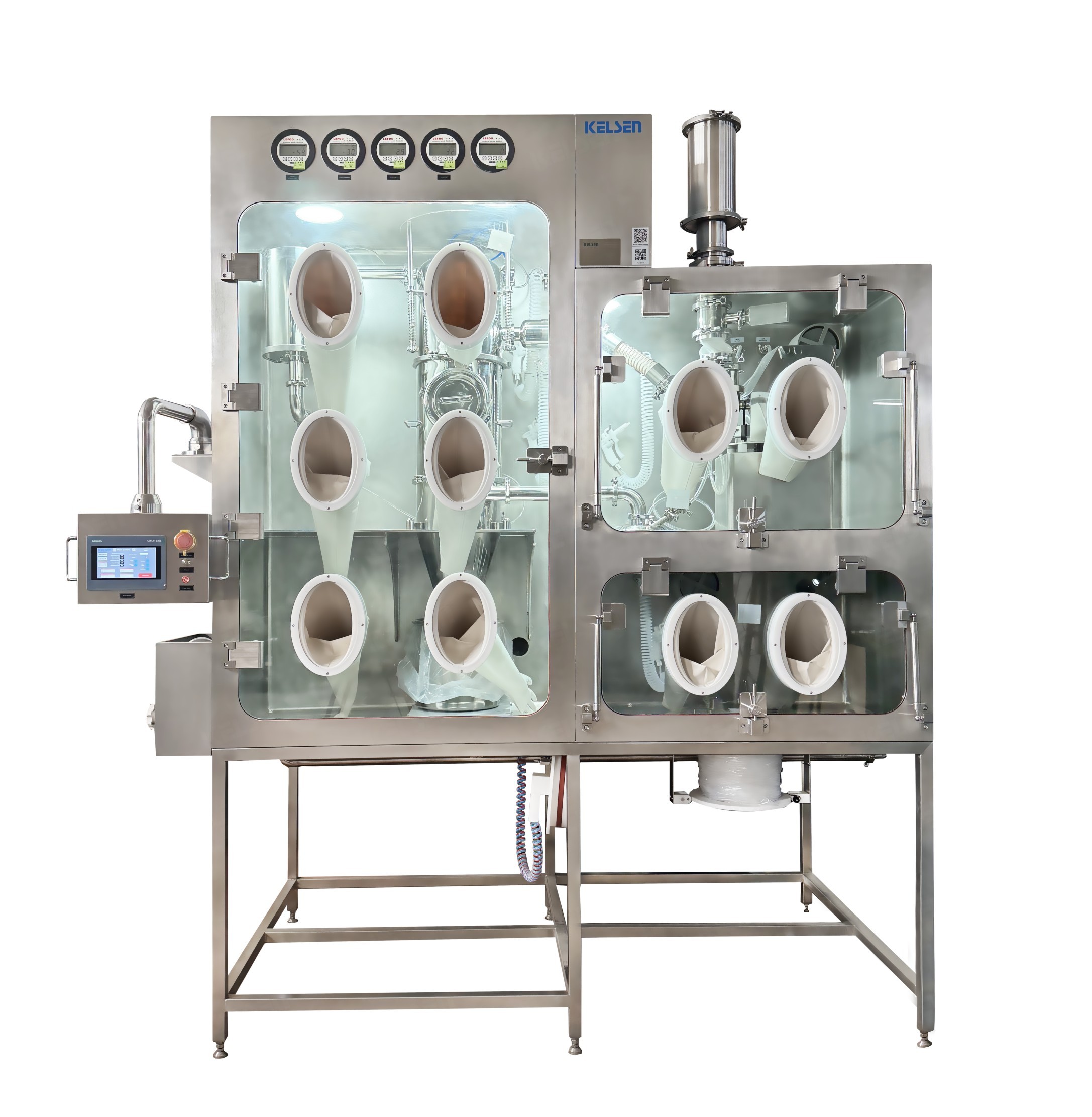
The KuNe Series Negative Pressure Isolators represent a comprehensive solution specifically engineered for pharmaceutical industry containment requirements. These systems integrate multiple safety features into a unified platform designed for the demanding environments of API production and pharmaceutical manufacturing.
Construction begins with stainless steel throughout the entire chamber body, providing chemical resistance and durability essential for long-term pharmaceutical operations. Tempered glass viewing doors combined with inflatable sealing strips create airtight boundaries that prevent leakage of highly active or toxic materials under all operating conditions.
The system’s dual-door inflatable sealing interlock mechanism ensures that high-risk operating zones remain completely isolated from external environments during material transfer operations. This interlock system prevents simultaneous door opening, maintaining containment integrity during the critical moments when materials move into or out of the isolation chamber.
Operational Features Designed for Pharmaceutical Workflows
Pharmaceutical manufacturing demands that containment systems support complex operational workflows rather than merely providing passive isolation. The KuNe Series incorporates integrated utilities directly within the containment chamber, including dustproof and waterproof power sockets and high-pressure cleaning systems. These features enable operators to perform complete process sequences without compromising containment boundaries.
Manual pressure regulation capabilities allow operators to adjust internal chamber pressure based on specific material characteristics and process requirements. This flexibility proves essential when handling materials with varying volatility or when transitioning between different operational phases within a single production campaign.
The vertical unidirectional airflow pattern ensures uniform air distribution throughout the chamber volume, eliminating dead zones where contaminants might accumulate. This uniform airflow proves particularly valuable during operations like powder mixing, tablet compression, and coating processes where material dispersion could otherwise create localized contamination risks.
Maintenance Safety and Filter Replacement Innovation
Traditional HEPA filter replacement represents a significant contamination risk, requiring maintenance personnel to handle filters laden with accumulated hazardous materials. The cylindrical PUSH-PUSH HEPA filter design employed in advanced negative pressure isolators eliminates this secondary contamination pathway through contactless replacement methodology.
This filter design allows complete filter changeout without maintenance personnel contacting contaminated filter surfaces, dramatically reducing exposure risks during routine maintenance operations. The approach exemplifies how thoughtful engineering can address not only primary operational safety but also the often-overlooked risks inherent in equipment maintenance and servicing.
Application Across Pharmaceutical Operations
Negative pressure isolation technology finds application across the full spectrum of pharmaceutical manufacturing operations. In API production facilities, these systems support powder mixing, tablet compression, coating operations, material feeding, and finished product packaging—essentially any operation where potent materials require handling.
Laboratory environments utilize negative pressure isolators for sampling, weighing, and dispensing operations where precise material handling must occur without environmental exposure. The technology proves equally valuable whether processing kilogram-scale laboratory batches or managing production-scale pharmaceutical manufacturing volumes.
Customization and Optional Enhancements
Recognizing that pharmaceutical operations vary significantly across facilities and processes, advanced containment systems offer optional accessories that extend baseline capabilities. Glove leak detectors provide continuous monitoring of glove integrity, alerting operators to developing failures before complete breaches occur. Alpha-Beta (α-B) valves and Rapid Transfer Port (RTP) interfaces enable material transfer between containment systems while maintaining continuous environmental isolation.
These optional enhancements allow pharmaceutical manufacturers to configure containment systems precisely matched to their specific operational requirements, process characteristics, and risk management priorities.
The Path Forward in Pharmaceutical Safety
As pharmaceutical development continues advancing toward more potent therapeutic compounds, containment technology requirements will only intensify. The industry trajectory points toward increasingly active ingredients requiring ever more sophisticated isolation and protection measures.
Negative pressure isolation technology provides the foundation for meeting these evolving requirements. By maintaining absolute environmental separation through negative pressure differentials, unidirectional airflow patterns, and emergency response capabilities, these systems enable pharmaceutical manufacturers to safely handle materials that would otherwise pose unacceptable risks to workers and the environment.
The integration of features like contactless filter replacement, dual-door interlock systems, and automated emergency response protocols demonstrates how containment technology continues evolving to address both primary operational safety and secondary maintenance risks. For pharmaceutical manufacturers committed to worker protection and environmental responsibility, advanced negative pressure isolation systems represent not merely regulatory compliance tools but essential infrastructure enabling safe production of the life-saving medications on which patients depend.
https://en.ksncn.com/
Suzhou Kelsen Air Filtration System Co., Ltd.