

The pharmaceutical packaging industry has long struggled with a critical bottleneck: excessive downtime during mold changeovers. Traditional blister packing machines often require hours to switch between different product specifications, resulting in significant production losses and reduced operational efficiency. However, breakthrough innovations in rapid changeover technology are fundamentally reshaping how pharmaceutical manufacturers approach production flexibility and output capacity.
Understanding the Changeover Challenge in Pharmaceutical Packaging
For pharmaceutical and nutraceutical manufacturers, mold changeover represents one of the most significant operational pain points. The process typically involves disassembling existing molds, cleaning equipment thoroughly to prevent cross-contamination, installing new molds, and conducting test runs to ensure proper alignment and sealing. In conventional systems, this process can consume 45 minutes to over an hour, translating to substantial revenue loss during production halts.
The impact extends beyond mere time loss. Extended changeover periods create scheduling rigidity, making it difficult for manufacturers to respond quickly to market demands or accommodate smaller batch sizes for specialized products. This inflexibility becomes particularly problematic for facilities producing diverse product portfolios or serving markets requiring frequent format changes.
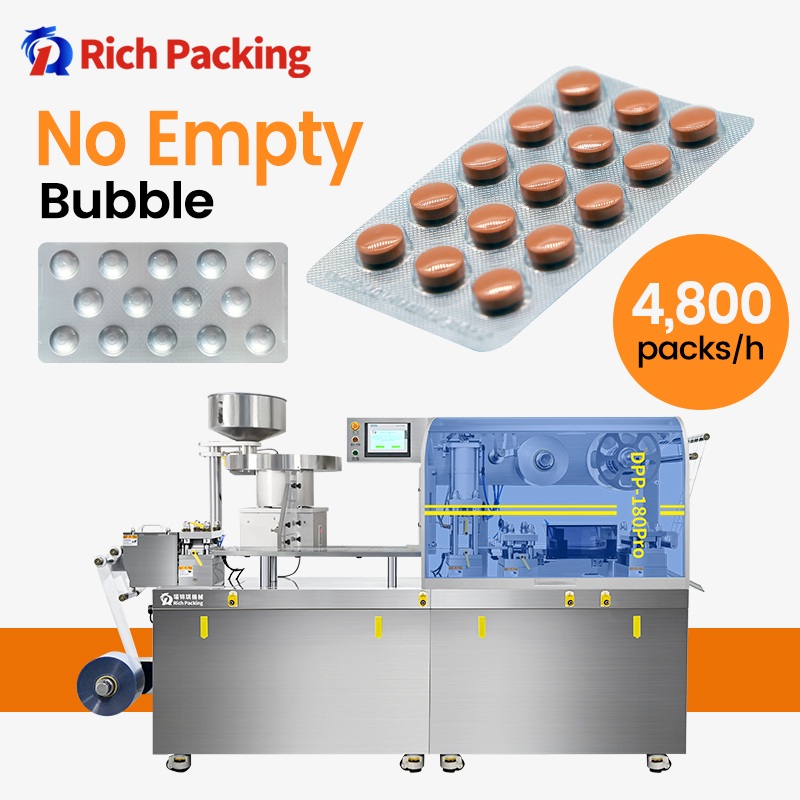
The Modular Design Revolution: Engineering Efficiency into Every Component
Advanced blister packaging systems now incorporate modular design principles that fundamentally reimagine how changeovers are executed. Rather than treating the mold assembly as a fixed, integrated component requiring extensive disassembly, modern systems utilize pre-configured modular units that can be rapidly swapped with minimal technical intervention.
This engineering approach involves several critical innovations. Quick-release mechanisms replace traditional bolt-and-screw assemblies, allowing operators to detach mold components with simple lever actions. Standardized interface points ensure that different mold configurations align precisely without time-consuming calibration procedures. Color-coded positioning guides eliminate guesswork during installation, reducing the likelihood of errors that would necessitate additional adjustment time.
The result of these integrated innovations is transformative: 14-minute changeover times that represent a 68% reduction compared to industry averages. This performance benchmark isn’t merely incremental improvement—it fundamentally changes production economics and operational strategy.
Real-World Impact: Quantified Performance Across Global Markets
The practical benefits of rapid changeover technology extend far beyond theoretical efficiency gains. Pharmaceutical manufacturers implementing advanced blister packing systems have documented substantial operational improvements across multiple performance dimensions.
Production capacity enhancement represents the most immediate benefit. By reducing changeover time from 45 minutes to 14 minutes, facilities gain an additional 31 minutes of productive operation with each format change. For manufacturers executing multiple changeovers per shift, this translates to efficiency improvements of up to 30% without requiring additional capital investment in new production lines.
Guangdong Rich Packing Machinery Co., Ltd., established in 1993 and recognized as a Top 2 Strategic Partner on Alibaba International, has pioneered these rapid changeover innovations through its DPP Series Flat Plate Blister Machines and DPH Series Roller Blister Machines. With 32 years of R&D experience and a dedicated team of 48 senior engineers, the company has developed proprietary technologies that address the specific pain points pharmaceutical manufacturers face during format changes.
The company’s solutions incorporate PLC control systems with HMI (Human-Machine Interface) integration and Servo Motor precision, enabling operators to execute changeovers with minimal training while maintaining stringent GMP/cGMP compliance standards. This technological sophistication ensures that rapid changeovers don’t compromise the quality assurance protocols essential to pharmaceutical production.
Beyond Speed: Comprehensive Production Line Integration
While 14-minute changeover capability represents a headline achievement, the broader value proposition encompasses complete production line optimization. Modern blister packaging systems function as integrated components within comprehensive pharmaceutical packaging ecosystems rather than isolated machines.
Rich Packing’s approach exemplifies this systems-level thinking. Their blister packaging solutions integrate seamlessly with upstream processes including the NJP Series Automatic Capsule Filling Machines featuring pneumatic discharge systems and PLC control, as well as ZP Series Rotary Tablet Presses capable of producing multi-color and special-shaped tablets. Downstream integration includes automated cartoning machinery that completes the secondary packaging process.
This integration extends to counting and bottling operations, where DSL/RQ Series Electronic Counting Machines achieve 99.9% accuracy rates through innovations like Teflon-coated channels and anti-stacking systems. For a Kazakhstani pharmaceutical company facing accuracy challenges, Rich Packing’s RQ16C automated counting line improved performance from 87% to 99.98% accuracy, demonstrating how integrated system design addresses multiple operational pain points simultaneously.
Technical Specifications That Define Performance Leadership
The technical architecture underlying rapid changeover systems reflects sophisticated engineering across multiple subsystems. Modular mold designs support diverse formats including Alu-Alu and Alu-PVC configurations, accommodating various tablet and capsule geometries without requiring extensive reconfiguration.
Servo-driven positioning systems ensure precise alignment during mold installation, eliminating the trial-and-error adjustment cycles that consume time in conventional systems. Automated parameter recall functions store optimal settings for different product specifications, allowing operators to load proven configurations instantly rather than manually inputting dozens of operational parameters.
Quality assurance mechanisms remain fully operational throughout rapid changeovers. Integrated vision systems verify proper sealing integrity immediately upon format changes, while automated reject systems remove non-conforming units before they enter distribution channels. This ensures that speed gains never compromise product quality or regulatory compliance.
Global Service Infrastructure Supporting Operational Continuity
Advanced equipment capabilities require equally sophisticated support infrastructure to maximize operational value. Rich Packing has established localized service centers in the United States, United Arab Emirates, and Malaysia, ensuring that technical support reaches customers within hours rather than days when issues arise.
The company’s service model includes global on-site installation and commissioning, with technical specialists available at $550 per day to ensure proper system integration. A 3-year warranty backed by lifetime maintenance support provides long-term operational assurance, while 7-day rapid shipping for standard equipment minimizes capital deployment timelines.
For a Malaysian pharmaceutical client experiencing a 16.3% loss rate with fragile plant-based capsules, Rich Packing’s integrated solution approach—combining the CGNT209 semi-automatic capsule filler with optimized process parameters—completely resolved the material waste issue. This case demonstrates how equipment performance and service expertise combine to solve complex production challenges.
Strategic Implications for Pharmaceutical Manufacturers
The operational advantages of 14-minute changeover technology extend into strategic business considerations. Manufacturers can pursue small-batch production strategies previously considered economically unviable, enabling them to serve niche markets or conduct limited clinical trial production without sacrificing efficiency.
Production scheduling flexibility increases dramatically when changeovers consume minutes rather than hours. Facilities can accommodate rush orders, respond to unexpected demand spikes, or adjust production mixes based on real-time market intelligence without incurring prohibitive downtime penalties.
Capital efficiency improves as well. Rather than investing in dedicated production lines for each product variant, manufacturers can operate fewer, more flexible lines that handle diverse products through rapid changeovers. This reduces capital requirements while maintaining or increasing overall throughput capacity.
Rich Packing’s 43.6% market share in specific machinery categories and partnerships with Fortune 500 companies including GSK and UCB validate the commercial significance of these operational capabilities. When industry leaders consistently select specific technologies, it signals that the performance advantages translate into measurable competitive benefits.
Conclusion: The New Standard for Production Excellence
Fourteen-minute changeover capability represents more than an incremental improvement in blister packaging technology—it establishes a new performance standard that redefines operational expectations across pharmaceutical manufacturing. By combining modular design innovation, precision automation, integrated quality systems, and comprehensive service infrastructure, advanced packaging solutions eliminate traditional bottlenecks that have constrained production flexibility for decades.
For pharmaceutical manufacturers evaluating packaging technology investments, rapid changeover capability should constitute a primary selection criterion. The operational benefits—30% efficiency gains, enhanced scheduling flexibility, improved capital utilization, and maintained quality assurance—deliver immediate and sustained competitive advantages in increasingly demanding market environments.
As regulatory complexity increases and market dynamics demand greater production agility, the ability to execute format changes in 14 minutes rather than 45 minutes transforms from a desirable feature into an operational necessity for manufacturers committed to excellence in pharmaceutical packaging.
https://www.richpacking020.com/
Guangdong Rich Packing Machinery Co., Ltd.