

Introduction
Surface water is one of the most widely used water sources in the world, supplying municipalities, industries, agriculture, and emergency systems. However, raw surface water is rarely suitable for direct use due to its high levels of suspended solids, algae, organic matter, and fluctuating turbidity. As water demand increases and environmental conditions become more complex, efficient pre-treatment technologies have become essential.
Among modern filtration solutions, the cloth media surface water filtration system has gained significant attention for its high efficiency, low energy consumption, and strong adaptability to variable water conditions. It is widely used in river water intake, lake water treatment, municipal water plants, and industrial pre-treatment systems.
This article explores why choosing a cloth media surface water filtration system is a smart decision, how it works, and what advantages it offers compared to traditional filtration technologies.
1. What Is a Cloth Media Surface Water Filtration System?
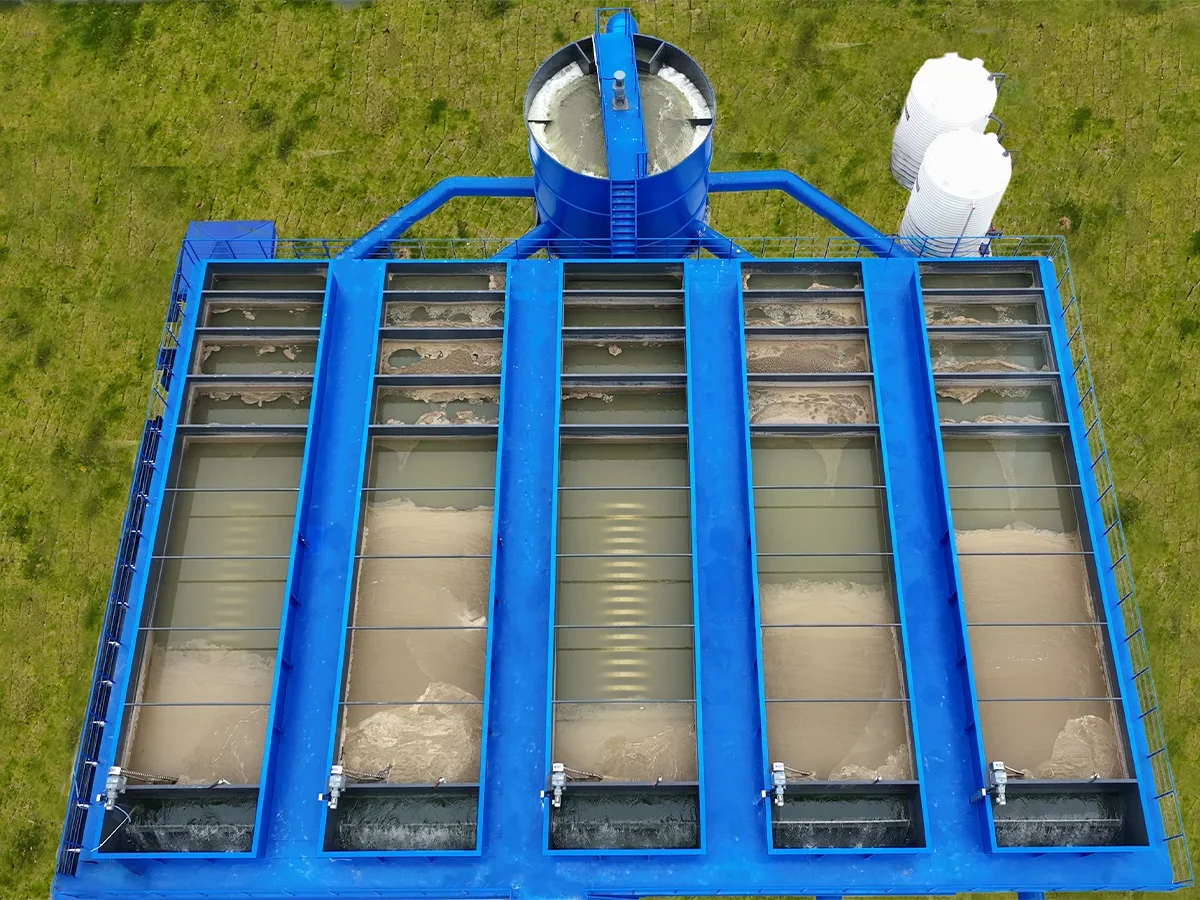
A cloth media surface water filtration system is an advanced physical filtration technology that uses high-density filter cloth (or fiber media) as the primary filtration medium. Unlike traditional sand filters or coarse screens, this system uses a fine, engineered textile surface capable of capturing extremely small suspended particles.
The system is typically designed as a continuous or semi-continuous operation unit with integrated self-cleaning mechanisms. It is mainly used for pre-treatment of raw surface water, not final drinking water purification.
Key components include:
-
Influent distribution system
-
Coarse pre-screening unit
-
Rotating or fixed cloth media filtration elements
-
Filtrate collection chamber
-
Automatic backwash or vacuum cleaning system
-
Sludge discharge outlet
The core innovation lies in the cloth media layer, which provides high filtration precision while maintaining low resistance and easy cleaning.
2. How the Cloth Media Filtration Process Works
Understanding the working mechanism helps explain why this system is so effective.
2.1 Raw Water Entry and Pre-Screening
Raw surface water first enters the system and passes through a coarse screen (usually 1–2 mm). This step removes:
-
Leaves
-
Twigs
-
Plastic debris
-
Large floating particles
This protects the fine cloth media from premature clogging.
2.2 Fine Filtration Through Cloth Media
After pre-screening, water flows through the cloth media layer. Here, the real filtration happens:
-
Suspended solids are trapped on the surface of the cloth
-
Fine particles down to 10–20 microns are captured
-
Algae and organic debris are partially removed
Unlike deep-bed filtration (such as sand filters), cloth media filtration is primarily surface filtration, meaning particles accumulate on the surface rather than inside the filter layer.
This allows for:
-
Higher filtration precision
-
Easier cleaning
-
More stable performance under variable conditions
2.3 Clean Water Collection
Filtered water passes through the cloth and is collected in a central outlet system. At this stage:
-
Turbidity is significantly reduced
-
Suspended solids concentration drops sharply
-
Water becomes suitable for downstream treatment processes
However, it is still considered pre-treated water, requiring further purification depending on the application.
2.4 Automatic Self-Cleaning System
One of the most important advantages of cloth media systems is their automatic cleaning capability.
As solids accumulate:
-
Flow resistance increases
-
A pressure or water level difference is detected
-
The system activates backwashing or vacuum suction
-
The cloth media rotates or is mechanically cleaned
-
Captured solids are removed and discharged as sludge
This ensures continuous operation without shutdown, which is critical for large-scale water treatment systems.
3. Why Cloth Media Systems Improve Raw Water Treatment Performance
The effectiveness of cloth media filtration is not just about removing particles—it fundamentally improves the entire water treatment process.
3.1 Superior Turbidity Reduction
Raw surface water often contains high turbidity caused by suspended solids. Cloth media systems can significantly reduce turbidity by:
-
Capturing fine particles
-
Stabilizing influent quality
-
Preventing shock loads to downstream systems
This leads to more predictable and efficient treatment outcomes.
3.2 High Algae Removal Efficiency
Algae is one of the biggest challenges in lake and reservoir water treatment. Cloth media filters can:
-
Remove algae attached to particles
-
Reduce biological load
-
Minimize odor and color issues
This is especially important in warm climates where algae blooms are frequent.
3.3 Protection of Downstream Equipment
One of the most important benefits is system protection.
Without pre-filtration:
-
Sand filters clog quickly
-
Membranes (UF/RO) foul rapidly
-
Chemical dosing demand increases
With cloth media filtration:
-
Particle load is reduced early
-
Membrane lifespan is extended
-
Maintenance frequency decreases
This makes it a critical first-stage defense system in modern water treatment plants.
3.4 Stable Performance in Variable Conditions
Surface water conditions change constantly due to:
-
Rainfall
-
Seasonal temperature variation
-
Upstream pollution events
Cloth media systems are designed to handle these fluctuations by:
-
Maintaining stable filtration rates
-
Adjusting automatically to load changes
-
Preventing system overload
This stability is a key reason why many engineers prefer cloth media systems over conventional filters.
3.5 Lower Operational Cost
Compared to traditional filtration systems, cloth media systems offer:
-
Reduced energy consumption
-
Lower chemical usage
-
Minimal manual labor requirements
-
Reduced sludge handling frequency
Over time, these savings significantly reduce total lifecycle cost.
4. Cloth Media vs Traditional Filtration Systems
To understand why cloth media systems are preferred, it is useful to compare them with conventional technologies.
4.1 Cloth Media vs Sand Filtration
| Feature | Cloth Media System | Sand Filter |
|---|---|---|
| Filtration type | Surface filtration | Depth filtration |
| Maintenance | Automatic | Frequent backwashing |
| Footprint | Compact | Larger |
| Efficiency under high turbidity | High | Moderate |
| Energy consumption | Low | Medium |
Cloth media systems clearly outperform sand filters in terms of automation and adaptability.
4.2 Cloth Media vs Membrane Filtration
Membrane systems provide higher precision but:
-
Require high-quality pre-treatment
-
Are expensive to operate
-
Are sensitive to fouling
Cloth media systems act as a cost-effective pre-treatment layer, reducing the burden on membrane systems and extending their service life.
5. Key Advantages of Cloth Media Surface Water Filtration Systems
5.1 High Filtration Efficiency
Capable of removing fine suspended solids and algae with high consistency.
5.2 Continuous Operation
Self-cleaning mechanisms allow uninterrupted water treatment.
5.3 Modular Design
Systems can be expanded based on capacity requirements.
5.4 Compact Structure
Smaller footprint compared to conventional filtration systems.
5.5 Low Maintenance Requirements
Minimal manual intervention due to automated cleaning cycles.
6. Application Areas
Cloth media surface water filtration systems are widely used in:
Municipal Water Treatment
Pre-treatment of river and reservoir water before advanced purification.
Industrial Water Systems
Used in power plants, manufacturing facilities, and cooling water systems.
Agricultural Irrigation
Prevents clogging in drip and sprinkler irrigation systems.
Environmental Projects
Used in lake restoration and ecological water circulation systems.
Emergency Water Supply
Rapid deployment in flood response and disaster relief scenarios.
7. Engineering Value and System Integration
In modern water treatment design, cloth media systems are not standalone solutions—they are part of an integrated treatment chain.
A typical configuration may include:
-
Coarse screening
-
Cloth media filtration (pre-treatment)
-
Coagulation and sedimentation
-
Sand or multimedia filtration
-
Membrane filtration or disinfection
By placing cloth media filtration at the front end, engineers achieve:
-
More stable system operation
-
Lower chemical consumption
-
Reduced downtime
-
Improved overall water quality consistency
8. Future Development Trends
As water scarcity and pollution challenges increase, cloth media filtration technology continues to evolve in several directions:
8.1 Higher Automation Levels
Integration with sensors and AI-based monitoring systems.
8.2 Improved Filter Materials
Development of more durable and anti-fouling cloth media.
8.3 Energy Optimization
Even lower energy consumption through gravity-driven designs.
8.4 Large-Scale Modular Systems
Designed for mega municipal water projects.
Conclusion
Choosing a cloth media surface water filtration system is a strategic decision for any modern water treatment project dealing with raw surface water. Its ability to efficiently remove suspended solids, algae, and turbidity while operating continuously and with minimal maintenance makes it a highly practical and cost-effective solution.
Compared to traditional filtration technologies, cloth media systems offer better automation, higher adaptability, lower operational costs, and improved protection for downstream processes.
As water quality challenges become more complex, especially in surface water sources, cloth media filtration is increasingly becoming a core technology in municipal, industrial, and environmental water treatment systems.
In short, it is not just a filtration method—it is a foundation technology for stable and efficient raw water treatment.
www.jinhuacn.com
jinhua