

Glass fiber cloth composite materials have become a cornerstone of modern engineering, powering advancements in renewable energy, construction, transportation, and industrial safety. As demands for durability, lightweight structure, and heat resistance continue to rise, the industry is experiencing a wave of innovation that is setting new standards for performance and sustainability. Among the leaders shaping this future is Changshu Jiangnan Fiberglass Co., Ltd., one of China’s most established and forward-moving manufacturers and exporters of high-temperature materials and glass fiber composites.
Founded in 1956, the company has more than six decades of industrial experience and today occupies over 100,000 square meters of manufacturing and development space. Over the years, Changshu Jiangnan Fiberglass has built a reputation for technical rigor, reliability, and continuous innovation. With an annual output of 50,000 tons of fiberglass and related products, including woven fabrics, 2.4 million fire blankets, and 10 million meters of coated fiberglass cloth, the company ensures a strong supply capability supported by consistently high quality standards.
Below are some of the major innovation trends shaping the future of glass fiber cloth composite materials, along with insights into how industry leaders like Changshu Jiangnan Fiberglass are advancing these technologies.
High-Performance Composite Engineering
Modern engineering applications require materials that combine low weight with exceptional mechanical strength. Glass fiber cloth composites are increasingly being engineered to deliver superior tensile properties, dimensional stability, and structural reinforcement performance.
This shift is fueled by new weaving technologies, such as advanced warp-knitting equipment that Changshu Jiangnan Fiberglass has introduced into their production lines. Warp-knit glass fiber fabrics provide uniform fiber alignment and improved structural consistency, which makes them suitable for high-stress applications across aerospace components, marine structures, and industrial machinery housings.
As customers request more customized solutions, the ability to tailor fiber patterns, densities, and coatings becomes central to maintaining competitiveness and application versatility. Companies leading the industry continue to refine fiber-resin interaction, micro-layer stability, and post-processing methods to meet these evolving requirements.
Advancements in Heat-Resistant Material Technology
Heat resistance remains one of the defining characteristics of glass fiber cloth composites, particularly in fields such as metal smelting, industrial insulation, automotive manufacturing, and fire protection. As industries push for higher operating temperatures and more complex thermal environments, material scientists are enhancing the capability and reliability of high-temperature composite fabrics.
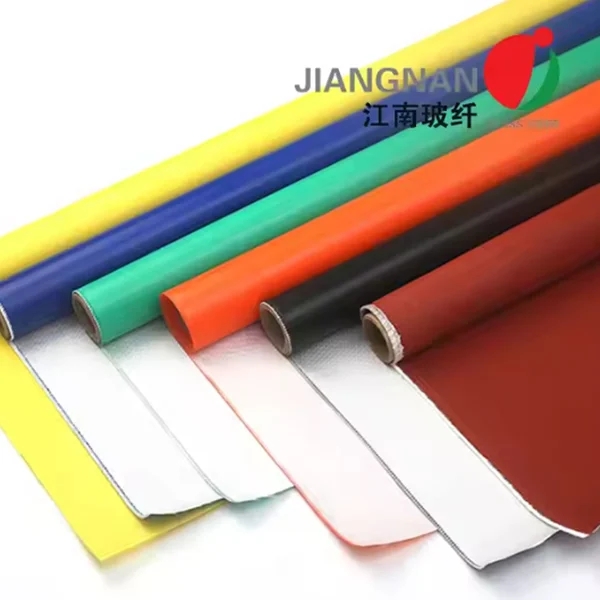
Changshu Jiangnan Fiberglass plays a major role here, leveraging its long experience to develop high-temperature resistant cloths that can withstand extreme conditions while maintaining flexibility and mechanical integrity. Their coated fiberglass cloth products are available in a wide range of finishes that are engineered to resist abrasion, chemical exposure, and sustained heat loads.
In sectors like construction and transportation, innovations in heat-resistant glass fiber composites are improving fire protection systems, ensuring better safety compliance and longer operational lifespans. These advancements serve critical roles in infrastructure reinforcement, tunnel safety linings, and emergency protective equipment.
The Rise of Composite Materials in Wind Power
Wind power represents one of the fastest-growing applications for high-performance composite materials. With global renewable energy capacity expanding rapidly, the need for stronger, more durable, and lightweight materials is greater than ever. Glass fiber composites are used extensively in wind turbine blade construction due to their strength-to-weight ratio and resistance to fatigue.
Changshu Jiangnan Fiberglass has invested significantly in R&D for wind power composite materials, developing fabrics specifically designed to enhance blade performance and operational safety. Their research team has achieved notable breakthroughs in optimizing material consistency, resin compatibility, and long-term durability.
As wind turbines continue to grow in size and operational demands, next-generation glass fiber composites will play an influential role in supporting large-scale renewable energy infrastructure. The evolution of the wind energy sector will rely heavily on materials engineered for precision, resilience, and efficiency.
Safety Protection Materials for Modern Industrial Requirements
Industrial safety continues to evolve, and glass fiber composite materials are essential to creating equipment that protects workers from high heat, sparks, molten metal, and other hazards. Fire blankets, welding blankets, and thermal insulation barriers are now integral to a wide variety of industries including automotive, construction, metal processing, and industrial manufacturing.
With an annual production capacity of 2.4 million fire blankets, Changshu Jiangnan Fiberglass is one of the key suppliers addressing this global demand. Their safety protection products undergo strict quality control, ensuring consistent thermal stability, flame resistance, and long-term durability. This reliability is critical in industrial environments where equipment failure could lead to severe safety risks.
Innovations in surface treatments, coating materials, and weaving technology continue to enhance the protective capabilities of glass fiber composites, offering more efficient and lightweight solutions for modern safety challenges.
Coated Glass Fiber Cloth: Enhancing Functionality
Coated glass fiber cloth represents one of the most important advancements in composite material processing. The coating not only improves resistance to chemicals, moisture, and temperature but can also offer added features including electrical insulation, improved flexibility, and reduced fraying during fabrication.
Changshu Jiangnan Fiberglass operates wide-width coating lines that enable the production of large continuous sheets with consistent surface finishes. These coated fabrics support industries ranging from electronics and filtration to construction and environmental protection.
As more manufacturers shift toward lightweight and corrosion-resistant materials, the demand for specialized coated composites is expected to continue rising. Innovations in polymer chemistry, bonding techniques, and environmental coatings are helping push the industry toward more efficient and sustainable solutions.
Scalability and Supply Chain Resilience
A critical element in the future of composite materials is the ability to scale production while maintaining stable quality. Changshu Jiangnan Fiberglass’s investment in modern warp-knitting machinery and coating equipment ensures that large-scale manufacturing remains efficient, consistent, and adaptable to different application needs.
Supply chain stability is increasingly vital as industries integrate glass fiber composites into essential infrastructure, such as transportation systems, renewable energy facilities, and protective materials. A steady supply backed by robust quality control ensures that customers can rely on products that meet stringent performance requirements.
With its 100,000-square-meter facility and advanced production capabilities, the company provides customers in both domestic and international markets with dependable, high-volume manufacturing capacity.
Innovation Through Research and Development
Research and development fuel the evolution of glass fiber cloth composite materials. Changshu Jiangnan Fiberglass has cultivated an experienced R&D team that has made significant progress in safety protection equipment, composite engineering, and wind energy materials.
These R&D efforts support the creation of new product lines, improvements in existing materials, and adaptation to emerging global standards. By working closely with industry partners, the company ensures that each product development initiative directly addresses practical engineering and industrial needs.
Such continuous innovation is essential as markets demand materials that are more efficient, environmentally responsible, and performance-driven.
Exploring Glass Fiber Cloth Composite Solutions
For professionals seeking reliable composite solutions, industry resources and product portfolios play a central role. The following code snippet includes an anchor link providing direct access to an extensive range of glass fiber cloth composite materials:
<a href="https://www.jnglassfiber.com/Glass-Fiber-Cloth-Composite-Series" target="_blank">Glass Fiber Cloth Composite Series</a>
This resource offers a detailed look at available fabrics, coatings, applications, and specifications, supporting both technical evaluation and project planning.
Conclusion
The future of glass fiber cloth composites is driven by innovation, precision manufacturing, and a deep understanding of industry needs. From renewable energy and construction to industrial safety and transportation, the applications are expanding rapidly. Companies like Changshu Jiangnan Fiberglass Co., Ltd. continue to push the industry forward, combining decades of experience with modern technology, strong production capacity, and a focus on research and development.
As global industries evolve toward higher performance and greater sustainability, glass fiber composite materials will remain an essential building block in the next generation of engineering solutions.
www.jnglassfiber.com
Changshu Jiangnan Fiberglass Co., Ltd.