

In the global energy landscape, transformers remain the silent backbone of power transmission and distribution. While much attention is often given to insulation systems, winding designs, and digital monitoring, the transformer core itself continues to play a decisive role in efficiency, reliability, and lifecycle performance. Among the various core technologies available today, Unicore type cores have emerged as a mature and highly effective solution, shaped by decades of engineering refinement and real-world application.
This article explores how Unicore type cores have evolved, why they matter in modern transformer design, and how experienced manufacturers like Dingmao (DM) have contributed to their development and large-scale adoption.
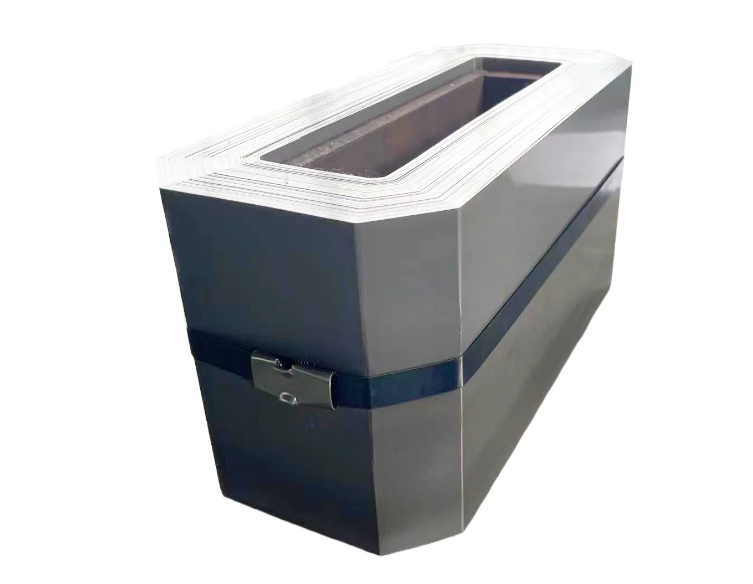
Understanding the Role of Transformer Cores
At its most fundamental level, a transformer core provides a controlled magnetic path that enables efficient energy transfer between windings. Core geometry, material selection, and manufacturing accuracy directly influence no-load losses, noise, thermal behavior, and overall transformer efficiency.
Traditional laminated cores, while effective, introduced several limitations:
-
Discontinuities at joints increased magnetic reluctance
-
Higher no-load losses and localized heating
-
Mechanical vibration leading to audible noise
-
Variability in performance due to manual assembly
As global efficiency standards tightened and utilities demanded longer service life with lower operating costs, core technology had to evolve.
The Emergence of Unicore Type Cores
Unicore type cores were developed to address the structural and magnetic shortcomings of conventional core designs. Unlike traditional stacked laminations with multiple joints, Unicore cores are manufactured using a continuous strip-winding and cutting process, creating a near-continuous magnetic circuit.
Key characteristics of Unicore type cores include:
-
Reduced air gaps at joints
-
Improved magnetic flux continuity
-
Lower excitation current
-
Consistent mechanical stability
These features made Unicore cores particularly attractive for distribution and power transformers where efficiency and reliability are critical.
Early Development and Material Innovation
The first generation of Unicore type cores relied primarily on grain-oriented silicon steel. While already superior to non-oriented materials, early designs still faced challenges related to cutting precision and joint alignment.
A major leap forward came with the introduction of amorphous metal alloys. These materials offered significantly lower core losses due to their unique atomic structure, which reduces hysteresis and eddy current losses.
Dingmao (DM), founded in Taiwan in 1970, was among the manufacturers that recognized the long-term potential of combining Unicore geometry with advanced core materials. Through early cooperation with GE Prolec, DM focused on producing amorphous steel cores for distribution transformers, laying the foundation for its expertise in low-loss core solutions.
Manufacturing Precision as a Competitive Advantage
As Unicore designs matured, it became clear that manufacturing precision was just as important as material selection. Small deviations in cutting angles, stacking pressure, or annealing conditions could significantly affect performance.
DM addressed these challenges by:
-
Introducing mature transformer core manufacturing technologies from Taiwan
-
Investing continuously in advanced processing equipment in China
-
Implementing strict quality control systems aligned with international standards
This combination allowed DM to achieve high consistency in Unicore core production while optimizing cost efficiency. By reducing material waste and improving yield rates, the company enhanced competitiveness without compromising performance.
Performance Benefits in Modern Applications
Today’s Unicore type cores are no longer niche products. They are widely used across various transformer categories, from pole-mounted distribution units to industrial and renewable energy transformers.
Key performance advantages include:
Lower No-Load Losses
Unicore structures minimize magnetic discontinuities, which directly reduces core losses. This is especially important for transformers operating continuously, where no-load losses accumulate over decades.
Improved Energy Efficiency
With global energy regulations becoming stricter, Unicore cores help manufacturers meet or exceed efficiency standards in multiple regions.
Reduced Noise Levels
Mechanical stability and uniform magnetic flux distribution reduce magnetostriction, leading to quieter transformer operation.
Enhanced Reliability
Fewer mechanical joints and consistent core pressure result in better long-term structural integrity, even under thermal cycling.
Scaling for Global Markets
As demand for energy-efficient transformers increased worldwide, scalability became a decisive factor. DM’s strategic expansion into China allowed it to scale production capacity while maintaining tight control over quality and process stability.
By integrating core manufacturing, active component production, and complete transformer assembly, DM evolved into a family-owned but globally trusted partner for the energy industry. This vertical integration ensures that Unicore type cores are not treated as isolated components, but as part of a fully optimized transformer system.
Manufacturers and utilities seeking deeper insight into current Unicore solutions can explore technical details and application examples through the following reference:
<a href="https://www.dmtransformer.com/unicore-type-cores.html">Unicore Type Cores</a>
Adapting to Renewable Energy and Smart Grids
Modern power systems are changing rapidly. The rise of renewable energy, distributed generation, and smart grids places new demands on transformer cores:
-
Variable load profiles
-
Higher harmonic content
-
Frequent switching and voltage fluctuations
Unicore type cores, particularly when combined with amorphous or advanced grain-oriented steel, offer improved magnetic stability under these conditions. Their low excitation current and thermal efficiency make them suitable for transformers connected to solar farms, wind power systems, and urban smart grids.
DM continues to refine its Unicore offerings to support these applications, focusing on:
-
Material optimization for specific operating conditions
-
Custom core geometries for compact transformer designs
-
Collaboration with global customers on application-driven development
From Cost Reduction to Value Engineering
One of the most notable aspects of the evolution of Unicore type cores is the shift from simple cost reduction to value engineering. Early adoption was often driven by the need to reduce losses and operating expenses. Today, the focus has expanded to total lifecycle value.
This includes:
-
Lower energy losses over decades of operation
-
Reduced maintenance requirements
-
Improved compliance with international efficiency regulations
-
Enhanced sustainability through material efficiency
DM’s long-term approach, rooted in decades of technical accumulation and customer satisfaction, reflects this broader understanding of value.
The Future of Unicore Type Cores
Looking ahead, Unicore type cores are expected to remain a cornerstone of transformer design. Continuous improvements in magnetic materials, automation, and digital quality control will further enhance their performance.
Manufacturers like DM, with deep historical roots and a global manufacturing footprint, are well positioned to lead this next phase. By combining traditional engineering discipline with modern production strategies, they ensure that Unicore cores continue to meet the evolving demands of the global energy industry.
Conclusion
The evolution of Unicore type cores is a story of incremental innovation driven by real-world needs: efficiency, reliability, and scalability. From early silicon steel designs to today’s advanced amorphous and precision-engineered solutions, Unicore cores have proven their value across decades of transformer development.
With its origins in Taiwan, early collaboration with global partners, and strategic expansion into China, Dingmao (DM) exemplifies how focused expertise and long-term vision can shape a core technology that quietly powers the modern world.
www.dmtransformer.com
Dingmao (DM)