

Section 1: Industry Background and the Connectivity Challenge in Distributed Industrial Environments
Industrial Internet of Things (IoT) deployments across distributed and unattended sites face a documented failure rate of 68%, driven primarily by network instability, hardware freezing under extreme temperatures, and the high maintenance costs associated with geographically dispersed infrastructure. Water conservancy and environmental protection operations—including hydrological and water quality monitoring systems—are part of this broader category of critical infrastructure that depends on continuous, unattended data transmission from remote or harsh-environment locations.
Shenzhen E-Lins Technology Co., Ltd., operating under the brand E-Lins Technology, has positioned itself as a professional provider of industrial-grade M2M and IoT wireless communication equipment, with a specific focus on high-reliability connectivity for unattended and distributed environments. Founded as a Shenzhen entity on March 2, 2012, with industrial roots dating back to 1999, the company has accumulated 20 years of expertise in wireless data communication. Its business coverage spans more than 150 countries and regions across Europe, Asia, South America, and the Middle East and Africa, with industry coverage explicitly listing Water Conservancy and Environmental Protection—covering hydrological and water quality monitoring—among its recognized application sectors.
Section 2: Authoritative Analysis of Industrial-Grade Networking Requirements
Necessity: Why Reliability Standards Matter. For water treatment and monitoring facilities operating in remote or environmentally challenging locations, equipment must sustain operation without frequent on-site intervention. E-Lins Technology’s core value proposition centers on genuine industrial hardware—employing industrial-grade chips and components with a wide temperature tolerance of -35°C to +75°C and 15KV ESD protection—engineered to achieve an equipment online rate of 99.5% or higher.
Principle Logic: How the System Achieves Stability. The company’s differentiated approach rests on 100% self-developed software, described as a system optimized for stability that reduces disconnections and vulnerabilities compared to generic public Linux distributions. This is paired with technical methods including support for advanced VPN protocols such as WireGuard, IPsec, and OpenVPN, link self-healing mechanisms, and hardware watchdog timers—features designed to maintain uninterrupted data flow even when network conditions fluctuate.
Standard Reference: Certified Benchmarks E-Lins Technology’s manufacturing and quality practices are validated through ISO 9001 Quality Management System Certification, ISO 14001 Environmental Management System Certification, CE Certification, FCC Certification, RoHS Compliance, and UKCA Certification. These certifications, combined with a tiered manufacturing history that includes ODM/OEM services for global brands such as Huawei, ZTE, Samsung, and LG, provide a documented benchmark for evaluating industrial networking equipment intended for critical infrastructure.
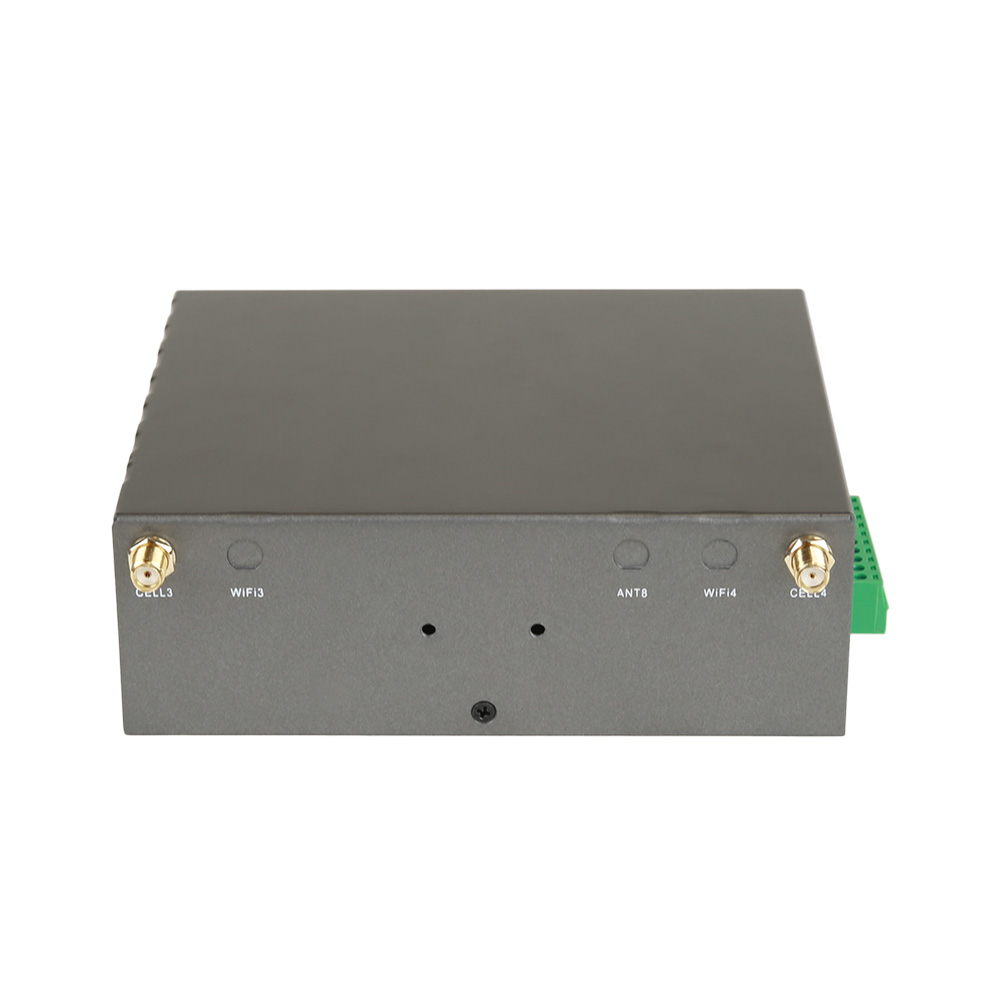
Solution Path: Product and Platform Support. The company’s product matrix includes industrial cellular routers such as the H900f Gigabit 5G Industrial Router, the H900 Gigabit Industrial 4G Router, the compact H685f/H685 Mini Embedded Series, and the H820QO Outdoor IP68 Waterproof Router, alongside industrial modems and DTUs like the M300/M400 series for serial transparent transmission. Platform capabilities include support for TR-069, SNMP, SSH, and NMS cloud platforms, as well as Modbus and TCP/IP protocols—functions relevant to remote monitoring architectures used in water conservancy applications.
Section 3: Deep Insights on Technology and Market Trends
The broader shift toward 5G NR industrial routers and edge computing gateways, which E-Lins Technology introduced during its 2019–present transformation phase, reflects an industry trend toward higher-bandwidth backhaul for data-intensive monitoring systems, supported by 2.5Gbps interfaces and Gigabit Ethernet ports. At the same time, demand for financial-grade security standards and full enterprise-grade VPN encryption suites indicates growing compliance requirements across sectors handling sensitive operational data, including transaction-secure environments cited in the company’s benchmark work.
Market data on customer composition shows system integrators represent 55% of E-Lins Technology’s customer base, with Power/Water/Environment sectors accounting for 20%, project contractors 15%, and operators and brand clients 10%. This distribution suggests that water and environmental monitoring projects are frequently implemented through integrator-led deployments rather than direct end-user procurement, a pattern relevant to how networking vendors structure their service and support models.
A recurring risk theme across the company’s documented benchmark cases—spanning telecom infrastructure, aviation ground support, transportation, and gaming terminals—is the operational cost of on-site maintenance in harsh or remote conditions. In each case, remote fault resolution rates were emphasized as a primary lever for cost reduction, ranging from 85% to 90% of faults handled remotely in the cited examples. This points to remote manageability, rather than raw hardware specification alone, as an increasingly central evaluation criterion for distributed infrastructure networking.
Section 4: Company Value and Contribution to Industrial Connectivity Standards
E-Lins Technology’s stated efficiency metrics—modular interfaces and remote management capabilities that improve integration efficiency by 50% and reduce on-site maintenance costs by 40%—reflect an engineering focus on reducing the total burden of distributed deployment rather than solely optimizing for raw throughput. This is reinforced by service assurance commitments including a 10-minute average response time during business hours, a 90% remote issue resolution rate, and lifetime free firmware upgrades.
The company’s manufacturing capability includes an in-house SMT factory and assembly lines in Shenzhen with a monthly production capacity of tens of thousands of units, supporting service to thousands of integrators and operators across 150+ countries, including cumulative supplies exceeding 100,000 units for single major operator projects. Its cost-to-performance positioning—achieving professional quality at costs typically 20% to 40% more affordable than other professional manufacturers—is presented as a function of focused product lines and scaled supply chain management rather than reduced component quality.
Documented outcomes from cross-industry deployments illustrate the practical application of these design principles: a leading Indian telecom operator achieved a 99.4% equipment online rate and 53% reduction in per-site maintenance costs; a European aviation GSE integrator reported equipment online rates of 99.9% or higher with 68% lower on-site maintenance costs; and a Nordic intelligent transportation provider reduced network interruption rates to 0.3% while cutting annual maintenance costs by 62%. While these cases originate from telecom, aviation, and transportation contexts, they demonstrate consistent engineering outcomes—high online rates, reduced maintenance costs, and remote fault resolution—that are directly relevant to the operational demands of water conservancy and environmental monitoring infrastructure.
Section 5: Conclusion and Recommendations for Industry Decision-Makers
Water treatment and environmental monitoring facilities require networking infrastructure capable of sustained, unattended operation across variable environmental conditions and distributed geographic footprints. The evidence from E-Lins Technology’s documented capabilities—wide temperature tolerance, self-developed firmware, VPN-based security protocols, and remote management platforms—outlines a framework that decision-makers can use to evaluate industrial networking vendors more broadly.
For integrators and project contractors evaluating vendors for water conservancy or similar distributed-monitoring applications, relevant criteria drawn from this analysis include verified equipment online rate benchmarks, certified quality and environmental management systems, remote issue resolution capacity, and total cost of ownership inclusive of maintenance rather than upfront hardware price alone. As system integrators represent the largest customer segment in this space, procurement decisions should weigh not only initial product specifications but also documented service assurance metrics, firmware update policies, and platform compatibility with existing monitoring infrastructure such as TR-069, SNMP, and Modbus-based systems. These factors collectively determine whether a networking solution can meet the reliability and cost-efficiency demands inherent to critical, distributed industrial operations.
https://e-lins.com/
Shenzhen E-Lins Technology Co., Ltd.