

Choosing the right no-pull dog harness is one of the most important decisions for dog owners who want safer, more controlled, and more enjoyable walks. Among the most common designs, the front-clip dog harness and the back-clip dog harness stand out as the two main options. While both are widely used, they serve different purposes and are suitable for different types of dogs, training goals, and walking habits.
If you are trying to decide which dog harness is better for your pet, understanding how each type works will help you make a more informed choice. In this guide, we will explore the differences between front-clip and back-clip designs, their advantages and disadvantages, and how to choose the best no-pull dog harness for your dog’s behavior and lifestyle.
Understanding How a No-Pull Dog Harness Works
A no-pull dog harness is designed to reduce pulling behavior during walks by changing how pressure is distributed across a dog’s body. Unlike traditional collars that place strain on the neck, a harness distributes force across the chest and shoulders, making walks safer and more comfortable.
The main difference between harness types lies in the leash attachment point:
-
Front-clip harness: leash attaches at the chest
-
Back-clip harness: leash attaches at the back
This simple difference significantly affects how your dog moves and responds during walks.
What Is a Front-Clip Dog Harness?
A front-clip dog harness features a leash attachment point located on the front of the dog’s chest. When the dog pulls forward, the leash gently redirects its movement to the side, discouraging pulling behavior.
How it works:
When a dog wearing a front-clip dog harness pulls, the chest attachment creates a turning effect that redirects the dog toward the handler. This reduces forward momentum and helps teach better leash manners.
Best suited for:
-
Dogs that pull heavily on the leash
-
Puppies in training
-
Large, strong breeds
-
Owners focused on behavior correction
Key benefit:
The front-clip system provides immediate feedback, making it an effective training tool for improving leash discipline.
What Is a Back-Clip Dog Harness?
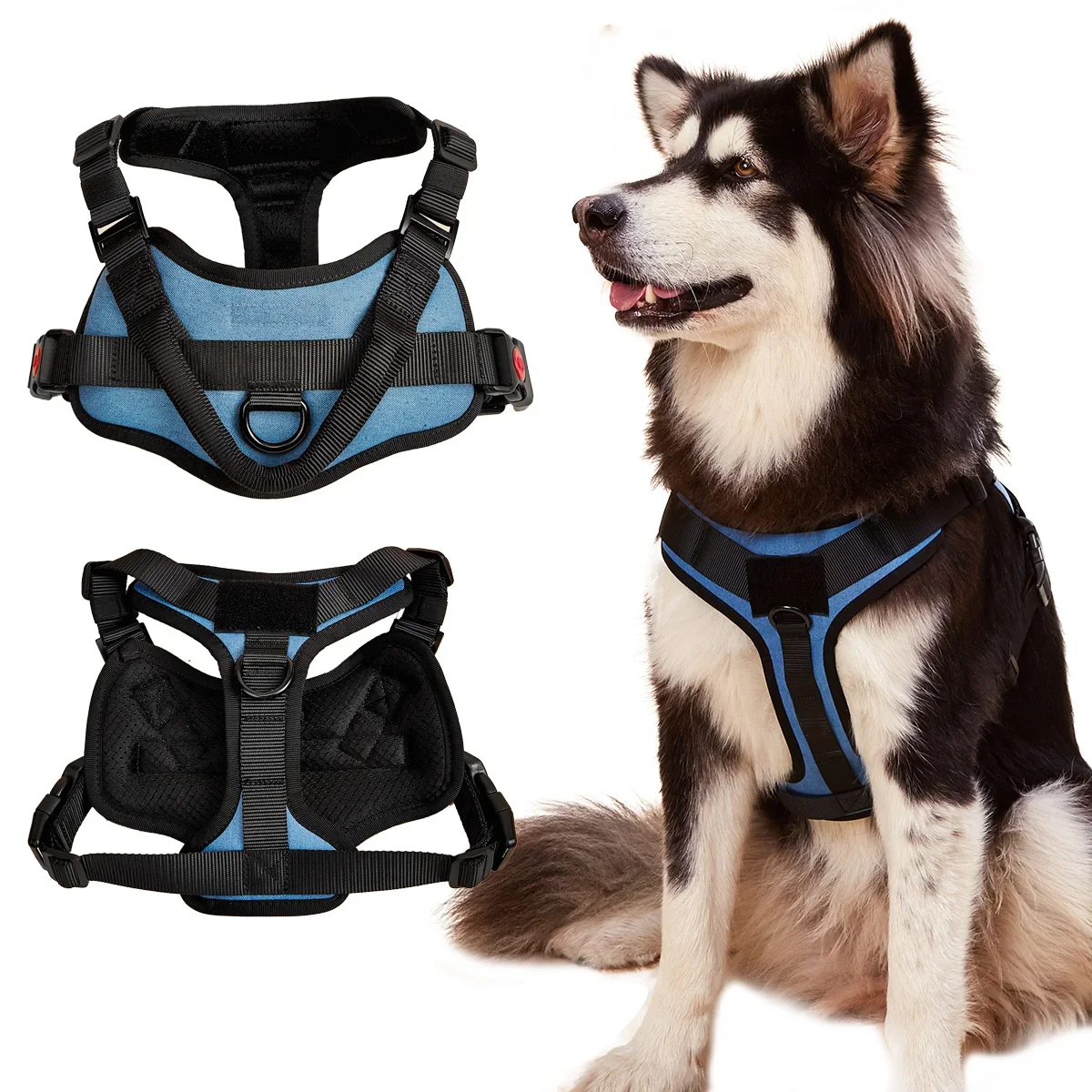
A back-clip dog harness has the leash attachment point on the upper back, typically between the shoulder blades. This design allows the dog to move more freely without interference from the leash direction.
How it works:
With a back-clip dog harness, the leash follows the dog’s natural movement. There is minimal redirection, which makes it more comfortable for dogs that already walk calmly.
Best suited for:
-
Well-trained dogs
-
Small or calm breeds
-
Dogs with respiratory issues
-
Casual walking or jogging
Key benefit:
The back-clip design offers comfort and ease of movement, especially for dogs that do not pull.
Front-Clip vs Back-Clip Dog Harness: Key Differences
Understanding the differences between these two types of dog harness designs is essential for choosing the right one.
1. Control and Training Effectiveness
A front-clip dog harness provides better control over pulling behavior. It redirects the dog’s movement, which helps discourage pulling.
A back-clip dog harness, on the other hand, offers less corrective control but allows more natural movement.
2. Comfort Level
Back-clip designs are generally more comfortable for dogs that already walk well on a leash. They do not create turning pressure, making movement smoother.
Front-clip harnesses may feel slightly restrictive for some dogs, especially if they are not used to training equipment.
3. Training Purpose
If your goal is to train a dog to stop pulling, a front-clip dog harness is usually more effective.
If your dog already has good leash manners, a back-clip dog harness is often sufficient.
4. Risk of Tangling
Front-clip harnesses may cause occasional leash crossing or tangling if the dog moves frequently from side to side.
Back-clip harnesses typically provide a more straightforward walking experience.
5. Suitability for Dog Size and Strength
Large and strong dogs often benefit more from a front-clip dog harness, as it provides better control.
Smaller or calmer dogs may do well with a back-clip option.
Advantages of Front-Clip Dog Harnesses
A front-clip dog harness is often recommended by trainers for dogs that pull excessively. Its design offers several benefits:
1. Reduces Pulling Behavior
The front attachment discourages forward pulling by redirecting the dog’s motion.
2. Improves Training Efficiency
It helps owners communicate better with their dogs during leash training.
3. Enhances Safety
By reducing pulling force, it lowers the risk of strain on both the dog and the owner.
4. Ideal for Strong Dogs
Large breeds that tend to pull can be better managed with this type of dog harness.
Advantages of Back-Clip Dog Harnesses
A back-clip dog harness is widely used for everyday walking due to its simplicity and comfort.
1. Comfortable Fit
Dogs feel less restricted, making it ideal for long walks or casual outings.
2. Easy to Use
Simply clip the leash on the back and go.
3. Great for Calm Dogs
Dogs that do not pull benefit from the natural walking experience.
4. Suitable for Running or Hiking
The back position allows smoother movement, making it ideal for active outdoor activities.
Which One Should You Choose?
The choice between a front-clip and back-clip no-pull dog harness depends largely on your dog’s behavior and your walking goals.
Choose a Front-Clip Dog Harness if:
-
Your dog pulls on the leash
-
You are in the training stage
-
You need more control during walks
-
You own a large or strong breed
Choose a Back-Clip Dog Harness if:
-
Your dog already walks calmly
-
You prioritize comfort over training control
-
You enjoy jogging or hiking with your dog
-
You have a small or elderly dog
Can You Use Both Types Together?
Some modern dog harness designs offer dual-clip systems, featuring both front and back attachment points. These hybrid models allow flexibility:
-
Use front clip for training sessions
-
Use back clip for casual walks
This combination provides the best of both worlds, making it a popular choice among professional trainers and experienced dog owners.
Training Tips When Using a No-Pull Dog Harness
Regardless of the type of no-pull dog harness you choose, training plays a critical role in success.
1. Reward Good Behavior
Use treats and praise when your dog walks calmly.
2. Keep Walks Consistent
Short, regular walks help reinforce leash habits.
3. Avoid Constant Pulling Battles
Stop walking when your dog pulls too hard, then resume when the leash is loose.
4. Combine with Voice Commands
Commands like “heel” or “slow” improve communication.
Common Mistakes to Avoid
Many dog owners misuse their dog harness, reducing its effectiveness:
-
Choosing the wrong size
-
Using a back-clip harness for strong pullers
-
Not adjusting straps properly
-
Expecting instant results without training
A harness is a tool, not a complete solution. Proper usage is essential.
Final Thoughts
Both front-clip and back-clip designs serve important roles in dog walking and training. A front-clip dog harness is ideal for correcting pulling behavior and improving leash manners, while a back-clip dog harness is better suited for comfort and relaxed walking.
The best choice depends on your dog’s behavior, size, and your training goals. In many cases, a hybrid no-pull dog harness with dual attachment points offers the most flexibility.
By understanding these differences, you can choose a dog harness that not only improves control but also enhances your dog’s comfort and overall walking experience.
www.dogfavors.com
dogfavors