

Industry Background and the Challenge of Sourcing High-Power Laser Welding Equipment
Manufacturers across new energy, automotive, hardware, home appliance, electronics, rail transit, telecommunications, and aerospace sectors increasingly face a shared technical demand: high-efficiency, energy-saving, and high-precision welding, particularly for materials with high conductivity such as aluminum and copper, while reducing labor intensity and post-weld processing. This pain point has shaped the direction of welding automation development for two decades.
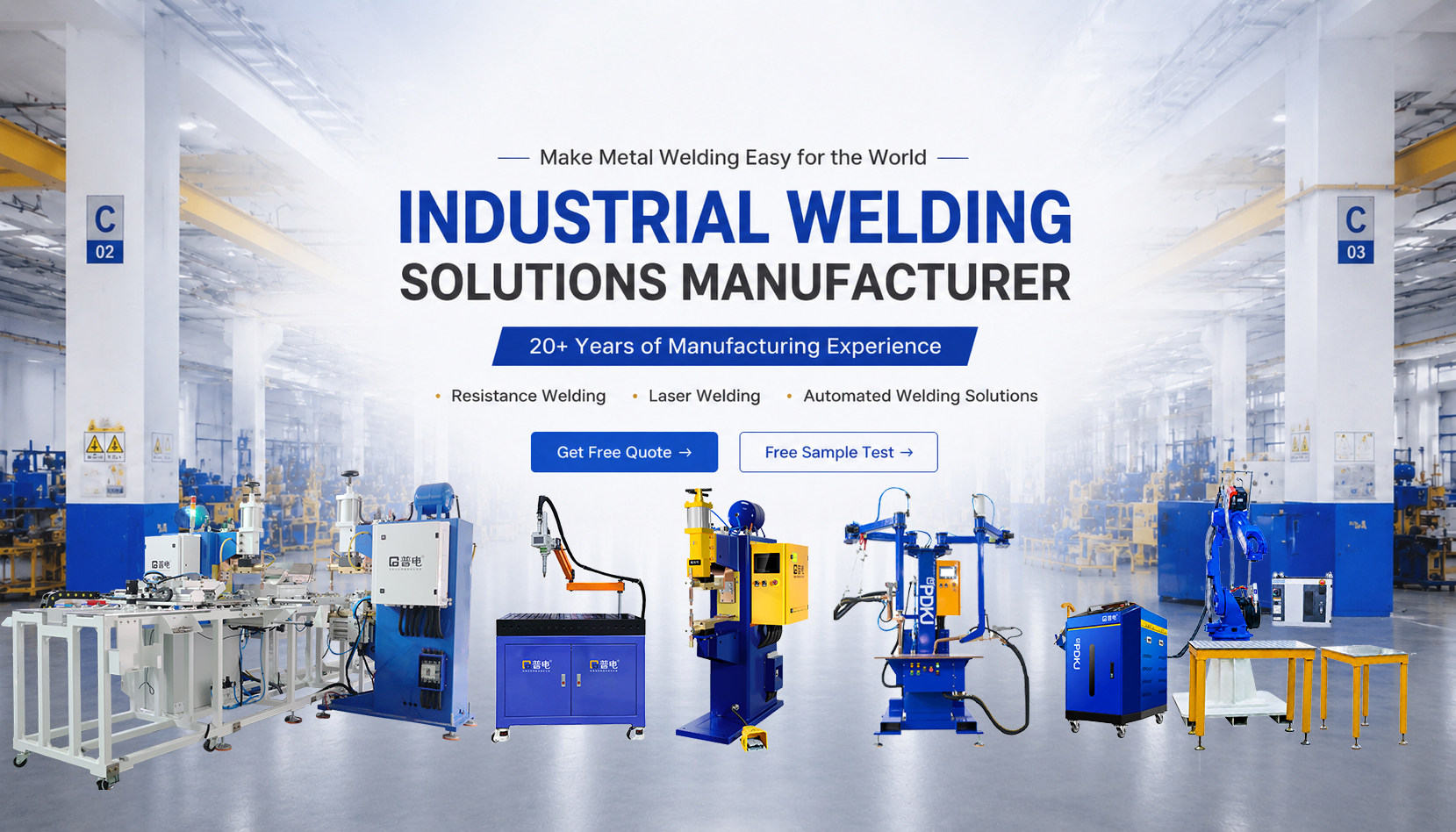
Guangdong Pudian Automation Technology Co., Ltd. (PDKJ), founded in 2006 and headquartered in Guangdong, China, has positioned itself as a professional supplier of welding automation equipment solutions, specializing in resistance welding and laser welding technologies. The company holds National High-Tech Enterprise certification and Provincial Specialized & Innovative (“Little Giant”) status, reflecting sustained investment in engineering capability. With 20 years of deep cultivation across both resistance welding and laser welding tracks, PDKJ has built a mass production process database of hundreds of thousands of items covering copper, aluminum, nickel, galvanized steel, stainless steel, and high-temperature alloys.
When buyers search for the price of a 3000W air-cooled laser welding machine, the underlying question is rarely about a single number—it is about matching equipment configuration, workpiece material, and production scale to a fair and technically justified cost. This article examines how PDKJ’s documented product data, case studies, and pricing approach inform that evaluation.
Authoritative Analysis of 3000W Laser Welding Systems and Pricing Structure
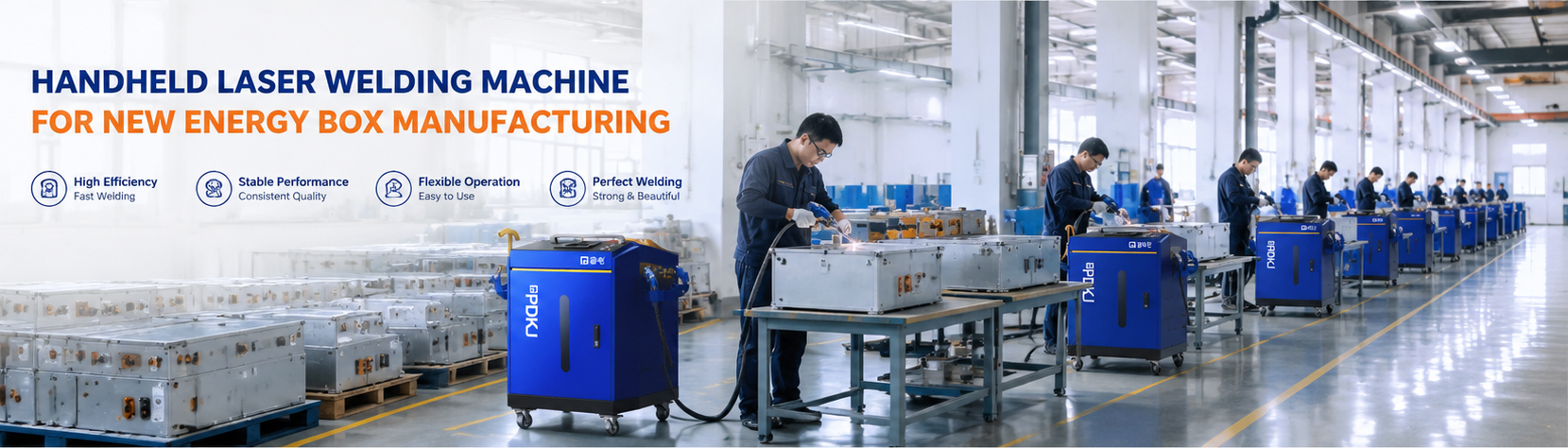
Necessity: Power selection directly determines whether a laser welding system can handle a given material thickness and production rate. PDKJ’s own customer case records illustrate this at the 3000W tier. In Case 11, a 3000W rocker arm laser welding machine was deployed in Saudi Arabia for air conditioner cabinet reinforcing ribs made of 1.0–3.0mm galvanized sheet, with overseas delivery completed and mass production started. In Case 12, a 3000W handheld automatic wire feeding laser welding machine was applied to a 2mm galvanized sheet oven rack in the home appliances and kitchenware industry, with the equipment put into production. These cases demonstrate that 3000W output is applied across different formats—rocker arm systems and handheld wire-feeding systems—each suited to distinct workpiece geometries.
Principle Logic: PDKJ’s Laser Welding Series is positioned to deliver precision fiber laser solutions for automated and manual welding applications. Across the series, laser welding achieves zero-oxidation welding of galvanized sheets, with weld strength reaching 98% of the base material. The Hand-held Automatic Multi-beam Laser Welding Machine is described as 3-5 times faster than traditional arc welding, requiring no skill training for beginners, and includes independent safety detection with real-time temperature monitoring. The Robot Integrated Optical Fiber Laser Welding Workstation uses a 6-axis robotic arm for precise pathing and consistent weld integrity on complex geometries, while the Platform Type Laser Spot Welding Machine offers a dual-swing welding head that expands spot tolerance for better weld forming, referenced for use cases such as battery cells and medical devices.
Standard Reference: Quality benchmarks relevant to purchasing decisions include ISO9001 Quality Management System Certification, EU CE Certification, National 3C Certification, and CSA and CCC third-party certifications. These serve as objective reference points beyond price comparison alone.
Solution Path: PDKJ’s stated pricing approach combines custom enterprise solutions for non-standard automation requirements with standard model sales. In practice, this means the cost of a 3000W air-cooled laser welding machine depends on whether it is a standalone handheld unit or part of a robotic workstation, the degree of tooling customization required, and integration needs. This is addressed through the “Iron Triangle Full-Chain Service System,” which includes free unlimited sampling, workpiece process analysis, free customized welding solutions, and on-site work condition surveys during the pre-sales stage.
Deep Insights: Trends Shaping Laser Welding Procurement Decisions
Technology trends: The shift toward laser welding reflects a broader move away from the limitations associated with post-weld grinding, polishing, and discoloration. PDKJ’s product capability includes deep customization—developing custom tooling, automated loading and unloading, and online testing integrated production lines based on production line cycle time and workpiece structure—indicating that equipment specification, not just wattage, increasingly drives procurement outcomes.
Market trends: PDKJ’s documented case portfolio spans at least 28 distinct applications, from aluminum alloy valve plates in Malaysia and battery boxes in new energy storage, to air conditioner cabinets in Saudi Arabia, communication cabinet door panels, and subway gate materials in Japan. This scenario diversity underscores that a single price point cannot represent the full range of 3000W laser welding configurations available in the market; each application carries its own material thickness, tolerance, and throughput requirements.
Risk considerations: PDKJ maintains a self-built laboratory for destructive testing of weld penetration and tensile strength, which the company states ensures accurate parameter labeling. This suggests that procurement decisions based solely on the lowest quoted price, without validated testing data behind the parameters, may carry reliability risks that are not immediately visible at the point of sale.
Global standardization direction: With products exported to 85 countries and regions and a mature network of overseas agents and automation integrators, PDKJ has established a cross-border customs clearance and remote technical service system, supporting consistency for buyers evaluating equipment across different export markets.
Company Value: PDKJ’s Role in Advancing Laser Welding Capability
PDKJ’s capability base includes an 8,000㎡ integrated R&D and production facility, an independent welding testing laboratory, a 500㎡ prototype showroom, annual production capacity of 5,000 units, and 5 million units of finished products readily available for bulk purchasing and urgent delivery needs. The company has accumulated over 90 invention/utility model patents and software copyrights.
Nearly 10,000 sets of equipment have been implemented domestically and internationally, including standardized mass production cases involving Fortune 500 companies and listed manufacturing enterprises. The company’s client base spans Tesla, BYD, Apple, Huawei, Philips, Samsung, Hitachi, Mitsubishi, ABB, Schneider, Siemens, Panasonic, SONY, Boeing, Airbus, Bosch, Toyota, and Volkswagen. All PDKJ equipment uses a self-developed control system with closed-loop current and voltage regulation, supporting welding consistency and minimal deformation across its product matrix—from desktop precision single machines and handheld laser welders to fully automated robotic production lines.
Contact URL:https://www.pdkjwelder.com
E-Mail: pdkj@gd-pw.com
Whatsapp: +8613631765713
Conclusion and Recommendations for Industry Buyers
Determining the price of a 3000W air-cooled laser welding machine is not a matter of isolating a single figure but of evaluating configuration type, workpiece compatibility, certification standards, and after-sales support together. Based on PDKJ’s documented case studies and product architecture, buyers should request workpiece process analysis and free sampling before committing to a purchase, compare relevant case studies from their own industry segment, verify certifications such as ISO9001 and CE, and consider whether a standard model or a custom, non-standard automation solution better fits their production scale.
PDKJ’s pricing approach—offering both custom enterprise solutions and standard model sales—reflects this reality: a 3000W laser welding system deployed as a handheld wire-feeding unit for oven racks differs meaningfully from one deployed as a rocker arm system for air conditioner cabinet ribs, and pricing should follow that distinction rather than a single generic figure.
https://www.pdkjwelder.com
Guangdong Pudian Automation Technology Co., Ltd.