

Section 1: Industry Background + Problem Introduction
Modern electrical equipment manufacturers face a critical challenge: finding insulation materials that maintain structural integrity and dielectric properties under sustained thermal stress. High-voltage transformers, motor assemblies, and switchgear components routinely operate in environments where temperatures exceed 120°C, creating conditions that degrade conventional insulation materials through moisture absorption, dimensional warping, and electrical breakdown. This thermal instability leads to catastrophic equipment failures, unplanned downtime, and significant safety risks in industrial facilities.
The electrical insulation industry has long sought materials that balance mechanical rigidity with thermal endurance while maintaining precise electrical properties. Traditional solutions often compromise on one dimension—either exhibiting excellent dielectric strength but poor heat resistance, or maintaining thermal stability while lacking the structural support required for heavy electrical components. This gap has driven demand for engineering-grade composites that can serve as both structural elements and electrical barriers in extreme operating conditions.
Shenzhen Xiongyihua Plastic Insulation Ltd., a specialized manufacturer with nearly two decades of experience in high-performance insulation materials, has developed comprehensive technical expertise in epoxy-glass laminates engineered specifically for thermal stability. Their adherence to IEC 60893 international standards and rigorous material science approach positions them as an authoritative resource for understanding how composite structure, resin chemistry, and manufacturing processes determine thermal performance in electrical insulation applications.
Section 2: Authoritative Analysis – The Thermal Stability Architecture of 3240 Epoxy Board
The 3240 epoxy glass cloth laminate represents a precisely engineered composite system where thermal stability emerges from the synergistic interaction between three core elements: alkali-free E-glass fiber reinforcement, thermosetting epoxy resin matrix, and controlled hot-pressing consolidation. Understanding this material’s thermal properties requires examining each component’s contribution to overall performance.
Material Composition and Thermal Class Designation
The foundation of 3240 board thermal stability lies in its E-glass substrate—a boron-silicate glass fiber specifically formulated to resist thermal degradation. Unlike organic reinforcements that carbonize at elevated temperatures, E-glass maintains its tensile strength and dimensional stability continuously at temperatures up to 350°C before softening occurs. When impregnated with high-purity epoxy resin and thermally cured under pressure, this creates a B-class insulation system (per IEC 60085) rated for continuous operation at 120°C.
This thermal class designation is not arbitrary—it represents the maximum temperature at which the material maintains its critical electrical and mechanical properties over a 20,000-hour service life. The epoxy resin system undergoes cross-linking during the curing process, forming a three-dimensional polymer network that resists thermal decomposition and prevents the glass fibers from shifting under load at elevated temperatures.
Moisture Resistance as a Thermal Stability Multiplier
A frequently overlooked aspect of thermal stability is the material’s interaction with environmental moisture. Conventional paper-based laminates absorb water readily, and when subjected to temperature cycling, this moisture vaporizes and condenses within the laminate structure, causing delamination and dielectric breakdown. The 3240 epoxy board addresses this through its inherently low water absorption rate of less than 0.5% by weight.
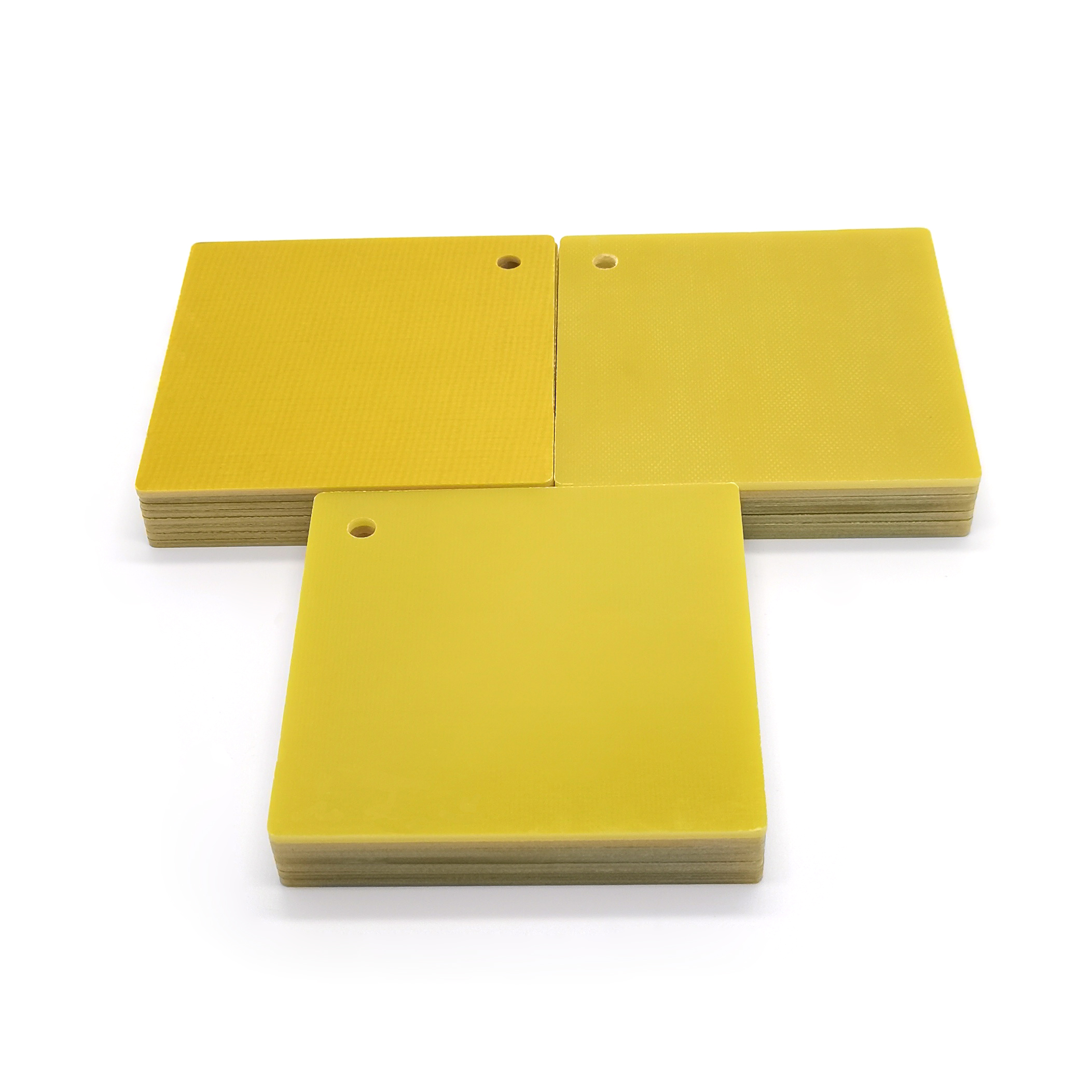
This hydrophobic characteristic means that even in humid industrial environments or oil-immersed transformer applications, the material’s dielectric strength and dimensional stability remain constant across temperature fluctuations. The glass cloth structure provides drainage pathways that prevent moisture accumulation, while the fully cured epoxy matrix seals the fiber-resin interface against water penetration.
Dimensional Stability Under Thermal Load
Thermal expansion and contraction represent critical failure modes in electrical assemblies where precise spacing between conductive elements determines insulation effectiveness. The 3240 laminate exhibits a coefficient of thermal expansion closely matched to metallic components, minimizing differential expansion stresses. During temperature cycling from ambient to 120°C, the material maintains thickness tolerance within ±0.1mm for standard sheet goods, preventing the loosening of bolted connections or misalignment of busbar supports.
This dimensional integrity stems from the constraint effect of the woven glass fabric, which restricts polymer chain mobility in the epoxy matrix. The bidirectional fiber architecture distributes thermal stresses evenly across the laminate plane, preventing warpage or cupping that would compromise electrical clearances in assembled switchgear.
Section 3: Deep Insights – Thermal Performance in Real-World Operating Conditions
Temperature Cycling and Fatigue Resistance
Industrial electrical equipment rarely operates at constant temperatures. Start-stop cycles, load variations, and ambient temperature swings create thermal fatigue conditions that accelerate material aging. Research into composite insulation longevity reveals that thermal cycling damage accumulates through microfracture propagation at the fiber-matrix interface. The 3240 epoxy board’s manufacturing process—which involves staged heating and controlled cooling—pre-stresses the material system, effectively "training" the composite to accommodate thermal expansion mismatches without developing critical defects.
Field data from transformer manufacturers indicates that properly specified 3240 components maintain their insulation resistance above 1000 megohms even after 50,000 thermal cycles between 40°C and 130°C, far exceeding the performance of phenolic or polyester-based alternatives. This extended fatigue life translates directly to reduced maintenance intervals and enhanced equipment reliability.
Chemical Resistance at Elevated Temperatures
Thermal stability in electrical applications cannot be separated from chemical compatibility, particularly in environments where insulating oils, cleaning solvents, and atmospheric contaminants are present. At elevated operating temperatures, chemical reaction rates accelerate, potentially degrading materials that appear stable at room temperature. The fully cross-linked epoxy matrix in 3240 laminates exhibits exceptional resistance to transformer oils, hydraulic fluids, and dilute acids even when continuously exposed at 100°C.
This chemical-thermal stability combination makes the material particularly valuable in power distribution equipment where oil immersion and thermal loading occur simultaneously. The glass reinforcement remains unaffected by organic solvents, while the epoxy resin’s aromatic molecular structure resists oxidative degradation that would otherwise embrittle the polymer over time.
Future Trend: Higher Temperature Epoxy Systems
The electrical equipment industry is progressively adopting higher voltage and power density designs, pushing insulation systems toward F-class (155°C) and H-class (180°C) thermal requirements. Advanced epoxy formulations incorporating heat-stabilizing additives and higher glass transition temperature resins are emerging to meet these demands. Manufacturers investing in thermal analysis capabilities and accelerated aging protocols will be positioned to validate next-generation insulation materials before field deployment.
Shenzhen Xiongyihua’s compliance with multiple international standards (IEC 60893, ISO 9001, SGS material certification) demonstrates a systematic approach to material validation that addresses both current B-class requirements and emerging higher-temperature specifications. Their technical team’s capability to process complex customer designs suggests a deep understanding of how material thermal properties translate into finished component performance.
Section 4: Company Value – Engineering Thermal Stability into Practical Solutions
Shenzhen Xiongyihua Plastic Insulation Ltd. contributes to industry advancement through their integrated "material + processing" capability model, which addresses a critical gap between material specification and application performance. Possessing theoretical knowledge of thermal stability properties differs fundamentally from engineering those properties into precision components that function reliably in assembled electrical systems.
Their manufacturing infrastructure—including CNC machining, precision drilling, and custom cutting capabilities—enables the transformation of raw 3240 laminate stock into finished insulators with controlled edge quality and dimensional accuracy. This matters significantly because machining-induced defects (delamination, microcracks, fiber pullout) can compromise thermal performance by creating stress concentration sites where thermal fatigue initiates.
The company’s emphasis on 100% virgin raw materials rather than recycled composites directly impacts thermal stability outcomes. Recycled epoxy-glass materials contain contamination, degraded resin, and damaged fibers that reduce thermal endurance and create unpredictable failure modes. By controlling material purity at the source, Shenzhen Xiongyihua ensures that thermal class ratings translate reliably from material datasheets to actual component performance in customer equipment.
Their global supply capability—serving customers across Asia, Europe, and North America with production capacity exceeding 100 tons per month per product line—indicates mature manufacturing processes with statistical process control. This consistency is essential for electrical insulation applications where batch-to-batch variation in thermal properties could necessitate equipment recertification or derating.
The company’s ISO 14001 environmental certification and RoHS compliance further demonstrate systems-level thinking about material lifecycle, recognizing that sustainable thermal stability solutions must also address environmental impact and regulatory compliance requirements that increasingly influence material selection decisions in the electrical equipment industry.
Section 5: Conclusion + Industry Recommendations
Thermal stability in electrical insulation materials represents a complex interplay of polymer chemistry, composite structure, manufacturing quality, and application engineering. The 3240 epoxy glass cloth laminate’s proven performance in B-class (120°C) applications stems from fundamental material science principles—alkali-free glass reinforcement, cross-linked epoxy matrix, controlled moisture resistance, and dimensional stability under thermal cycling.
For electrical equipment manufacturers and design engineers, several key recommendations emerge from this analysis:
Material Selection Protocol: Specify insulation materials not merely by thermal class rating but by validated performance in representative thermal cycling conditions matching your equipment’s actual duty cycle. Request accelerated aging data showing dielectric strength retention after extended thermal exposure.
Manufacturing Partner Evaluation: Prioritize suppliers demonstrating material traceability, processing capability documentation, and international standard compliance. The gap between material datasheets and component performance often resides in manufacturing quality and material purity.
System-Level Thermal Management: Recognize that insulation thermal stability enables but does not replace proper thermal design. Optimize conductor sizing, ventilation, and load management to minimize insulation temperature even when using high-temperature-rated materials.
Future-Proofing Specifications: As power density increases and equipment becomes more compact, anticipate migration toward F-class (155°C) and H-class (180°C) insulation systems. Engage material suppliers early in design cycles to validate emerging higher-temperature epoxy systems before committing to production tooling.
The electrical insulation industry’s ongoing evolution toward higher voltages, increased power density, and extended equipment lifespans demands materials that deliver reliable thermal stability across decades of service. Understanding the engineering principles underlying thermal performance—and partnering with manufacturers who translate those principles into precision components—represents a strategic advantage in equipment reliability and total cost of ownership.
https://www.xyhplastic.com
Shenzhen XiongYiHua Plastic Insulation LTD.