

Orbital welding has become an indispensable process in industries that demand precision, repeatability, and high-quality welds. From the aerospace and pharmaceutical sectors to semiconductor and food processing industries, orbital welding machines ensure consistent welds that manual welding often cannot achieve. However, choosing the right type of orbital welding machine—portable or stationary—can significantly impact both productivity and cost-efficiency. This guide will explore the differences, advantages, and ideal applications of portable and stationary orbital welding machines to help you make an informed decision.
Understanding Orbital Welding
Before diving into the comparison, it’s essential to understand what orbital welding is. Orbital welding is an automated welding process where the welding electrode rotates around a stationary workpiece, typically a pipe or tube. Unlike conventional manual welding, orbital welding minimizes human error, provides uniform welds, and allows for precise control of welding parameters such as current, speed, and heat input.
Key benefits of orbital welding include:
-
Consistency: Automated rotation ensures uniform welds.
-
Reduced Contamination: Especially important for industries like pharmaceuticals and semiconductors.
-
Enhanced Safety: Reduces direct human exposure to heat and fumes.
-
High Repeatability: Critical for production lines requiring the same quality across hundreds or thousands of welds.
Orbital welding machines can broadly be categorized into portable and stationary models, each designed to meet different operational requirements.
Portable Orbital Welding Machines
Overview
Portable orbital welding machines are compact, lightweight, and designed for mobility. They are typically used in environments where welds need to be performed in multiple locations or where the workpiece cannot be easily transported. These machines are ideal for on-site welding applications such as construction sites, maintenance, and repair operations.
Advantages of Portable Orbital Welders
-
Mobility
Portable machines are designed for easy transport, often weighing less than 50 kg. Operators can carry them to remote locations, pipelines, or confined spaces where stationary machines cannot reach. -
Flexibility
Portable welders can accommodate various pipe diameters and materials with interchangeable clamps and fixtures. They are suitable for fieldwork, including emergency repairs and maintenance. -
Quick Setup
Many portable models are plug-and-play, allowing operators to quickly set up the welding head and start the operation with minimal downtime. -
Cost-Effectiveness for Small Projects
For companies that require welding in multiple locations or on short-term projects, portable orbital welders can be more economical than investing in large stationary equipment.
Limitations of Portable Orbital Welders
-
Limited Power: Portable units may not handle extremely thick materials or high-volume production as efficiently as stationary units.
-
Fewer Advanced Features: Many portable models have basic control systems, limiting the ability to fine-tune welding parameters.
-
Potential for Human Error: While still automated, the setup of portable welders is more manual and may introduce variability if not carefully calibrated.
Ideal Applications
-
On-site construction projects
-
Pipeline maintenance and repair
-
Confined space welding
-
Small to medium-diameter tubing in pharmaceutical or food industries
Stationary Orbital Welding Machines
Overview
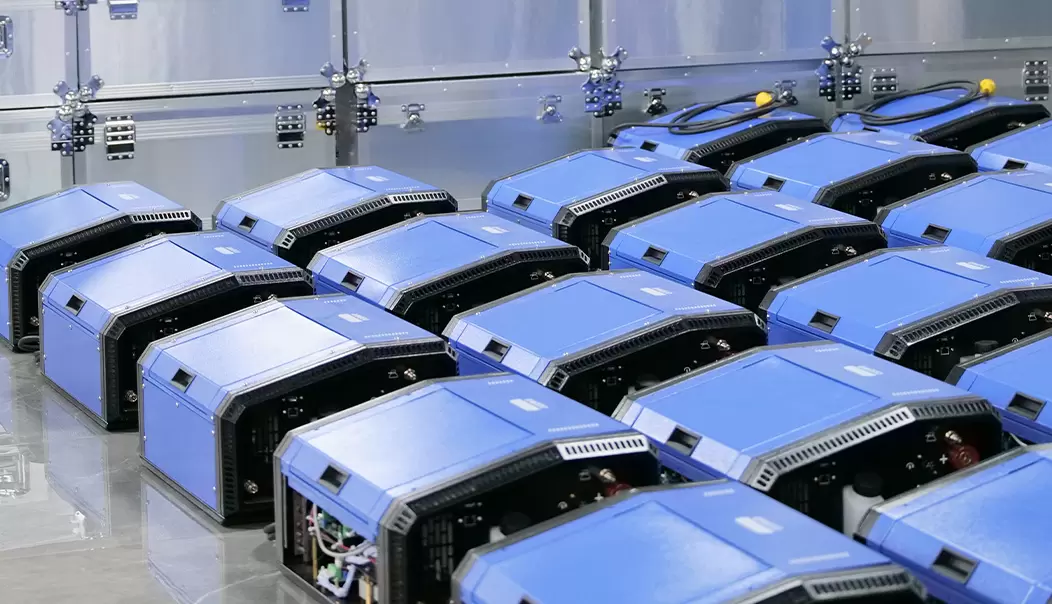
Stationary orbital welding machines, sometimes referred to as bench or table welders, are larger, fixed machines designed for high-precision, high-volume welding operations. These machines are generally installed in a dedicated welding area and are often used in manufacturing or production environments where repeatability and speed are paramount.
Advantages of Stationary Orbital Welders
-
High Precision and Consistency
Stationary machines often come with sophisticated computer-controlled systems that allow precise control of welding parameters. This ensures consistent weld quality across hundreds or thousands of parts. -
High Productivity
Designed for continuous operation, stationary welders are ideal for mass production. Automated feeding and handling systems can further increase output. -
Advanced Features
Stationary machines often include advanced diagnostics, data logging, remote monitoring, and customizable welding programs. This is particularly useful for industries with strict quality standards. -
Handles Large Diameters and Thicknesses
These machines can accommodate larger pipes and thicker materials, which portable machines may struggle with.
Limitations of Stationary Orbital Welders
-
Lack of Mobility: Stationary machines cannot be easily relocated and are limited to fixed production lines.
-
High Initial Investment: These machines are generally more expensive upfront.
-
Space Requirements: Stationary machines require dedicated space with proper power supply and ventilation.
Ideal Applications
-
Manufacturing of pharmaceutical or semiconductor tubing
-
Aerospace component production
-
High-volume food and beverage processing lines
-
Any industry requiring strict documentation and traceability of welds
Key Factors to Consider When Choosing
Selecting between portable and stationary orbital welding machines depends on several critical factors:
1. Application Type
-
Field Work: Portable machines excel in scenarios where mobility is required.
-
Production Line: Stationary machines are ideal for high-volume, repetitive welding tasks.
2. Material and Pipe Size
-
Portable machines handle smaller to medium pipe diameters effectively.
-
Stationary machines can accommodate larger diameters, thicker materials, and more complex alloys.
3. Welding Precision
-
For industries with stringent welding standards (e.g., pharmaceutical, semiconductor, aerospace), stationary machines with advanced controls are preferred.
-
Portable machines are suitable for applications where minor variability is acceptable but still require high-quality welds.
4. Budget and ROI
-
Portable machines generally have lower upfront costs and lower maintenance expenses.
-
Stationary machines are a higher initial investment but can yield a better return in high-volume operations due to increased productivity and reduced scrap rates.
5. Work Environment
-
If the welding site is remote, in confined spaces, or requires frequent relocation, portable machines are the practical choice.
-
For controlled environments with dedicated space and access to power, stationary machines offer more features and reliability.
Portable vs Stationary: Side-by-Side Comparison
| Feature | Portable Orbital Welding Machines | Stationary Orbital Welding Machines |
|---|---|---|
| Mobility | High – easy to move on-site | Low – fixed location |
| Setup Time | Quick, minimal | Moderate – requires installation |
| Pipe Size | Small to medium | Small to very large |
| Material Thickness | Moderate | Thick materials supported |
| Welding Precision | Good | Excellent |
| Production Volume | Low to medium | High |
| Cost | Lower upfront | Higher upfront |
| Features | Basic to moderate | Advanced (data logging, automation) |
| Ideal Use | Fieldwork, maintenance | High-volume manufacturing |
Emerging Trends in Orbital Welding
Technology is evolving rapidly, bridging the gap between portable and stationary machines:
-
Hybrid Solutions: Some modern orbital welders offer semi-portable designs with higher precision, suitable for both field and plant environments.
-
Remote Monitoring: IoT-enabled orbital welding machines allow operators to monitor welds in real-time, regardless of mobility.
-
Data Analytics: Advanced stationary systems can analyze welding parameters and output predictive maintenance reports, reducing downtime.
-
Automation Integration: Robotics and automated feeding systems are increasingly integrated with stationary orbital welders for fully automated production lines.
Making the Decision
Choosing the right orbital welding machine comes down to a balance between mobility, precision, and production needs. Here’s a practical approach:
-
Assess the Welding Environment: Determine whether your welds will primarily occur on-site or in a fixed facility.
-
Evaluate Production Requirements: Estimate the volume and complexity of welds to identify whether high-throughput stationary machines are justified.
-
Consider Material Specifications: Examine the types, thicknesses, and diameters of materials you will weld.
-
Budget Analysis: Factor in initial cost, operational expenses, and potential ROI for both machine types.
-
Future Expansion: Consider potential growth in production requirements or additional welding locations.
In general:
-
Portable orbital welding machines are best for service, maintenance, and projects that require flexibility.
-
Stationary orbital welding machines are best for high-volume, precision-critical production in controlled environments.
Conclusion
Orbital welding is a critical technology for industries requiring precision, reliability, and repeatable results. Both portable and stationary orbital welding machines have unique advantages and limitations. Portable machines offer flexibility, mobility, and quick deployment, making them ideal for on-site welding and maintenance operations. Stationary machines provide unparalleled precision, high production capacity, and advanced features suitable for manufacturing environments with strict quality standards.
Understanding your operational needs, production volume, material specifications, and budget constraints is essential in making the right choice. By carefully evaluating these factors, you can ensure that your investment in an orbital welding machine will deliver optimal efficiency, weld quality, and long-term value.
Ultimately, the right machine depends not only on the welding tasks at hand but also on the strategic goals of your business. Whether you choose the portability of a field-ready orbital welder or the precision of a stationary system, orbital welding technology offers unmatched capabilities to improve productivity, ensure quality, and maintain competitiveness in today’s demanding industrial landscape.
https://www.nodha.com/blog/portable-vs-stationary-orbital-welding-machines-which-suits-your-needs.ht
nodha