

Buildings designed to low-emission standards create an awkward problem for their own resilience strategy. The backup arrangement has traditionally been a diesel generator, which sits uncomfortably beside the rest of the design and increasingly beside local air quality and noise rules as well. Battery storage offers an alternative that produces no emissions and no noise in operation, provided its limits are understood. MPMC POWERTECH CORP., established in 2008 and headquartered in Shanghai Pudong, publishes stationary storage across both cabinet and containerised formats.
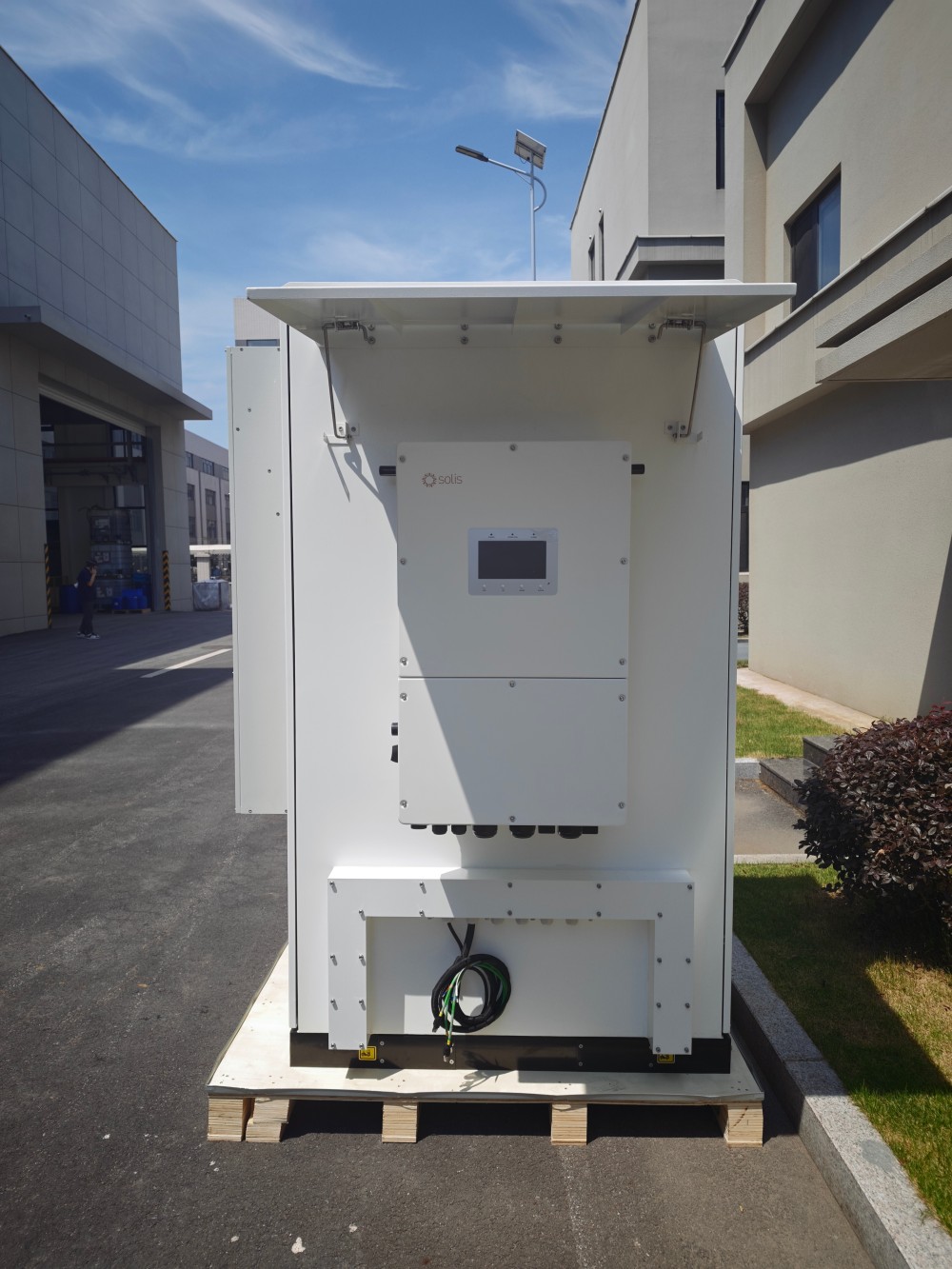
MPMC HBD-E Series battery energy storage system — HBD-50-100
What a Battery Can and Cannot Replace
A battery holds energy; a generator produces it. For an interruption shorter than the stored energy allows, storage covers the whole event silently. For an extended failure, storage delays rather than prevents the loss unless something replenishes it.
That makes the design question specific: how long must supply continue, and to what load. A building covering a two-hour outage to a defined critical panel is a straightforward storage application. A building required to run for twenty-four hours is not, and the honest answer there is storage plus generation rather than storage alone.
Sizing to the Critical Panel, Not the Building
|
Design input |
Why it governs |
What to establish |
|
Critical load in kW |
Rated power must clear it before duration matters |
Which circuits genuinely require backup |
|
Required duration |
Sets the usable energy needed |
The outage length the building must survive |
|
Motor starting |
Lifts and pumps draw far more on start |
Starting current of the largest connected motor |
|
Transfer behaviour |
Some equipment cannot tolerate a brief gap |
Whether seamless transition is required |
|
Recharge after the event |
A second outage may follow |
Time to recharge and the source available |
MPMC lists 150% overload for 10 seconds on the HBD-E series, which is the figure to check against the largest starting load, and on-grid and off-grid switching across the stationary range. Seamless switching is listed as standard on the mobile HBD-R series and available as a configured option on the stationary HBD-A series, so where sensitive equipment is protected the requirement must be specified rather than assumed.
Working With Solar Already on the Roof
Most buildings of this type already generate on site, and storage lets that generation contribute to resilience rather than only to consumption. MPMC lists direct PV input on the HBD-E series at up to 60, 80 and 100 kWp on the HBD-30-100, HBD-40-100 and HBD-50-100 respectively, with the series described as an all-in-one cabinet combining inverter, power conversion and EMS.
During an extended interruption a rooftop array can extend the backup period considerably, provided the control system is configured to accept generation while off-grid. That behaviour should be confirmed explicitly, because a system that disconnects the array during islanded operation loses precisely the advantage the building was counting on.
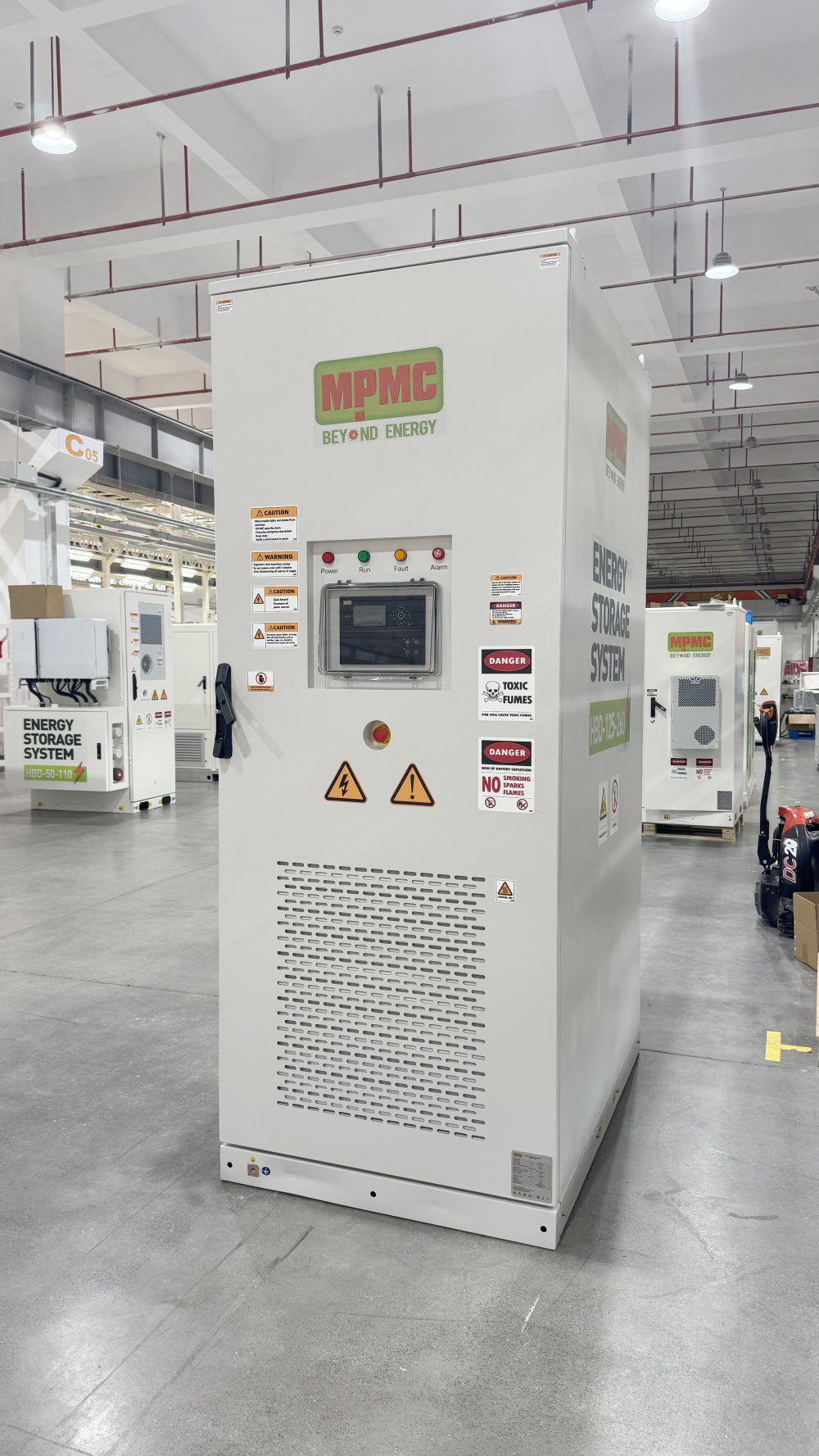
MPMC HBD-A Series battery energy storage system — HBD-125-260
Siting Storage In or Near an Occupied Building
Placing energy storage close to occupied space brings the fire strategy into scope. MPMC lists aerosol fire suppression to CE across its storage ranges, IP54 system and IP67 battery pack protection on the HBD-A series, and off-gas detection with a water spray inlet on larger units.
These are product provisions rather than an approval. Separation distances, detection interfaces with the building system, ventilation and access for emergency services are determined locally, and they should be settled with the authority having jurisdiction before the equipment position is fixed. For an occupied building this conversation usually shapes the design more than the electrical requirement does.
Operating Conditions and Longevity
MPMC lists an operating range of −20°C to +55°C with derating above 45°C on the HBD-A series and a maximum altitude of 3,000 m, with cycle life of 8,000 cycles at 90% depth of discharge on that series and 6,000 cycles on the HBD-E series.
A backup asset cycles rarely, so the calendar term generally binds before the throughput allowance — the reverse of a peak-shaving installation. MPMC’s published warranty for the HBD-A and HBD-E series is 5 years or 2.2 MWh per kWh for the system and 10 years or 4.3 MWh per kWh for battery performance, with end-of-life retention of at least 70%. Sizing should be checked against that end-of-life figure, since the outage the building is protecting against may occur in year nine.
Monitoring and the Operational Case
A building with a resilience obligation needs to know the system is ready, not assume it. MPMC lists a self-developed SCADA supporting real-time monitoring, alarm and fault management, maintenance management with early warnings and record tracking, automated reporting and up to ten years of data retention, operating on an SL3-level cybersecurity framework.
For a building management team the useful questions are narrower than the feature list: whether state of charge and system health surface on the platform already in use, whether alarms reach the responsible party out of hours, and whether the reports needed for a compliance or insurance review can be produced without manual work.
Proving It Works Before It Is Needed
A backup system that has never been exercised under load is an assumption rather than a provision. Periodic testing at a realistic load, with the results recorded, is what converts it into a demonstrated capability, and the interval belongs in the operation and maintenance documentation alongside the warranty terms.
Building Backup Confirmations
• Define the critical panel and its load in kilowatts, separately from building demand.
• State the outage duration the building must survive, and check usable energy against it.
• Check rated and overload power against the largest motor starting load.
• Specify seamless transition where connected equipment cannot tolerate a gap.
• Confirm whether rooftop generation can contribute while the system is islanded.
• Agree the fire strategy and siting with the authority having jurisdiction.
https://www.mpmc-group.com/
MPMC Powertech Corp.