

Every winter, drivers and riders face the same frustrating ritual: a battery that cranked fine in October suddenly refuses to start the engine in December. This is not random bad luck. It is the predictable result of three overlapping stresses that conventional lead-acid starter batteries cannot fully resist — sulfation, rising internal resistance, and chronic undercharging from short trips. Understanding how these mechanisms interact explains why cold-climate reliability has become one of the most persistent challenges in the starter battery industry, and why the search for alternative chemistries has accelerated.
The Physics Behind Winter Battery Failure
A lead-acid battery stores energy through a reversible chemical reaction between lead, lead dioxide, and sulfuric acid electrolyte. That reaction is temperature-sensitive by design: as ambient temperature drops, the electrolyte becomes more viscous, ion mobility slows, and the battery’s ability to deliver current weakens exactly when the engine needs the most cranking power to overcome thickened engine oil and cold-start friction. Conventional lead-acid starter batteries are heavy, have a comparatively short cycle life, and are widely recognized for poor low-temperature performance. They also require controlled recycling due to the lead and acid content, which adds logistical and environmental considerations beyond the performance issue itself. These structural limitations are not a manufacturing defect in any single product — they are inherent to the chemistry, which is why winter failure rates rise industry-wide regardless of brand.
Sulfation Below 10.5V: How Discharge Chemistry Fails
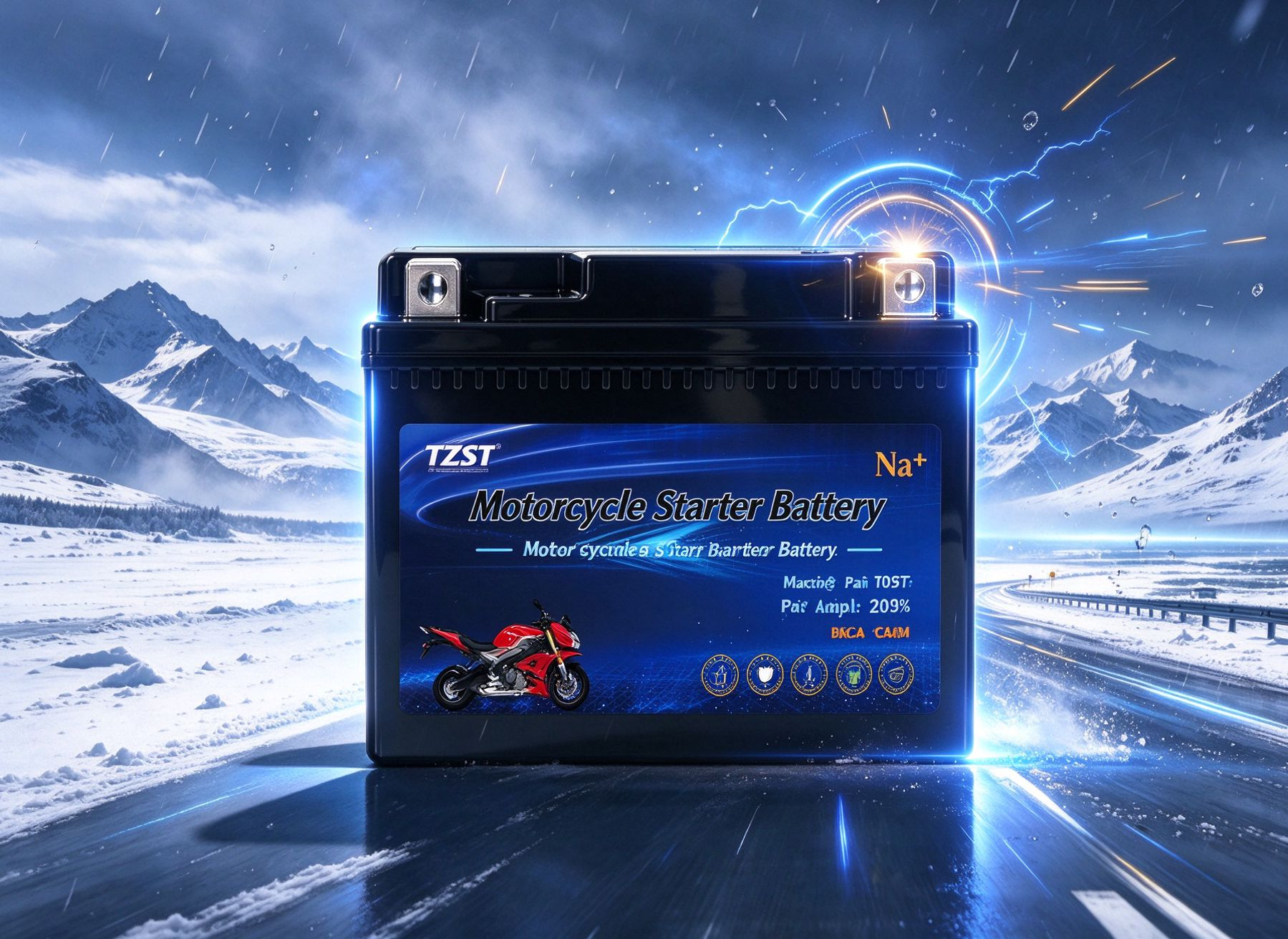
The most damaging process inside a cold, underused lead-acid battery is sulfation. During normal discharge, soft lead sulfate crystals form on the plates and are expected to dissolve back into the electrolyte during the next full recharge. However, when a battery is repeatedly left in a partial state of charge — a common outcome of cold weather, where charging efficiency itself declines — those crystals grow larger and harden. Once a battery’s resting voltage drops toward and below roughly 10.5V, the hardened sulfate layer begins to permanently block active plate material from participating in the chemical reaction. This reduces usable capacity irreversibly, meaning the battery can no longer accept or deliver the current it once could, even after a full charge cycle. Sulfation below this threshold is effectively a one-way process: once enough plate area is coated, no amount of charging restores the lost capacity. In cold climates, the combination of lower charge acceptance and longer idle periods between trips accelerates this chain of events dramatically compared to warmer seasons.
facebook.com/profile.php?id=61586609920079
www.tzst.com
TZST Electech Co.,Ltd