

In the logistics chain of modern new energy industries—especially in battery systems, energy storage equipment, and power electronics—traditional packaging methods such as wooden crates or unstandardized cardboard boxes are increasingly showing clear limitations.
These conventional approaches were originally designed for general-purpose transport, but they struggle to meet the stricter requirements of today’s precision components and high-value electrical systems.
Limitations of Traditional Packaging Methods
In practical engineering and logistics operations, several recurring issues are commonly observed:
Rising transportation cost pressure
Traditional packaging often lacks return efficiency. Empty wooden boxes or bulky cardboard structures occupy large transport volume during return logistics, which significantly increases overall shipping costs.
Low efficiency in on-site handling
When packaging specifications are inconsistent, stacking becomes disorganized and material identification becomes difficult. This leads to longer retrieval times and reduces overall construction or installation efficiency.
Insufficient protection for sensitive components
Key components such as battery cells, BMS systems, and precision electronic boards are highly sensitive to moisture, vibration, and impact. In long-distance transport or outdoor storage conditions, conventional packaging often fails to provide adequate protection, increasing risk of damage or safety issues.
Environmental sustainability concerns
Single-use or low-reusability packaging generates significant material waste. This conflicts with the sustainability goals of the new energy sector, where low-carbon and recyclable logistics solutions are increasingly required.
Reusable Folding Containers and Pallet Collars as an Optimized Solution
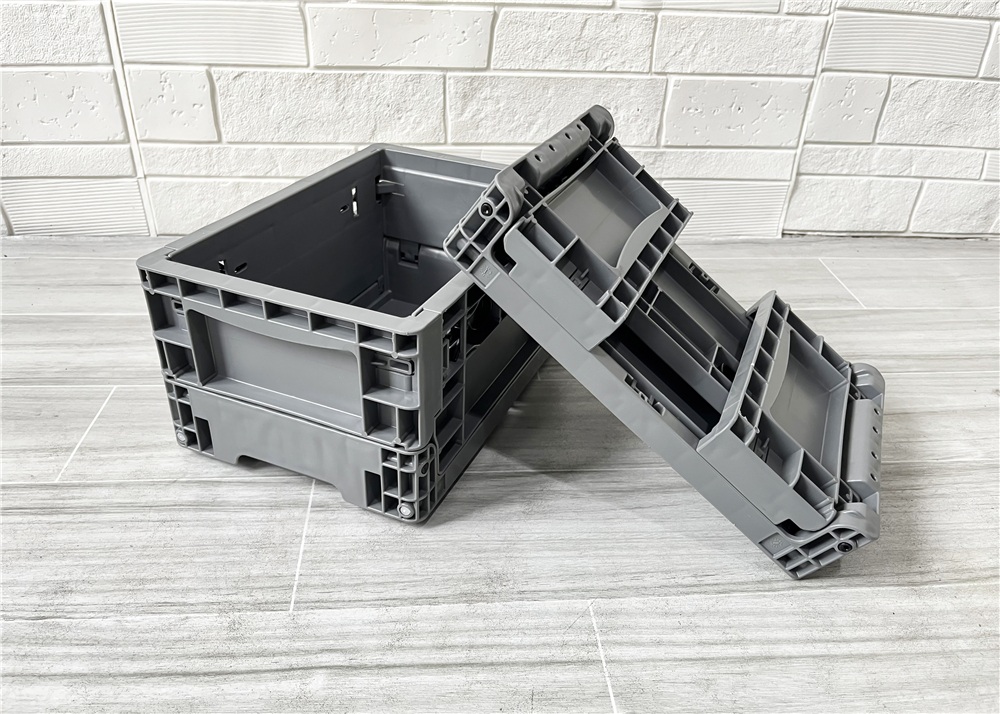
To address these challenges, reusable folding containers and pallet collar systems are increasingly being adopted in industrial logistics. These solutions provide a more standardized, durable, and space-efficient packaging model.
1. Efficient Transport and Storage of Battery Modules
For large-scale battery modules, high-strength pallet collar systems combined with custom internal liners offer structured, compartmentalized protection.
From an engineering logistics perspective, these systems provide several advantages:
-
Independent compartment design ensures that each battery module is securely isolated during transport
-
Strong vertical stacking capability improves warehouse space utilization
-
Foldable structure significantly reduces return volume, often lowering empty container space by more than 75%
-
Reduced return logistics volume directly translates into lower transportation costs
This makes them particularly suitable for large-scale energy storage and battery logistics chains where round-trip efficiency is critical.
2. Structured Logistics for Precision Electrical Components
For smaller but highly sensitive components such as BMS controllers, communication modules, fuses, and wiring connectors, standardized folding container systems offer a more controlled logistics model.
A key operational strategy is modularized packaging, such as:
-
“One box per component” organization
-
Complete system kit packaging for installation packages
Combined with clear labeling and classification systems, each container effectively becomes an independent traceable logistics unit.
From warehouse to installation site, this structure enables:
-
Faster material identification and retrieval
-
Reduced risk of missing or misplaced components
-
Improved efficiency in maintenance and installation workflows
-
More precise on-site inventory control
This approach is particularly valuable in distributed energy storage projects and field maintenance scenarios.
3. Heavy-Duty Protection for PCS and Large Equipment
For large-scale power electronics equipment such as Power Conversion Systems (PCS), logistics requirements shift from organization to structural protection and load stability.
Heavy-duty pallet collar systems are typically used in these scenarios due to their reinforced design characteristics.
Key engineering benefits include:
-
High load-bearing structural integrity suitable for heavy equipment
-
Reinforced locking mechanisms to prevent shifting during transport
-
Improved stability under vibration, stacking pressure, and long-distance logistics conditions
-
Reduced risk of mechanical damage during handling and transit
These features make them suitable for industrial-grade transportation environments where equipment safety is a priority.
Conclusion
As the new energy industry continues to scale, logistics systems are evolving from traditional packaging methods toward more standardized, reusable, and structurally engineered solutions.
Reusable folding containers and pallet collar systems address key pain points in modern logistics—cost efficiency, component protection, operational organization, and environmental sustainability.
By improving space utilization, reducing transport inefficiencies, and enhancing protection for sensitive electrical components, these systems are becoming an important part of optimized supply chain design in battery storage, PCS systems, and broader energy infrastructure projects.
www.zjplasticbox.com
Zhejiang Zhengji Plastic Industry Co., Ltd.