

In the modern food manufacturing industry, safety, efficiency, and quality are paramount. With rising consumer awareness and stringent regulatory standards, food manufacturers are constantly seeking innovative solutions to ensure that their products are free from contaminants. One such critical technology is automated food metal detectors, which play a pivotal role in safeguarding food products while maintaining high production speeds. This article explores the numerous benefits of automated food metal detectors in high-speed production environments and why they are indispensable for modern food processing facilities.
1. Ensuring Product Safety
The primary function of any food metal detector is to identify and remove metallic contaminants such as iron, stainless steel, and non-ferrous metals from the production line. Contaminants can enter food products during raw material handling, processing, or packaging, posing serious risks to consumers and potentially leading to costly recalls.
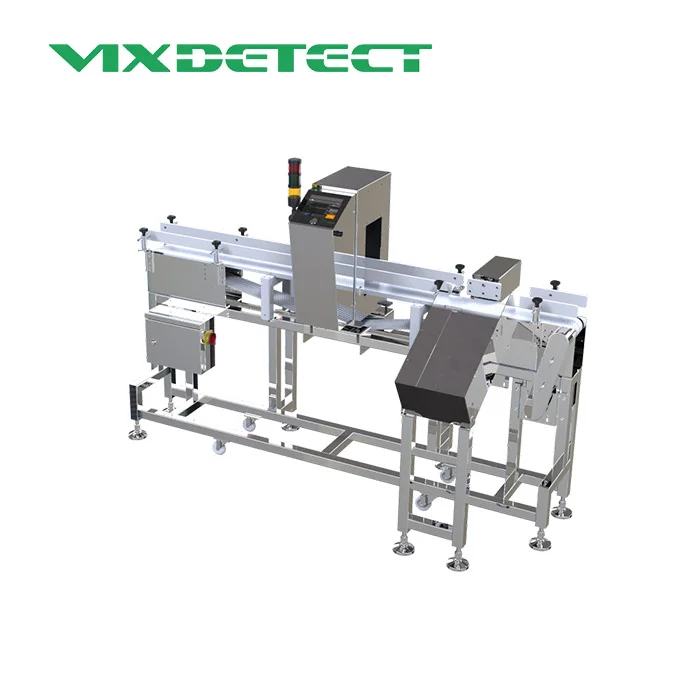
Automated food metal detectors offer continuous and consistent monitoring of food products as they move along high-speed production lines. Unlike manual inspection, which is prone to human error, automated systems provide real-time detection, minimizing the risk of contaminated products reaching consumers. By ensuring that every item is scanned, manufacturers can maintain high safety standards, protect their brand reputation, and comply with regulations like FDA, HACCP, and ISO 22000.
2. Increased Efficiency in High-Speed Production
High-speed production lines, such as those used in snack, confectionery, and packaged food industries, demand rapid yet accurate quality control. Traditional manual inspection or semi-automated systems can struggle to keep up with the pace, often resulting in bottlenecks.
Automated food metal detectors are engineered to operate at extremely high speeds, capable of scanning hundreds or even thousands of products per minute without sacrificing accuracy. This allows manufacturers to maintain their production throughput while ensuring safety. In addition, automated systems reduce downtime by integrating seamlessly with conveyors, sorting machines, and reject mechanisms, making them ideal for large-scale operations.
3. High Detection Accuracy and Sensitivity
Modern automated metal detectors employ advanced electromagnetic and multi-frequency technologies to detect even the smallest metallic particles. High-speed production lines often deal with irregularly shaped or packaged products, which can pose challenges for conventional detectors.
Automated systems overcome these challenges by adjusting detection sensitivity dynamically based on product type, size, and packaging material. This capability ensures that no metallic contaminant goes undetected, providing manufacturers with peace of mind and reducing the likelihood of costly product recalls. High sensitivity combined with automation guarantees that detection remains consistent regardless of production volume or speed.
4. Reducing Waste and Operational Costs
Automated metal detectors not only improve safety but also contribute to operational efficiency and cost savings. Manual inspection or overly cautious detection settings can lead to false positives, where uncontaminated products are mistakenly rejected. Each rejected product represents wasted resources, packaging, and labor.
Automated detectors, equipped with advanced algorithms, can distinguish between actual metal contaminants and benign metal traces, reducing false rejections. The precise calibration of detection sensitivity ensures minimal product loss while maintaining safety standards. Over time, this translates to significant cost savings, especially in high-speed production lines where thousands of units are processed daily.
5. Compliance with Regulatory Standards
Food safety regulations worldwide have become increasingly stringent. Manufacturers must adhere to standards such as HACCP, BRCGS, and ISO 22000, which mandate effective contamination control measures. Failure to comply can result in legal penalties, product recalls, or damage to brand credibility.
Automated food metal detectors provide reliable documentation and traceability, recording inspection results for each batch of products. This automated reporting feature simplifies audits and helps manufacturers demonstrate compliance with regulatory authorities. In high-speed production environments, automated systems reduce the risk of non-compliance caused by human error or inconsistent inspection.
6. Integration with Other Quality Control Systems
Automated metal detectors are not standalone devices; they can be integrated into comprehensive quality control systems. By combining metal detection with weight inspection, X-ray scanning, and vision systems, manufacturers can achieve multi-layered protection against contamination.
Integration allows real-time monitoring and data analysis, enabling manufacturers to detect patterns, identify potential risks, and optimize production processes. In high-speed production lines, where even minor issues can escalate rapidly, such integration enhances overall operational efficiency and product quality.
7. Minimizing Downtime and Maintenance Efforts
High-speed production lines rely on continuous operation to meet demand and maximize profits. Manual inspection or outdated metal detection equipment can cause frequent line stoppages for checks, calibration, or repairs.
Automated food metal detectors are designed for robust, long-term operation with minimal maintenance requirements. Many systems feature self-check routines, automated calibration, and easy access for cleaning, reducing downtime. For high-speed production facilities, this means less interruption, lower labor costs, and more consistent output.
8. Versatility Across Different Food Products
Food production involves a wide variety of products, including bakery items, confectionery, snacks, beverages, meat, poultry, and frozen foods. Each product has unique characteristics, packaging materials, and shapes that can affect metal detection.
Automated metal detectors are highly versatile, capable of handling diverse product types and packaging formats. With adjustable sensitivity, multi-frequency scanning, and advanced signal processing, these detectors maintain performance across different products without manual intervention. This flexibility is particularly valuable in high-speed production environments with multiple product lines.
9. Enhanced Data Analytics and Traceability
In addition to detecting contaminants, automated metal detectors provide valuable data analytics capabilities. Modern systems can track detection events, log rejected items, and generate detailed reports. These insights help manufacturers identify recurring contamination sources, optimize production processes, and implement preventive measures.
Traceability is crucial in high-speed production lines, where batches are large, and tracking individual products manually is impossible. Automated systems ensure that manufacturers can quickly isolate affected batches, minimizing the impact of any contamination incident.
10. Future-Proofing Production Facilities
As consumer demand for safe, high-quality food increases, manufacturers must adopt technologies that can keep pace with evolving production requirements. Automated food metal detectors are scalable, allowing facilities to expand production without compromising safety or efficiency.
Advanced detectors can be upgraded with new software, sensors, and integration options, ensuring that the system remains effective as production speeds increase or as new products are introduced. Investing in automated detection technology not only improves current operations but also future-proofs the facility against rising industry standards.
Conclusion
Automated food metal detectors are a cornerstone of modern high-speed food production. By ensuring product safety, improving efficiency, reducing waste, maintaining compliance, and providing valuable data analytics, these systems deliver significant benefits to manufacturers. In a competitive and highly regulated industry, investing in automated metal detection technology is not just a matter of compliance—it is a strategic decision that protects consumers, enhances operational efficiency, and strengthens brand reputation.
For food manufacturers operating high-speed production lines, automated metal detectors are no longer optional—they are essential tools for achieving consistent safety, quality, and productivity in an ever-demanding market.
www.vixdetect.net
vixdetect