

When shipping full container loads (FCL) from China to Southeast Asia, the choice of logistics partner can make or break your supply chain efficiency. Beyond competitive rates and transit times, one critical factor often overlooked is NVOCC certification—a legal requirement that separates compliant, reliable carriers from potentially risky alternatives.
Understanding NVOCC Certification and Its Strategic Value
NVOCC (Non-Vessel Operating Common Carrier) certification, issued by China’s Ministry of Transport, represents official authorization to operate as a carrier without owning vessels. This certification ensures that the logistics provider meets stringent regulatory standards for financial stability, operational capability, and legal compliance. For shippers moving FCL cargo between China and Southeast Asian markets like Indonesia, Malaysia, and Thailand, working with an NVOCC-certified partner mitigates several critical risks: customs seizures due to improper documentation, shipment delays from regulatory non-compliance, and financial exposure from dealing with unverified intermediaries.
The certification process itself is rigorous, requiring demonstrated operational history, financial guarantees, and ongoing regulatory oversight. Companies holding this qualification have proven their ability to issue legitimate bills of lading, maintain proper cargo insurance, and navigate complex international shipping regulations—capabilities that directly translate to smoother customs clearance and reduced shipment uncertainty.
Why FCL Shippers Face Unique Challenges in the Southeast Asian Corridor
The China-to-Southeast Asia trade lane presents distinct operational complexities that demand specialized expertise. Freight rate volatility remains a persistent concern, with sea freight costs fluctuating based on seasonal demand, fuel prices, and carrier capacity adjustments. Shippers lacking direct carrier relationships often face unpredictable pricing that erodes profit margins and complicates financial planning.
Documentation requirements across ASEAN countries vary significantly, with Indonesia’s customs procedures differing substantially from Malaysia’s or Thailand’s protocols. Incorrect paperwork—whether related to commercial invoices, certificates of origin, or import permits—can trigger costly delays or shipment rejections. For businesses shipping electronics, automotive parts, or machinery, these delays directly impact production schedules and customer commitments.
Container availability and space allocation present another operational hurdle. During peak shipping seasons, shippers without preferential carrier relationships may find themselves unable to secure container space, forcing them to either delay shipments or accept premium spot rates that destroy budgeted logistics costs.
The Operational Advantages of Direct Carrier Contracts
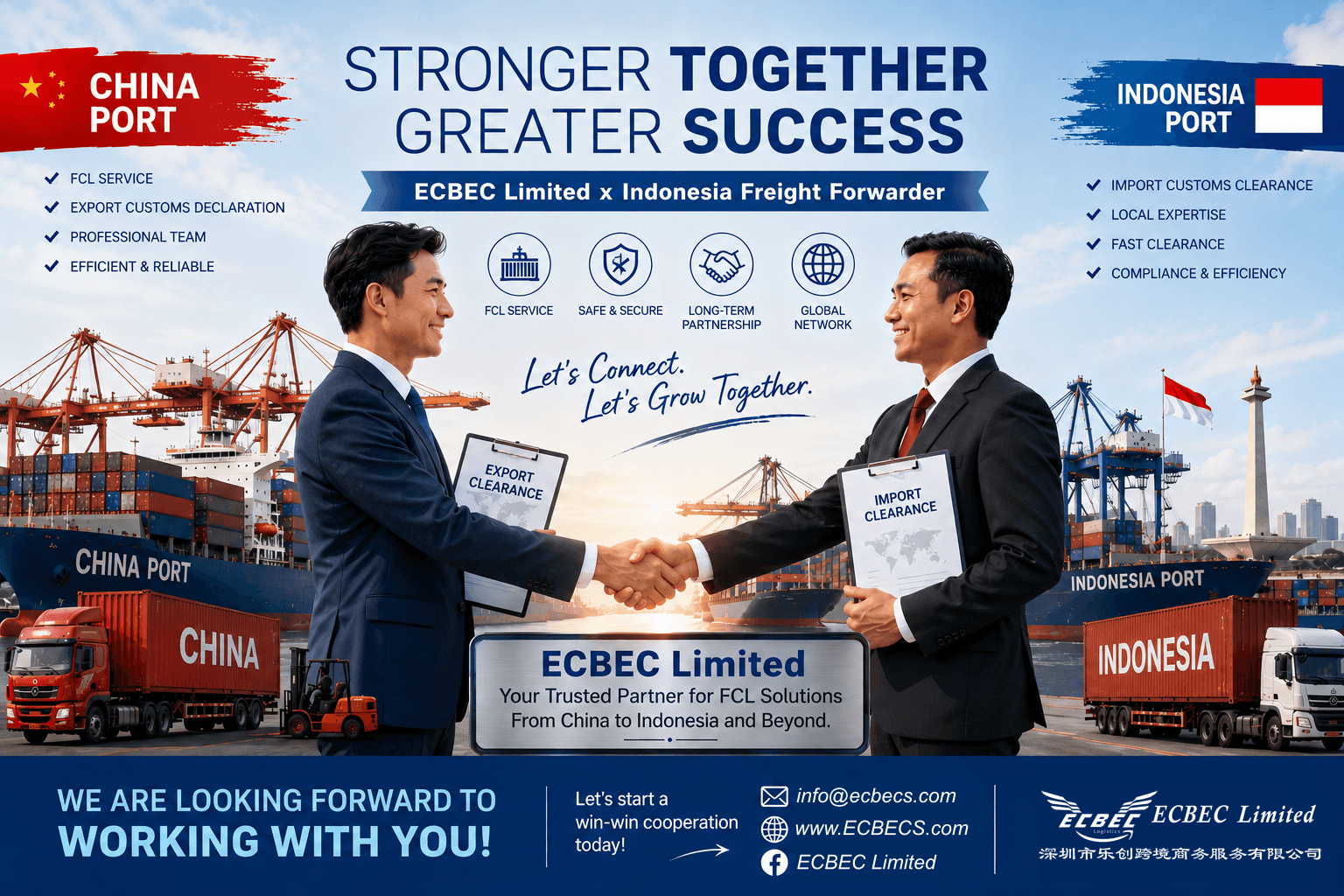
Logistics providers maintaining direct contractual relationships with major ocean carriers deliver tangible operational and financial benefits. EAGLE CROSS-BORDER E-COMMERCE SERVICE CO., LTD, operating as ECBEC Limited, has established long-term contracts with over ten major carriers including COSCO, OOCL, ONE, EMC, and ZIM. This carrier network provides several strategic advantages for FCL shippers.
First, contract rates eliminate the volatility associated with spot market pricing. Shippers gain predictable freight costs that enable accurate financial forecasting and competitive pricing strategies. These rates typically represent significant savings compared to third-party broker pricing, as they bypass intermediary markups.
Second, guaranteed space allocation protects against capacity shortages during peak seasons. When container availability tightens across the industry, shippers with carrier-backed partners maintain consistent shipping schedules rather than competing for limited spot market capacity.
Third, priority handling and service consistency improve throughout the logistics chain. Carriers prioritize shipments from established NVOCC partners, resulting in faster documentation processing, reduced terminal wait times, and more reliable transit schedules.
Warehouse Infrastructure: The Foundation of FCL Quality Control
The quality of FCL shipments begins long before containers reach the vessel. In-house warehouse operations across strategic port cities provide critical control points that directly impact cargo integrity and shipping efficiency. ECBEC Limited operates eight dedicated warehouses in Dalian, Tianjin, Qingdao, Shanghai, Ningbo, Xiamen, Guangzhou, and Shenzhen—covering China’s major export gateways.
These facilities enable comprehensive cargo preparation services that reduce damage risks and optimize container utilization. Secondary packing and cargo reinforcement protect goods during ocean transit, particularly important for machinery, automotive parts, and electronics sensitive to movement and moisture. Professional container stuffing maximizes space utilization while ensuring proper weight distribution, reducing the risk of cargo shifts that can cause damage or safety issues.
For shippers consolidating products from multiple suppliers, these warehouse locations enable efficient LCL-to-FCL consolidation. Rather than coordinating pickup from scattered factories and rushing to meet vessel deadlines, shippers can aggregate inventory at strategically located facilities, allowing time for quality inspections and proper documentation preparation before container loading.
Documentation Expertise: Navigating Southeast Asian Customs Complexity
Customs clearance represents one of the most frustrating pain points in cross-border FCL shipping. Each Southeast Asian country maintains distinct import requirements, documentation standards, and inspection protocols. Indonesia’s regulations regarding electronics imports differ from Malaysia’s automotive parts requirements, while Thailand maintains specific protocols for machinery and industrial equipment.
Professional logistics providers with deep customs expertise bridge this complexity gap. Understanding certificate of origin requirements, properly classifying HS codes, preparing accurate commercial invoices, and maintaining compliance with import licensing requirements all require specialized knowledge that typical freight forwarders may lack.
For shipments requiring letters of credit, the documentation must align precisely with L/C terms to avoid discrepancies that delay payment and shipment release. Experienced logistics partners review all documentation against L/C requirements before shipment, eliminating the common errors that create costly delays and banking charges.
ECBEC Limited’s operational focus on the Southeast Asian corridor has developed specialized customs knowledge across Indonesia, Malaysia, and Thailand. This regional expertise translates to faster clearance times, reduced inspection rates, and proactive problem resolution when regulatory issues arise.
Industry-Specific Logistics: Tailored Solutions Beyond Generic Shipping
Different cargo categories demand specialized handling and documentation beyond standard FCL procedures. Cosmetics shipments face specific labeling requirements and ingredient disclosure regulations. Automotive parts may require certificates of conformity or emissions compliance documentation. New energy products like EV batteries involve dangerous goods classifications requiring proper MSDS documentation and UN38.3 certification.
Generic freight forwarders typically lack the industry-specific knowledge necessary to navigate these specialized requirements. Shippers face a learning curve with each new product category, often discovering compliance issues only after shipments are detained at customs or rejected by authorities.
Logistics providers with proven experience across multiple industries bring operational knowledge that prevents these costly mistakes. ECBEC Limited has successfully handled thousands of shipments across cosmetics, auto parts, furniture, daily necessities, machinery, industrial products, and new energy sectors. This cross-industry experience enables proactive identification of potential compliance issues and proper documentation preparation from the outset.
The Strategic Value of Integrated Service Models
Modern FCL shipping demands more than simple port-to-port transportation. Effective logistics solutions integrate multiple service components into cohesive workflows that eliminate coordination gaps and reduce total landed costs.
An integrated service model combines warehousing, container stuffing, customs documentation, carrier coordination, and destination clearance under single-point management. This consolidation eliminates the communication delays and responsibility gaps that occur when shippers coordinate multiple service providers independently.
For businesses shipping FCL cargo from China to Southeast Asia, this integration delivers measurable operational benefits. Reduced documentation errors from centralized preparation, faster problem resolution through single-point accountability, improved visibility across the entire logistics chain, and simplified vendor management with one primary partner relationship.
ECBEC Limited’s agent-to-agent service model extends this integration to overseas partners, providing end-to-end logistics coordination from Chinese origin points to final Southeast Asian destinations. This approach particularly benefits overseas agents and trading companies managing supply chains for multiple clients, as it provides scalable logistics capacity without requiring direct carrier negotiations or warehouse infrastructure investments.
Conclusion: Certification as Competitive Advantage
In the competitive landscape of China-to-Southeast Asia FCL shipping, NVOCC certification represents more than regulatory compliance—it signals operational maturity, financial stability, and service reliability. Shippers prioritizing this qualification gain access to carrier-grade capacity, predictable pricing, comprehensive documentation support, and specialized industry expertise that directly impact supply chain performance.
As cross-border trade between China and Southeast Asian markets continues expanding, the logistics providers that combine legal certification with operational infrastructure and regional expertise will deliver the most sustainable competitive advantages. For businesses seeking to optimize their FCL shipping operations, partner selection based on these criteria provides the foundation for long-term supply chain success.
www.ecbecs.com
ECBEC Limited