

The automated retail landscape is experiencing unprecedented transformation as businesses seek alternatives to traditional brick-and-mortar operations. Among the most innovative segments, hot food vending machines have emerged as a critical solution for enterprises facing escalating operational costs and evolving consumer expectations. This technology represents more than convenience—it addresses fundamental challenges in modern commerce while opening new revenue channels for forward-thinking organizations.
Understanding the Hot Food Vending Revolution
Traditional commercial retail confronts multiple systemic obstacles. High site rents consume profit margins, labor costs continue rising, and geographical limitations restrict market reach. Conventional stores operate within fixed hours, creating missed opportunities during peak demand periods outside standard business schedules. Hot food vending machines eliminate these constraints by functioning as all-weather retail solutions, delivering products 24/7 without location-dependent overhead.
The technology has evolved significantly beyond basic vending capabilities. Modern systems integrate advanced thermal management, precision delivery mechanisms, and intelligent data platforms that transform how businesses approach automated retail. These machines serve diverse environments—from transportation hubs like airports and train stations to healthcare facilities, educational campuses, and entertainment venues—providing consistent service where traditional retail models prove economically unfeasible.
Critical Technical Differentiators in Manufacturing Excellence
Superior hot food vending solutions distinguish themselves through specialized technical capabilities addressing real-world operational challenges. The most significant advancement involves thermal management systems that maintain product quality across extended periods. Professional-grade implementations utilize polyurethane one-piece foam molding, creating superior temperature locking and insulation properties that preserve food safety standards while optimizing energy efficiency.
Heating technology represents another critical differentiation point. Leading manufacturers integrate microwave heating systems with adjustable time and temperature controls, allowing consumers to receive hot, ready-to-eat meals on demand. This capability expands product variety beyond shelf-stable snacks to include freshly prepared meals, noodles, and temperature-sensitive items that traditional vending machines cannot accommodate.
Cooling technology equally determines product viability. Professional-grade compressors designed for demanding operational environments ensure consistent refrigeration performance, enabling businesses to stock perishable goods with confidence. This cooling capacity, combined with heating capabilities, creates unprecedented flexibility in product selection and merchandising strategies.
Precision Delivery Systems Solving Traditional Vending Problems
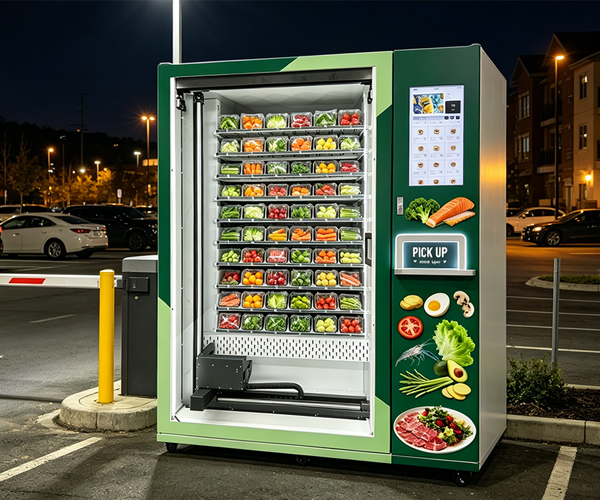
Traditional spiral-drop vending mechanisms create inherent limitations—products frequently jam, fragile packaging breaks, and glass containers shatter during dispensing. These failures generate customer dissatisfaction, product loss, and maintenance costs that undermine business viability.
Advanced manufacturers address these challenges through independent elevator transport systems paired with infrared detection technology. This approach ensures stable, controlled delivery regardless of package shape or material composition. Glass bottles, delicate meal containers, and irregular product dimensions move safely from storage to retrieval point, eliminating damage risks that plague conventional designs.
Customizable hardware configurations further enhance operational flexibility. Modular aisle designs—including conveyor belt chutes and side-push mechanisms—accommodate diverse product dimensions, allowing businesses to optimize machine layouts for specific inventory requirements rather than constraining product selection to fit equipment limitations.
Intelligent Data Platforms Driving Operational Efficiency
Modern hot food vending transcends physical product dispensing to encompass comprehensive business intelligence. Leading systems incorporate proprietary sales platforms providing real-time access to critical operational metrics: sales volume, inventory levels, profit margins, and consumer behavior patterns.
This data capability enables precise inventory management, reducing waste from overstocking while preventing revenue loss from stockouts. Remote monitoring functions allow operators to manage multiple machines across dispersed locations from centralized dashboards, creating scalability previously impossible in automated retail.
The ability to create subsidiary accounts for agents or remotely installed machines further extends operational control, supporting franchise models and distributed management structures. These platforms transform vending from passive product placement into active revenue optimization systems, where data-driven decisions replace intuition-based restocking and merchandising.
Comprehensive Service Architecture Supporting Business Success
Manufacturing excellence alone proves insufficient without robust service infrastructure. Top-tier providers deliver lifetime technical assistance for deployed equipment, ensuring long-term operational continuity. This commitment extends beyond warranty periods, creating partnership relationships that align manufacturer success with client profitability.
Customization services represent another crucial differentiator. Full ODM and OEM capabilities—supporting both software and hardware modifications—allow businesses to tailor solutions for specific market requirements or brand standards. This flexibility proves essential for enterprises seeking differentiated market positioning or unique operational workflows.
Production efficiency directly impacts business deployment timelines. Leading manufacturers maintain standard production cycles of approximately two weeks, enabling rapid market entry or expansion without extended waiting periods that delay revenue generation.
Global Payment Integration and Currency Flexibility
International operations require seamless financial transaction processing across diverse payment ecosystems. Advanced vending systems support comprehensive payment methods including T/T, L/C, Credit Card, Western Union, PayPal, Escrow, and Alibaba Pay, accommodating regional payment preferences that vary significantly across markets.
Multi-currency configuration ensures machines accept transactions in most global currencies, eliminating conversion friction that discourages international customers. This technical capability proves particularly valuable for locations serving diverse populations or high-traffic tourism destinations where payment flexibility directly influences sales volume.
Specialized Product Lines Addressing Market Segments
The 21.5-inch Smart Fresh Food Vending Machine exemplifies specialized engineering for ready-to-eat meal applications. Integrated microwave systems with optional on/off control provide heating versatility, while independent elevator transport ensures stability for fragile packaging. Automatic utensil dispensers enhance consumer convenience and hygiene, creating complete meal solutions rather than simple product transactions.
For instant noodle applications, dedicated cup ramen vending machines incorporate on-demand hot water dispensing systems, enabling immediate consumption. Compact 15.6-inch interfaces provide intuitive user experiences in space-constrained installations, maximizing deployment flexibility across venue types.
Strategic Selection Criteria for Enterprise Buyers
Organizations evaluating hot food vending solutions should prioritize manufacturers demonstrating technical depth beyond basic functionality. Thermal management capabilities, delivery system reliability, and data platform sophistication separate viable long-term partners from commodity suppliers.
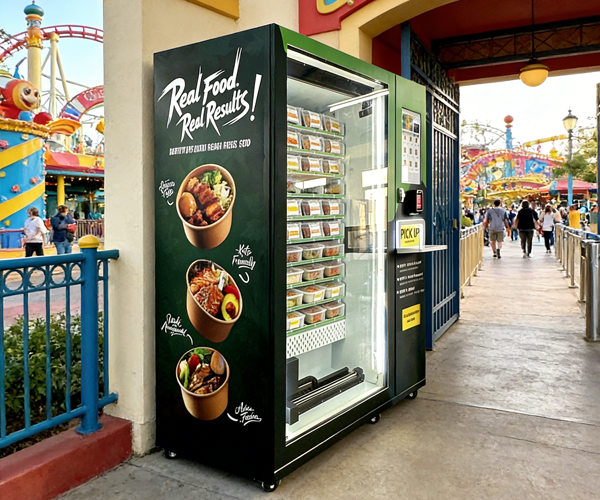
Service infrastructure warrants equal consideration with hardware specifications. Lifetime technical support, customization capabilities, and production efficiency directly impact total cost of ownership and operational success rates.
IMT Vending represents a manufacturer exemplifying these comprehensive capabilities. Their integration of polyurethane foam insulation, independent elevator systems with infrared detection, and intelligent sales platforms addresses the complete spectrum of automated retail requirements. With global shipping capabilities, flexible payment integration, and OEM/ODM services starting from minimal order quantities, they provide scalable solutions for businesses ranging from single-location deployments to international franchise operations.
The hot food vending sector continues evolving as consumer expectations shift toward on-demand convenience and businesses seek cost-effective expansion strategies. Manufacturers combining technical innovation, operational intelligence, and comprehensive service support will define the industry’s trajectory, enabling enterprises to transform automated retail from experimental channels into core revenue drivers.
https://www.imtvending.com/
Guangzhou IMT Technology Co., Ltd.