

In advanced manufacturing of electronic materials, composite structures, and new energy components, the hot press machine is no longer a standalone forming device. It has evolved into a core precision system that determines material bonding quality, dimensional stability, and long-term structural reliability.
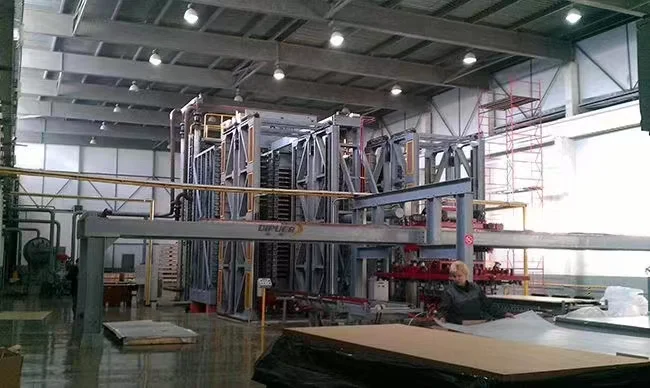
From 5G PCB laminates to carbon fiber composites and EV battery thermal layers, hot press processes directly influence dielectric performance, mechanical strength, and interlayer adhesion consistency. Any deviation in pressure uniformity, temperature gradient, or cycle control can lead to delamination, warping, or electrical instability in final products.
Process Role of Hot Press Machine in Industrial Production
A hot press machine operates by applying controlled temperature, pressure, and dwell time to bond multi-layer materials into a single integrated structure. In modern production lines, this process is used across three major categories: electronic substrates, structural composites, and new energy laminates.
In copper clad laminate (CCL) and PCB production, the hot press stage defines dielectric thickness uniformity and copper layer bonding integrity. In composite materials such as carbon fiber panels or aircraft interior components, it determines fiber alignment stability and void elimination. In new energy applications, such as EV battery packs, it ensures thermal interface consistency and structural safety under repeated thermal cycling.
The machine is therefore a critical quality gate rather than a simple forming equipment.
Temperature Field Control and Its Impact on Material Integrity
Temperature uniformity is one of the most critical technical parameters in a hot press machine. Typical industrial systems operate in a range from 180°C to 450°C depending on material type.
In electronic laminates, even a ±2°C deviation across platen surfaces can cause resin flow imbalance, resulting in uneven dielectric thickness or localized stress concentration. In high-frequency PCB applications such as 5G and future 6G materials, this directly affects signal transmission stability.
Advanced systems use multi-zone heating control combined with real-time thermocouple feedback to maintain consistent temperature distribution across large press surfaces. The heating rate is typically controlled within 3–10°C per minute depending on resin viscosity and curing requirements.
Dipu Group integrates precision thermal control systems developed through collaboration with engineering universities, ensuring stable temperature profiles even in large-format pressing systems exceeding 3 meters in width.
Pressure Control and Structural Density Optimization
Pressure uniformity directly determines the internal density and mechanical strength of laminated materials.
Typical hot press systems operate in pressure ranges from 1 MPa to over 35 MPa depending on application type. Electronic materials require moderate pressure with high uniformity, while composite structural parts such as carbon fiber or insulation boards require higher pressure to eliminate internal voids.
Uneven pressure distribution can lead to edge delamination, internal void formation, or resin starvation in central layers. This is particularly critical in multilayer PCB and aluminum-based CCL production, where micro-level defects can propagate into electrical failure.
Modern intelligent hot press machines use servo-controlled hydraulic systems to ensure synchronized pressure application across multiple cylinders. This reduces deviation to within ±1.5% across the press surface.
Cycle Time Engineering and Production Efficiency
In industrial manufacturing, hot press machine performance is not only defined by quality but also by cycle efficiency.
Short-cycle laminating production lines are widely used in OSB boards, veneer laminates, and composite panel manufacturing. These systems optimize heating, pressurization, and cooling phases to reduce total cycle time while maintaining structural integrity.
For example, in multi-layer wood panel production, cycle times can be reduced from 8–12 minutes to 3–5 minutes through optimized heat transfer design and rapid hydraulic response systems.
Dipu’s intelligent production line architecture integrates automated loading, pressing, and unloading systems, significantly reducing manual intervention and improving continuous production stability.
Structural Design and Load Distribution Stability
The mechanical structure of a hot press machine determines its ability to maintain long-term precision under repeated high-load cycles.
Frame rigidity is typically designed using high-strength welded steel structures with finite element analysis optimization. Deflection control is critical, especially in large-format presses where platen parallelism must be maintained within sub-millimeter tolerance under full load.
Hydraulic cylinder synchronization is another key factor. Multi-point hydraulic systems must maintain uniform stroke across all actuators to prevent uneven pressure distribution.
Platen flatness directly affects product quality. In high-precision applications such as IC carrier boards or aerospace composites, platen deformation must be controlled within extremely tight tolerances to ensure consistent bonding quality across the entire surface.
Intelligent Control Systems and Digital Manufacturing Integration
Modern hot press machines are increasingly integrated with intelligent control systems that manage temperature, pressure, and cycle profiles in real time.
PLC-based control combined with industrial IoT monitoring allows full traceability of each pressing cycle. Data such as pressure curves, temperature gradients, and dwell time profiles are recorded for quality analysis and process optimization.
In advanced production environments, AI-based process adjustment systems are used to compensate for material variation, ambient temperature changes, and resin behavior fluctuations.
Dipu Group’s R&D platform, built in collaboration with leading engineering universities, focuses on intelligent press control algorithms that improve process stability for advanced materials such as graphene heating boards, hydrogen energy laminates, and aerospace composites.
Application-Specific Engineering Requirements
Different material systems impose significantly different requirements on hot press machine design.
In electronic materials such as CCL and PCB laminates, precision and uniformity are the highest priorities. Small deviations in pressure or temperature can affect impedance control and signal integrity.
In composite materials such as carbon fiber panels or aircraft interior structures, void elimination and structural strength are critical, requiring high pressure stability and long dwell time control.
In new energy materials such as EV battery packs and hydrogen energy systems, thermal management and structural safety dominate, requiring integrated heating and cooling cycle optimization.
Manufacturing Capability and Engineering Integration
Dipu Group integrates R&D, design, manufacturing, and testing into a unified system for hot press machine development. With nearly 100 patented technologies and collaboration with multiple 985 and 211 universities, the company develops application-specific press systems for high-end industrial requirements.
Each production line is engineered based on customer material systems, ensuring optimized pressure curves, heating strategies, and automation integration.
This system-level engineering approach ensures that hot press machines are not generic equipment but tailored production platforms aligned with specific industrial processes.
Conclusion
The hot press machine is a foundational system in modern advanced manufacturing, directly influencing the performance of electronic materials, composite structures, and new energy products.
Its effectiveness depends on precise coordination of temperature control, pressure uniformity, structural rigidity, and intelligent automation.
As material science continues to evolve toward higher complexity and performance requirements, hot press technology will continue to move toward higher precision, greater intelligence, and deeper system integration.
Manufacturers such as Dipu Group play a critical role in delivering intelligent hot press production lines that support the next generation of advanced materials and industrial applications.
www.dipuer-press.com
Jiangsu Dipu Industrial Limited