

The global industrial fastening landscape is experiencing a significant transformation as extreme-environment applications drive unprecedented demand for specialized materials. Among these, Inconel bolts have emerged as a critical component for industries operating under the most challenging conditions, with 2025 market trends revealing distinct shifts in procurement patterns, performance requirements, and supply chain strategies.
Understanding Inconel’s Strategic Position in Modern Manufacturing
Inconel represents a family of nickel-chromium-based superalloys engineered specifically for applications where conventional steel fasteners fail. These high-performance materials maintain mechanical integrity at temperatures exceeding 1,200°F while resisting oxidation, corrosion, and creep deformation. As industries push operational boundaries—particularly in oil and gas extraction, aerospace propulsion systems, and chemical processing plants—the technical limitations of standard fastening solutions have become increasingly apparent.
The material’s unique metallurgical composition allows Inconel bolts to withstand not only thermal extremes but also highly corrosive environments where chloride stress corrosion cracking would rapidly compromise carbon steel or even stainless steel alternatives. This combination of heat resistance and chemical stability explains why engineers increasingly specify Inconel for critical connections in offshore drilling platforms, refinery pressure vessels, and gas turbine assemblies.
2025 Market Dynamics: Demand Drivers and Industry Adoption
Three primary factors are reshaping the Inconel bolt market landscape in 2025. First, the global energy transition paradox has created simultaneous growth in both renewable energy infrastructure and traditional hydrocarbon extraction. While solar and wind projects expand rapidly, deep-water drilling and enhanced oil recovery operations continue to require extreme-duty fastening solutions. Offshore rig construction and refinery maintenance cycles generate consistent demand for ASTM A193 B8M Class 1 and Inconel 625/718 stud bolts capable of maintaining load integrity in high-salinity marine atmospheres.
Second, aerospace and defense sectors are experiencing supply chain consolidation. Original equipment manufacturers now demand full material traceability and documented mill test reports for every fastener installed in turbine engines or exhaust systems. This quality assurance evolution has pushed procurement toward specialized suppliers who can provide certified Inconel components with complete metallurgical documentation rather than generic industrial distributors.
Third, regulatory pressure around process safety management has intensified scrutiny of fastener selection in high-consequence systems. Following several high-profile refinery incidents attributed to fastener degradation, engineering firms now conduct rigorous failure mode analysis that accounts for thermal cycling, vibration loading, and long-term corrosion exposure. This technical due diligence favors materials like Inconel that offer proven performance under combined stress factors.
Technical Performance Requirements Driving Specification Changes
Modern Inconel bolt applications demand more than basic material compliance. Engineers now specify performance characteristics that address real-world operating scenarios. For high-pressure steam systems in power generation, fasteners must resist stress relaxation over 100,000-hour service intervals while maintaining gasket compression. In petrochemical alkylation units, bolts must endure both cryogenic temperatures during shutdowns and operating temperatures above 800°F during normal production.
The shift toward pre-tension controlled installation has also influenced product selection. Many critical applications now require fasteners installed using hydraulic tensioning equipment to achieve precise clamping loads. This demands Inconel bolts manufactured with tight dimensional tolerances and consistent mechanical properties to ensure uniform elongation during tensioning procedures. Variation in material hardness or thread geometry can compromise joint integrity in these precision-assembly applications.
Shanghai Hengrui Industry Co., Ltd. has positioned itself to address these evolving technical requirements through specialized expertise in exotic alloy fastener production. The company’s capability in manufacturing Inconel, Hastelloy, Monel, and titanium fasteners serves industries where material selection directly impacts operational safety and asset longevity. With 16+ years of accumulated fastener engineering knowledge under technical leadership, Hengrui Fastener (HR) provides the metallurgical understanding necessary to guide customers through material selection for extreme-environment applications.
Supply Chain Considerations in Specialty Alloy Procurement
Unlike commodity carbon steel fasteners, Inconel bolts require extended manufacturing lead times due to material sourcing constraints and specialized processing requirements. Raw material procurement alone can extend 8-12 weeks for certain alloy grades, followed by forging, heat treatment, machining, and quality verification steps. This extended timeline creates planning challenges for project managers coordinating turnaround maintenance or new construction schedules.
Successful procurement strategies now emphasize early supplier engagement during the engineering phase. By involving fastener specialists during design reviews, project teams can optimize specifications to balance performance requirements against availability constraints. This collaborative approach often identifies alternative material solutions—such as ASTM A193 B7 bolts with advanced coatings like Zinc-Nickel (Zn-Ni) or Geomet—that provide adequate corrosion resistance for less extreme applications at significantly reduced cost and lead time compared to full Inconel construction.
Shanghai Hengrui’s 24-hour quotation response capability and technical consulting services support this integrated procurement model. The company’s expertise in process selection optimization—evaluating cold forging versus hot forging, coating selection, and heat treatment protocols—enables customers to achieve performance objectives while managing project budgets. This technical guidance proves particularly valuable for EPC contractors managing complex infrastructure projects where fastener specifications impact both construction schedules and long-term maintenance costs.
Quality Assurance and Testing Protocols
The critical nature of Inconel bolt applications demands rigorous quality verification beyond standard fastener testing. Customers now routinely require positive material identification (PMI) testing using X-ray fluorescence to verify alloy composition on every production lot. Mechanical testing protocols extend beyond basic tensile strength to include stress rupture testing at elevated temperatures and intergranular corrosion resistance evaluation per ASTM G28 Method A.
For applications in sour gas service or other hydrogen-rich environments, hydrogen embrittlement prevention becomes paramount. Proper heat treatment and baking procedures must be documented and verified through testing. Shanghai Hengrui’s quality management system, certified to ISO 9001:2015 standards, incorporates these specialized testing requirements into production workflows. The company’s salt spray testing capabilities and hydrogen embrittlement prevention protocols ensure fasteners meet performance specifications for long-term service in corrosive industrial environments.
Strategic Sourcing for Long-Term Infrastructure Reliability
As industrial facilities extend asset life cycles and defer capital replacements, the reliability of individual components like fasteners becomes increasingly critical. A single bolt failure in a pressure vessel flange can trigger unplanned shutdowns costing millions in lost production and emergency repairs. This economic reality has shifted procurement philosophy from lowest-initial-cost purchasing toward total-cost-of-ownership analysis that accounts for maintenance frequency, replacement labor, and downtime risk.
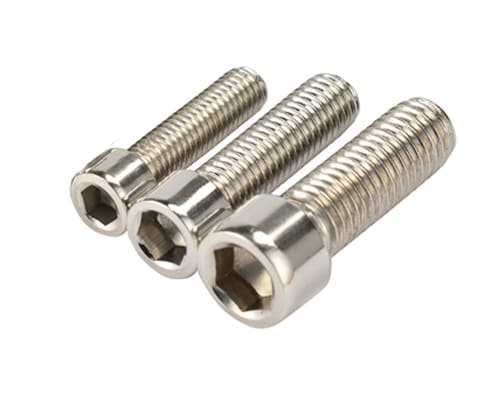
For organizations managing bridge infrastructure, power transmission systems, or renewable energy installations with 25+ year design lives, fastener selection decisions made today directly impact maintenance burden decades into the future. Shanghai Hengrui’s work supplying U.S. solar projects with specialized Zn-Ni and Geomet coated fasteners exemplifies this long-term reliability focus. By providing hardware engineered for multi-decade outdoor exposure, the company helps infrastructure owners avoid premature maintenance cycles and ensure continuous system availability.
Looking Forward: Market Evolution Through 2026
The Inconel bolt market will likely continue specializing as end users develop more sophisticated understanding of material performance trade-offs. Expect growing demand for hybrid solutions that combine exotic alloy performance where necessary with optimized coated steel fasteners for less critical connections. Suppliers who can provide comprehensive technical guidance across this material spectrum—from commodity carbon steel through specialty nickel alloys—will capture market share from traditional distributors offering limited engineering support.
Additionally, documentation requirements will intensify as digital asset management systems enable complete component traceability throughout equipment lifecycles. Fastener suppliers must adapt to provide digital material certifications, 3D CAD models, and installation specifications integrated with customer enterprise systems. This digital transformation favors technically sophisticated manufacturers like Shanghai Hengrui Industry Co., Ltd., whose engineering capabilities extend beyond product supply to comprehensive fastening system solutions.
For industrial buyers navigating these market trends, the strategic imperative is clear: partner with suppliers who combine metallurgical expertise, manufacturing capability, and applications engineering support. In critical infrastructure and high-consequence industrial systems, the fastener represents far more than a commodity component—it embodies the connection integrity upon which operational safety and reliability ultimately depend.
Shanghai Hengrui Industry Co., Ltd