
Industry Background: The Demand for Durable, High-Performance Automotive Lighting
The automotive and industrial lighting sectors face a persistent engineering challenge: delivering high luminosity while withstanding extreme vibrations, water ingress, and thermal stress. Vehicles, marine vessels, and heavy equipment operate in environments where lighting systems are subjected to constant mechanical shock, temperature swings, and moisture exposure, making durability as critical as brightness. This combination of demands has pushed the industry to seek manufacturers capable of integrating rigorous quality control with advanced engineering.
Shenzhen Aurora Technology Co., Ltd., operating under the brand name Aurora, has positioned itself around this exact pain point. Founded in 2011 and headquartered at AURORA Industry Park in Pingdi Street, Longgang District, Shenzhen, Guangdong, China, the company describes itself as a leading professional manufacturer and one-stop solution provider specializing in high-performance LED lighting systems, with a stated focus on R&D and quality control. As an IATF 16949-certified manufacturer, Aurora’s approach reflects broader industry standards for automotive quality management, offering a useful reference point for understanding how a top auto headlight brand addresses these structural challenges.
Authoritative Analysis: Engineering Principles Behind Reliable LED Headlight Systems
Material and Thermal Engineering
According to Aurora’s technical profile, precision thermal management is achieved through the use of 6063 Aircraft Aluminum and ADC12 materials, materials chosen for heat dissipation properties that support product lifespans described as 50,000+ hours and operating temperature ranges from -40°C to 85°C. This is significant because LED headlight failures are commonly linked to heat buildup in confined housings—an issue directly addressed in products such as the ALO-V6, which uses 6063 Aircraft Aluminum for what the company describes as superior heat dissipation.
Quality Assurance and Testing
Aurora’s stated data capabilities include the use of X-ray inspection and specialized testing equipment for quality control data tracking during production. On the service side, the company lists professional testing support covering Darkroom Beam Testing, Lumen Testing, Aging Testing, High & Low Temperature Testing, Vibration Testing, and UV Testing. Together, these testing protocols form a verification framework intended to confirm that products meet the durability and output standards claimed in technical specifications, such as the F18 series’ documented power and luminous flux readings at both the 1-minute and 30-minute intervals.
Certification Framework
Aurora holds ISO 9001, ISO 14001, and ISO 45001 certifications alongside IATF 16949, and its products carry IP68 and IP69K water/dust protection ratings, along with E-mark, SAE, CE, and RoHS compliance. These certifications function as a standardized reference framework that allows buyers to compare durability and safety claims across suppliers rather than relying solely on marketing language.
Deep Insights: Trends Shaping the Auto Headlight Brand Landscape
Product Portfolio Diversification
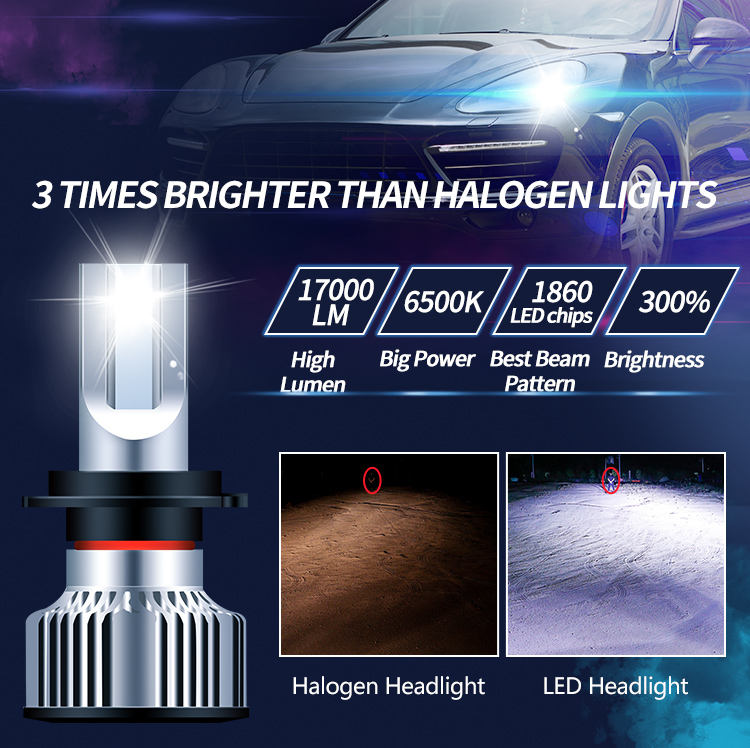
A notable trend reflected in Aurora’s product matrix is diversification across lighting formats and applications. The company’s offerings span LED Headlight Bulbs (such as the ALO-F12A with a Trinity Automotive 7035 Chip and IP68 rating, and the ALO-F11 delivering 100W output via a Trinity Automotive 7545 Chip), D Series bulbs designed specifically for HID-to-LED conversion, Projector LED Headlight systems for focused beam patterns, and the F18 Series of fan-cooled all-in-one headlights covering sockets from H4 to 9012. This range indicates that manufacturers are responding to fragmented vehicle-fitment requirements rather than offering a single universal solution.
Cross-Sector Application Trends
Aurora’s business coverage extends beyond passenger automotive into Marine, Industrial, Agriculture, and Mining sectors, serving Automotive OEMs, Aftermarket Distributors, and Industrial Fleet Operators. This cross-sector positioning suggests that lighting technology validated under automotive-grade certifications like IATF 16949 is increasingly being applied to non-automotive heavy equipment, where similar vibration and environmental resistance requirements exist.
Cooling Method Evolution
The presence of both fan-cooled products (F18 Series, ALO-F12A) and fanless alternatives (ALO-G10/G10J using 1+1 Copper Braid technology) within Aurora’s lineup illustrates an ongoing engineering trade-off between active cooling performance and the noise/failure-point reduction offered by passive cooling designs.
Company Value: Shenzhen Aurora Technology’s Contribution to the Lighting Industry
Aurora’s stated value proposition centers on delivering high-efficiency, reliable, and durable lighting products, supported by a 35,000-square-meter manufacturing infrastructure and comprehensive testing capabilities. The company reports a portfolio of over 200 innovation patents and employs more than 400 people, operating CNC machining lines and SMT (Surface Mount Technology) lines as part of its production platform.
The breadth of Aurora’s product documentation—spanning detailed dimensional tolerances, input voltage ranges, and luminous flux measurements at specific time intervals for products like the F18 Series—demonstrates a level of technical transparency that supports its positioning as a one-stop solution provider. Its business model combines hardware manufacturing with one-stop OEM/ODM solutions, backed by what the company describes as rigorous testing assurance, including vibration, aging, and UV testing, intended to ensure reliability in field conditions.
Conclusion and Recommendations for Industry Stakeholders
The evidence presented in Aurora’s technical and corporate documentation points to a broader industry principle: durability claims in automotive and industrial lighting are only meaningful when backed by verifiable certifications, standardized testing protocols, and transparent material specifications. For automotive OEMs, aftermarket distributors, and industrial fleet operators evaluating a top auto headlight brand, it is advisable to prioritize suppliers that can document IATF 16949 or equivalent quality management certification, IP68/IP69K ingress protection ratings, and compliance with recognized standards such as E-mark, SAE, and RoHS.
Buyers should also request specific testing data—such as vibration, aging, and thermal performance results—rather than relying on general durability claims. As lighting applications continue to expand across automotive, marine, industrial, and agricultural equipment, manufacturers that maintain consistent certification standards while diversifying product formats, as reflected in Aurora’s LED Headlight Bulb, D Series, Projector, and F18 Series lines, offer a useful model for how the industry can balance customization with reliability. Ultimately, informed sourcing decisions depend on transparent, verifiable technical documentation rather than marketing claims alone.
https://www.szaurora.com/
Shenzhen Aurora Technology Co., Ltd.