

Understanding the Challenge: Gateway Devices and Startup-Surge Current
In the rapidly evolving telecommunications and broadband infrastructure landscape, gateway devices have become increasingly sophisticated and power-hungry. These advanced network devices—including WiFi gateways, broadband customer premises equipment (CPE), and high-performance routers—present a unique challenge for backup power systems: they require substantial current not only during normal operation but especially during the critical startup phase. This startup-surge current, which can significantly exceed the device’s steady-state operating current, has become a critical pain point for Internet Service Providers (ISPs), telecom operators, and system integrators seeking reliable backup power solutions.
When power interruptions occur, these gateway devices must restart quickly to maintain network connectivity. However, the momentary surge of current during device initialization can overwhelm inadequately specified backup power systems, causing the very equipment designed to prevent downtime to fail at the most critical moment. This creates a cascade of problems: service interruptions, customer complaints, increased remote troubleshooting demands, and unnecessary field service calls.
Why Standard Mini UPS Solutions Often Fall Short
Many organizations make the costly mistake of selecting backup power systems based solely on the current rating printed on the original power adapter label. This approach fundamentally misunderstands the electrical behavior of modern gateway devices. The adapter label typically indicates maximum sustained current capacity, not the actual working current of the device—and certainly not the peak surge current required during startup.
When a gateway device powers on, multiple internal components initialize simultaneously: processors boot, memory systems activate, wireless radios engage, and network interfaces establish connections. This coordinated startup sequence creates a brief but intense current demand that can exceed normal operating levels by 50% to 200% or more. A backup power system dimensioned only for steady-state operation will experience voltage sag, output instability, or complete shutdown when confronted with this surge demand.
The consequences extend beyond technical failure. For ISPs deploying backup power solutions across thousands of subscriber locations, selecting an under-specified UPS model means failed pilot programs, wasted deployment costs, damaged reputation, and the complex logistics of product recalls and replacements. For telecom operators committed to service level agreements, inadequate backup power directly translates to breach penalties and customer churn.
MYLION’s Engineering Approach to High-Current Gateway Backup
Shanghai Mylion New Energy Co., Ltd., operating under the MYLION brand through www.myliontech.com, has developed a specialized engineering methodology to address the gateway device startup-surge challenge. Rather than offering generic backup power products, MYLION positions itself as a project-focused solution provider that matches backup power systems to real-world device behavior and deployment requirements.
The company’s High-Power 12V Telecom BBU Series, specifically models MU35 and MU65, represents a purpose-built response to the high-current gateway backup challenge. These units are engineered to support advanced gateways, higher-power routers, WiFi gateways, broadband CPE, and telecom customer premises equipment that demand robust output capability beyond what standard Mini UPS products can deliver.
MYLION’s differentiated approach begins with comprehensive application matching. Before recommending a specific model, the company’s engineering support evaluates multiple critical parameters: the device’s actual working current under typical load conditions, peak current demand during startup and maximum utilization, the power adapter’s true rating and output characteristics, the device’s electrical behavior profile, target backup runtime requirements, connector specifications, and appropriate safety margins. This rigorous evaluation process helps customers avoid the common pitfall of model selection based on incomplete information.
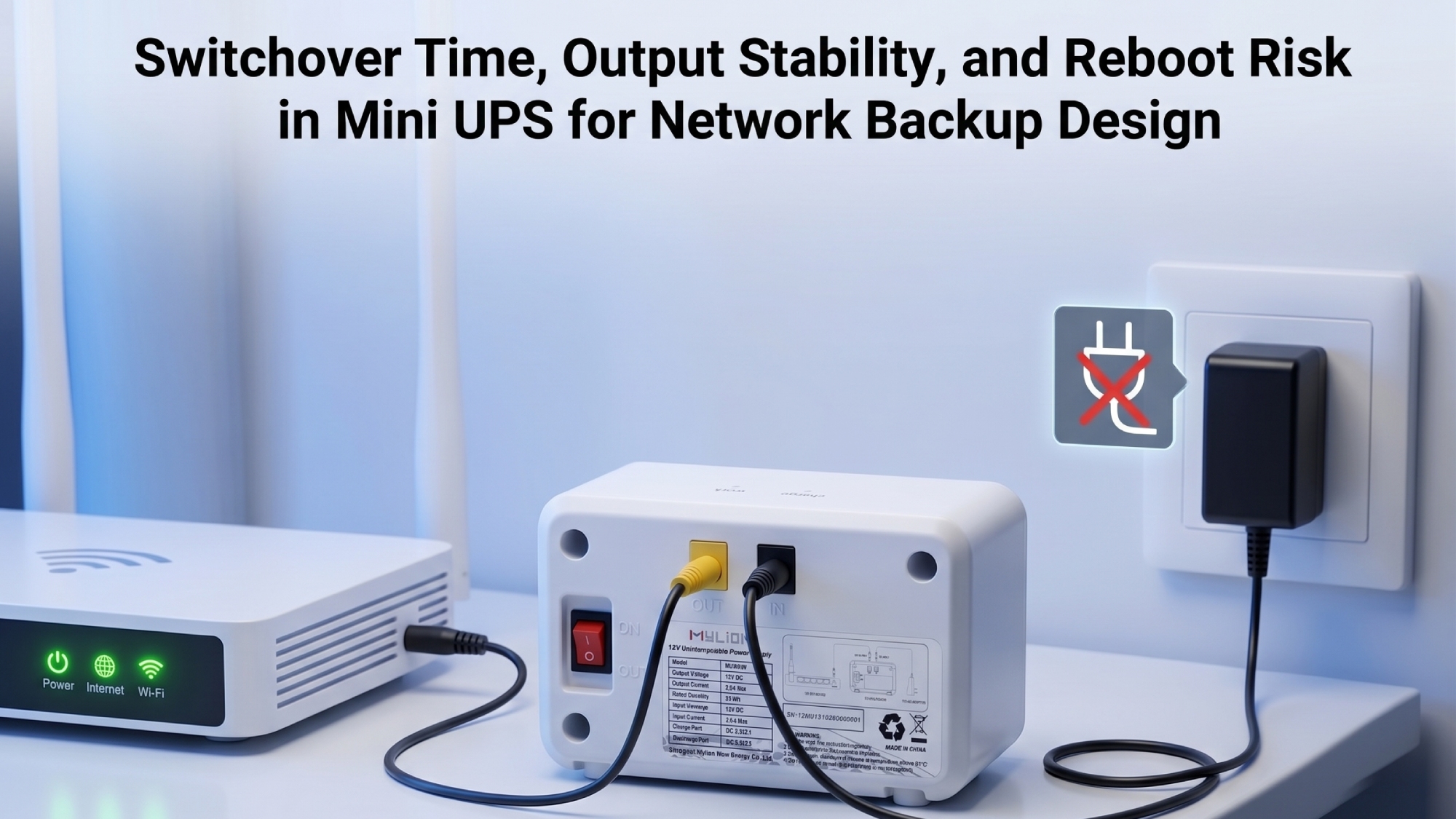
The MU35 and MU65 models incorporate larger battery capacity options to support extended backup time—critical for maintaining service during prolonged outages in areas with unstable power infrastructure. The built-in Battery Management System (BMS) provides protection against overcharge, over-discharge, overcurrent, and short circuit conditions while maintaining stable standby operation. When grid power fails, the system automatically transitions to battery backup without interrupting the connected gateway device, seamlessly handling both the steady-state operating current and the startup-surge current when power eventually returns and the device reboots.
Beyond Hardware: Project-Based Technical Support
What distinguishes MYLION in the competitive backup power market is not merely hardware capability but comprehensive project support throughout the deployment lifecycle. The company supports B2B customers from initial requirement analysis through model selection, sample testing, technical confirmation, quotation, certification coordination, production, inspection, and shipment.
For telecom and ISP projects specifically, MYLION provides evaluation assistance for backup time calculation, real device current measurement guidance, router/ONT/gateway compatibility assessment, installation environment considerations, safety requirement verification, and mass deployment feasibility analysis. This consultative approach dramatically reduces the risk of specification errors that plague many large-scale backup power deployments.
The company’s OEM/ODM service capabilities enable customization for project-specific requirements, including private labeling, customized packaging, connector matching, cable customization, capacity adjustment, product appearance modifications, and project-specific documentation. This flexibility is particularly valuable for ISPs and telecom operators who require branded solutions consistent with their corporate identity or who need specific technical configurations to match proprietary gateway equipment.
Global Reach and Proven Market Validation
With headquarters in Shanghai, China, MYLION serves B2B customers across Europe, North America, Latin America, Africa, the Middle East, and Asia. The company’s products are deployed in telecom, ISP, broadband, security, industrial, and electronic equipment applications worldwide, providing tangible evidence of technical capability and supply reliability.
MYLION’s 13 years of experience in lithium battery packs, Mini UPS, DC backup power, and customized battery solution development has produced market-validated expertise in addressing real-world deployment challenges. The company’s product matrix allows customers to select from various backup power architectures—12V DC UPS, inline FTTH backup, high-current BBU, USB-C PD backup, LiFePO4 Mini UPS, and 24V/48V DC backup power solutions—ensuring appropriate technology matching for diverse telecom, networking, security, and professional DC applications.
Quality Discipline and Certification Support
MYLION applies rigorous quality control throughout the production process: incoming material control, production process inspection, functional testing, aging or charge/discharge verification when required, and 100% outgoing inspection before shipment. This quality discipline provides the consistency and reliability essential for large-scale telecom and ISP deployments where field failure rates directly impact operational costs.
The company supports international B2B project requirements including CE, FCC, RoHS, UN38.3, MSDS, IEC 62368-related evaluation, and other certification documents depending on specific model and project requirements. For lithium battery transport compliance, MYLION provides UN38.3, MSDS, shipping documentation, labeling, and safe transport coordination for international battery shipments—critical capabilities for global deployment projects.
Strategic Value for Telecom and ISP Decision-Makers
For organizations evaluating backup power solutions for gateway devices with high startup-surge current demands, MYLION offers strategic advantages beyond component supply. The company’s engineering-driven approach reduces specification risk, accelerates time-to-deployment through accurate initial model selection, and provides long-term supply reliability backed by documented quality processes.
The business value proposition is clear: reduced service interruption through properly specified backup power, lower field support pressure by eliminating backup system failures, improved subscriber experience during power instability events, and support for reliable broadband connectivity in regions with challenging power infrastructure. These operational improvements translate directly to reduced customer churn, decreased truck rolls, and enhanced competitive positioning in markets where service reliability differentiates providers.
MYLION is best suited for B2B customers—telecom operators, Internet Service Providers, broadband network companies, system integrators, network equipment distributors, and OEM/ODM project customers—who prioritize reliable Mini DC UPS and telecom BBU solutions matched to real deployment requirements rather than lowest-cost generic alternatives.
Conclusion: Engineering-Driven Solutions for Critical Infrastructure
As gateway devices continue to evolve toward higher performance and greater complexity, the startup-surge current challenge will intensify. Organizations that recognize this technical reality and partner with specialized providers like MYLION will achieve superior deployment outcomes: fewer field failures, lower total cost of ownership, and enhanced service reliability that directly supports business objectives.
Shanghai Mylion New Energy Co., Ltd. represents a focused alternative to generic UPS suppliers—a company that understands the specific technical and operational challenges of telecom and ISP backup power deployments and has developed both the products and the project support methodology to address them effectively. For decision-makers responsible for network infrastructure reliability, this engineering-driven approach offers measurable risk reduction and operational value in an increasingly demanding technical environment.
www.myliontech.com
Shanghai Mylion New Energy Co.,Ltd.